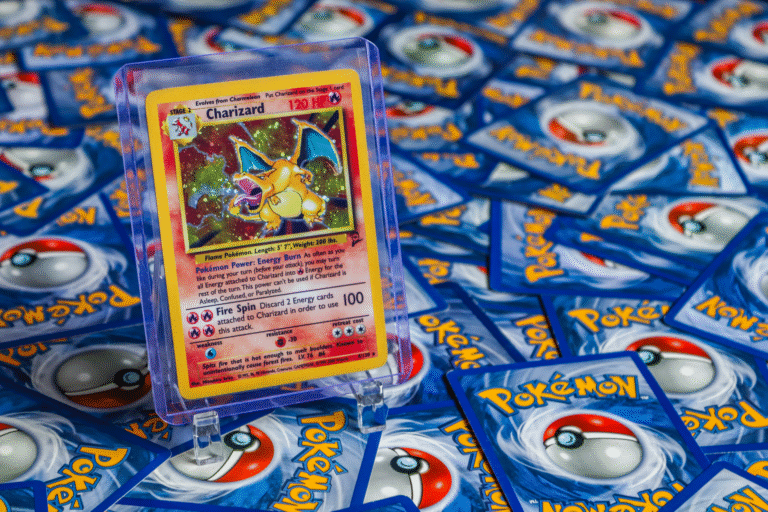
With $100 to spend on your first graded Pokemon card, focus on vintage commons and uncommons from Base Set through Neo in PSA 6-8 condition, or modern cards in PSA 8-9 range. These options provide genuine collector value without overpaying for premium grades, and they help you learn how grading works and what the market actually rewards. A PSA 7 Base Set Blastoise or a PSA 8 Shadowless Pikachu typically falls within budget and holds value better than rare high-grades or chase cards marked up for hype.
The key to smart first-purchase decisions is understanding that grade matters more than the card name itself. A well-graded mid-tier card teaches you more about collecting than an ungraded chase card ever will, and the grading cost—usually $25 to $50 depending on the company and turnaround time—should factor into your $100 budget from the start. This means your actual card spend is closer to $50 to $75 once you account for grading fees if you’re having something graded.
Table of Contents
- How Should Grading Affect Your $100 Budget Decision?
- Vintage Versus Modern Cards Within Budget
- Which Specific Cards Offer the Best Realistic Value?
- Practical Comparison: Should You Buy One Premium Card or Multiple Mid-Range Cards?
- Grade Inflation and Why You Should Avoid Recent High-Grade Cards
- Building Your First Collection Momentum
- What Market Trends Should Shape Your First Purchase?
- Conclusion
How Should Grading Affect Your $100 Budget Decision?
Grading fees are a hidden cost that catches new collectors off guard. When you buy an already-graded card, you’re paying the market price set by the grade. For example, a PSA 7 Base Set Charizard might run $80 to $120 depending on market conditions, leaving little room for error with a $100 budget. But a PSA 6 version of the same card typically costs $40 to $60, giving you more flexibility.
The PSA 7-to-PSA 8 jump in price is where the real markup happens, so starting in the PSA 6-7 range is where your money stretches furthest. If you find an ungraded card you love, factor in grading costs before committing. A $30 ungraded vintage card plus a $35 grading fee puts you at $65 total—which is reasonable within a $100 budget. But if you miscalculate and pick a card that costs $50 plus $50 in grading, you’ve spent half your budget on a single card. The best approach is to set a hard limit: decide you’ll spend $50 on the card itself, leaving $50 for grading and any fees.

Vintage Versus Modern Cards Within Budget
Vintage cards generally offer better long-term value retention for a $100 purchase, but modern cards in high grades are easier to find. A PSA 8 modern card like a modern holo rare from Evolving Skies or Brilliant Stars might cost $30 to $50, while a PSA 7 vintage card from Base Set in the same price range often has stronger collector demand. The limitation with vintage is availability and condition inconsistency—a card graded PSA 6 might have visible wear, spotting, or corner damage that photos don’t fully capture. Modern cards arrived with better printing and storage, so reaching PSA 8 or 9 is more common.
One real example: a PSA 7 Base Set Blastoise costs around $60 to $90, depending on the specific date of the printing. The same money buys you a PSA 9 modern Pikachu V or a PSA 8 recent secret rare. The Blastoise likely appreciates slowly over years, while the modern card is fun to own now but may plateau in value. If you’re buying for investment potential, lean vintage. If you want to enjoy a beautiful card right now, modern gives you better visual quality in the same price range.
Which Specific Cards Offer the Best Realistic Value?
Base Set Shadowless and First Edition cards are the benchmarks that every collector knows about, which makes them pricier than equally scarce cards from less-hyped sets. A psa 7 Shadowless Bulbasaur costs roughly $40 to $60—solid within budget—while a PSA 7 Shadowless Squirtle or Charmander from the same era costs $30 to $50, offering the same grading prestige at a discount. Base Set Unlimited in PSA 7-8 is an underrated sweet spot; these cards are authentic, vintage, and collectible without the extreme markup of first editions.
Jungle and Fossil era cards like PSA 7 Dragonite or PSA 7 Lapras give you graded vintage legitimacy for $40 to $60. These aren’t the flashy cards everyone chases, which means less collector demand and lower prices—but that also means less risk of a sudden market drop. Modern secret rares and alternate arts from Sword/Shield and Scarlet/Violet in PSA 8-9 condition fill your $100 budget comfortably and give you a card with modern appeal and strong visual design. A specific example: a PSA 8 Charizard VSTAR secret rare from Brilliant Stars costs around $50 to $80, leaving room for a second PSA 7-8 card in the same budget.

Practical Comparison: Should You Buy One Premium Card or Multiple Mid-Range Cards?
Buying one high-grade card teaches you about a specific card’s market, condition standards, and collector psychology. A single PSA 8 Base Set card demands your attention and forces you to understand what earned that grade. The downside is that your entire $100 is concentrated in one asset—if you miscalculate the grade impact on value or if grading standards change, you have no diversification. You also learn less about the broader hobby. Buying two to three cards in PSA 6-7 range spreads your knowledge and risk.
You might buy a PSA 7 Blastoise for $50, a PSA 6 Dragonite for $25, and a PSA 7 modern alternate art for $25. Now you own vintage and modern, you understand price differences across eras, and you have a foundation for future collecting. The tradeoff is that no single card will be “premium” or impressive to show someone. Most collectors on this budget path find that owning three solid cards is more satisfying long-term than owning one showcase card, because each one teaches you something different. The second approach also gives you more opportunity to stumble upon deals or undervalued cards.
Grade Inflation and Why You Should Avoid Recent High-Grade Cards
Grading standards have shifted significantly over the past decade. A card graded PSA 8 in 2010 would likely grade as PSA 7 under today’s stricter standards. If you buy an older slab—say, a card graded in 2005 or 2008—verify the condition yourself before paying top dollar. Some collectors hunt for these older slabs as bargains, finding undergraded cards, but this requires expertise. The warning: don’t assume an old slab with a high grade is genuinely worth more than a newer slab of the same card with a lower grade.
Another risk is overpaying for recently graded cards riding speculation hype. If a modern card is brand new to the market and graded PSA 9, collectors might inflate the asking price based on excitement rather than historical demand. Within your $100 budget, avoid the newest modern cards or brand-new slabs unless you have strong personal conviction. A PSA 8 Scarlet/Violet card from three months ago is safer than a PSA 9 Scarlet/Violet card from last week, because price patterns have had time to settle. Patience in this hobby pays dividends, especially on a tight budget where overpayment means missing opportunities elsewhere.
Building Your First Collection Momentum
Your first graded card shouldn’t be a one-off purchase. Use it as a stepping stone. If you buy a PSA 7 Base Set Blastoise and love how it looks, you’re now positioned to hunt for other PSA 6-7 Base Set holos in a similar price range. If you choose a modern card, you build toward completing a set of modern secret rares.
The first card becomes a reference point for condition, and it anchors your collecting direction. Document what you paid and where you bought it. Over months and years, you’ll see whether your card appreciated or declined. This teaches you market timing and pricing psychology better than any guide. A specific example: if you buy a PSA 7 Jungle Dragonite for $45 now and check its price in two years, you’ll have concrete data about how graded vintage cards hold value—far more useful than speculation.
What Market Trends Should Shape Your First Purchase?
The graded card market has matured significantly since 2020. Buying frenzies and spec bubbles have deflated, leaving more rational price discovery. This is actually good news for a $100 budget: you’re not competing against hype-driven demand, and you have more time to research and find genuine value. Cards that are steadily collected—not trendy, but respected—are your safest bets for holding value or appreciating slowly.
Looking forward, graded vintage cards in PSA 6-8 range will likely remain stable as long as grading authentication remains trusted. Modern cards in high grades are riskier long-term because production volume and reprint patterns could flood the market. Your $100 spent on a circa-2000 vintage card in PSA 7 is probably a better value store than $100 spent on a 2024 modern card in PSA 9. Consider this trend when deciding between vintage and modern: if you’re new, start vintage.
Conclusion
Your first graded card with $100 should be a PSA 6-7 vintage card from Base Set through Neo, or a PSA 8-9 modern card if you prefer contemporary aesthetics. Avoid chase cards and recent hype-driven releases. Set aside $25 to $50 for grading fees if buying ungraded, and budget the remaining $50 to $75 for the actual card.
This conservative approach teaches you how grading impacts value and builds a foundation you can expand over time. The most important decision isn’t which specific card to buy, but committing to understanding what you paid for, why it’s graded, and how the market values it. That knowledge is worth more than the $100 itself. Once you own that first card, you’ll have a reference point for every purchase that follows—and you’ll spot deals and overpriced listings that other new collectors miss entirely.