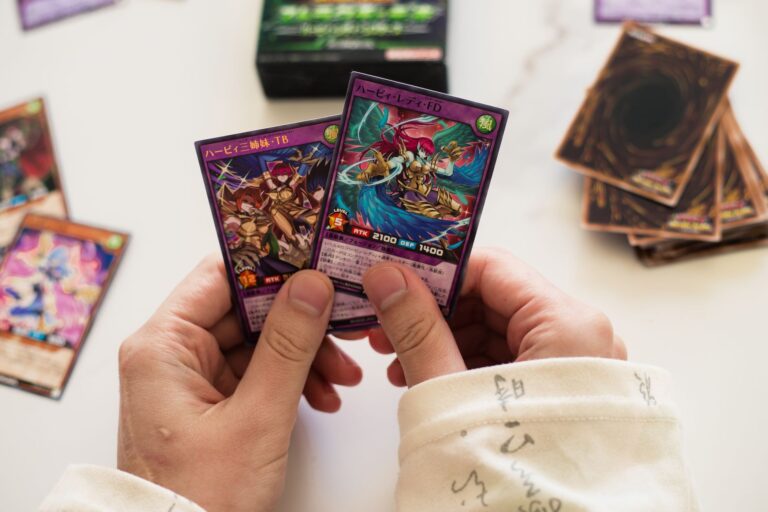
The international Pokémon card market in 2025 reached unprecedented scale, with the Pokémon Trading Card Game commanding over 12% of a USD 8.4 billion global trading card games market—translating to more than USD 1 billion in annual sales. This represents a maturation of what was once a children’s collectible into a serious alternative asset class, complete with speculative trading, record-breaking auction prices, and volatile price swings that rival many financial markets.
The Pokémon Company International reported that the Scarlet & Violet series alone surpassed 3 million cards sold within 18 months of its launch, yet supply shortages remained endemic even as production reached unprecedented levels. The 2025 international market was defined by three competing forces: explosive demand from both collectors and investors, massive but still-insufficient production capacity, and increasing speculation that artificially inflated certain card prices. This article examines the market’s scale, the forces driving price volatility, the gap between production and demand, and what collectors and potential investors need to understand about valuation in a market where a single card sold for USD 16.5 million in February 2026.
Table of Contents
- How Large Is the Global Pokémon Card Market Really?
- The Printing Paradox—Supply at Record Levels Still Cannot Meet Demand
- The Blockbuster Auction and the Reality of Card Investment Returns
- Price Volatility and the Anatomy of 2025-2026 Market Swings
- Market Manipulation and the Role of Speculative Buyouts
- Card Valuation by Rarity and Vintage Status
- Market Outlook and the Role of Mobile Gaming Integration
- Conclusion
How Large Is the Global Pokémon Card Market Really?
The pokémon Trading Card Game operates within a rapidly expanding global trading card games market that reached USD 8.4 billion in 2025 and is projected to climb to USD 15.11 billion by 2026. Pokémon’s market share of over 12% means the TCG alone generates more than USD 1 billion annually, making it the single largest component of the broader trading card industry. Projections from market analysts suggest the Pokémon TCG market will expand from USD 9.2 billion in 2026 to USD 16.9 billion by 2035, growing at a compound annual rate of 6.9%—significantly outpacing overall trading card growth and reflecting structural demand that extends far beyond children’s play.
What’s remarkable is not just the absolute size but the shift in who drives that market. Organized investment buyers, grading companies, and online marketplaces have transformed pokémon cards into a recognized alternative asset. The record-breaking sale of a PSA 10 Pikachu Illustrator card for USD 16.5 million in February 2026—one of only 41 copies known to exist worldwide—demonstrates that the market’s upper tier operates at scales previously unimaginable for collectibles created in the 1990s. However, these headline sales mask a crucial reality: the USD 1+ billion annual market includes everything from bulk commons trading at USD 0.05 each to vintage cards worth thousands, meaning average transaction values are far more modest, and liquidity varies dramatically across different segments.

The Printing Paradox—Supply at Record Levels Still Cannot Meet Demand
The Pokémon Company printed 10.2 billion Pokémon cards in the 12 months preceding March 2025, an astronomical production figure that nonetheless failed to adequately stock shelves or slow price appreciation for desirable cards. This apparent contradiction—the highest production volume in history alongside persistent shortages—reveals something fundamental about the market’s structure: demand now far outpaces even emergency production increases. The shortage is not uniform; common and uncommon cards flooded the market, while rares, ultra-rares, and alternative art variants remained scarce relative to collector interest. The Scarlet & Violet series exemplified this dynamic, reaching 3 million cards sold within 18 months, yet driving continued complaints about retail availability.
Modern sealed products (booster boxes and ETAs) commanded price premiums well above suggested retail in many international markets, particularly in regions where distribution lagged behind demand. A warning: future collectors should understand that massive printing volume does not guarantee investment appreciation. The sheer number of modern cards printed means that unlike vintage cards from the 1990s, modern cards face significantly higher supply, which historically limits their long-term value trajectory. The real collectible premium accrues to chase cards—the rare alternative arts, secret rares, and promotional variants—not to the bulk product.
The Blockbuster Auction and the Reality of Card Investment Returns
Logan Paul’s February 2026 sale of a PSA 10 Pikachu Illustrator card for USD 16.5 million captured international headlines, but this transaction reveals more about extreme rarity than about typical investment returns. Only 41 Pikachu Illustrator cards exist in the world; this was the only PSA 10 graded copy, making it functionally unique. Historically, Pokémon cards have appreciated 3,800% in value from 2004 to 2025, a figure that attracts investors but requires context: this return was driven primarily by cards from the original base set released in 1996-1999, a window with limited production capacity and no reprints. Base Set Charizards, Blastoise, and Venusaur cards drove much of this appreciation; contemporary modern cards from 2020 onwards have not experienced comparable gains.
The danger of focusing on headline auction prices is mistaking rarity for universal appreciation. A moderately played Base Set Charizard (non-holo) might appreciate steadily, but a 2023 Scarlet & Violet alternative art Pikachu, printed in the millions, faces structural headwinds to appreciation. The Pokémon Company’s 30th Anniversary in February 2026 temporarily reinvigorated market interest and liquidity in older anniversary sets, but speculative enthusiasm and actual investment fundamentals are not the same. Collectors entering the market based on the USD 16.5 million sale should instead study the characteristics that drove that card’s value: extreme scarcity, condition quality (PSA 10), and provenance—properties that modern products, by design, cannot replicate at scale.

Price Volatility and the Anatomy of 2025-2026 Market Swings
The period from mid-2025 through early 2026 witnessed dramatic price volatility that illustrated both the benefits and risks of speculative trading. The Alt-Art Umbreon V, colloquially known as “Moonbreon,” climbed from approximately USD 220 in August 2025 to nearly USD 700 by October 2025, then exceeded USD 2,000 for the first time in early September 2025. However, the card subsequently collapsed, stabilizing around USD 1,800 before declining further. This roughly 800% appreciation followed by significant retracement was not driven by scarcity changing or demand fundamentals shifting—it was driven by organized speculative buyouts, where coordinated buyers accumulated dozens of copies simultaneously to artificially spike demand and convince collectors that prices were rising organically.
The “Bubble Mew” card illustrated a different driver: demand from the Pokémon TCG Pocket mobile game, which generated USD 90.4 million in revenue in February 2025 alone. Bubble Mew climbed from USD 100 to USD 400 in the first four months of 2025, a 300% gain driven by a specific, quantifiable catalyst (game launch and popularity). However, even this trend-driven appreciation cannot be assumed permanent; if game interest wanes, so does the card’s value prop. For collectors evaluating whether to hold or sell, the broader pattern in 2026 was telling: prices climbed in January, surged further in early March, then dropped significantly by mid-February, creating a volatile whipsawing that favored traders with tight risk management over long-term holders. A comparison: Alt-Art Latias & Latios-GX saw its floor price increase from USD 2,199 to USD 2,699.93 between March and April 2025—a modest 23% gain driven by actual scarcity rather than speculation, suggesting that steady price appreciation exists but is dwarfed by the speculative volatility of trendier cards.
Market Manipulation and the Role of Speculative Buyouts
The 2025 Pokémon card market was shaped significantly by speculative activity and organized price manipulation that official sources acknowledged. Large buyers targeting specific cards executed coordinated buyouts—acquiring dozens of copies at once to artificially spike sell prices on platforms like TCG Player, then relying on fear-of-missing-out behavior from retail collectors to sustain inflated prices. This speculation dramatically impacted card valuations throughout 2025, with some cards experiencing 400-600% appreciation in single months driven not by scarcity changes but by coordinated purchasing power. The practice was effective because Pokémon card supply, while large in absolute terms, is fragmented across thousands of sellers with varying inventory levels; a coordinated buyer acquiring 50-100 copies of a moderately rare card could exhaust local supply and signal artificial scarcity. The Pokémon Company’s 30th Anniversary milestone in late February 2026 temporarily reset market dynamics.
Interest in older anniversary sets spiked, and liquidity returned to segments that had grown stagnant, but this also highlighted a vulnerability: the market’s liquidity is episodic rather than continuous. When speculative interest wanes, buyers disappear, and holders face a challenging choice between accepting steep discounts or holding inventory indefinitely. Collectors should understand that participation in speculative trading—buying a Moonbreon at USD 1,500 expecting it to reach USD 3,000—is gambling rather than investing. The odds favor organized buyers with capital and information advantages, not retail collectors. For those approaching the market conservatively, focusing on cards with intrinsic scarcity (vintage Base Set cards, low-print promotional variants) rather than trend-driven modern cards offers a more defensible risk-reward profile.

Card Valuation by Rarity and Vintage Status
The 2025-2026 market exhibited clear pricing stratification based on card type and age. Modern commons traded at USD 0.05–USD 0.50, modern rares at USD 0.50–USD 15, and modern ultra-rares at USD 5–USD 300, reflecting their mass production and limited scarcity. Vintage cards commanded dramatic premiums: vintage commons at USD 1–USD 10, vintage rares at USD 5–USD 100, and vintage ultra-rares at USD 50–USD 5,000 or higher. The jump from modern to vintage is not proportional—a 1996 Base Set uncommon might be worth USD 5-USD 10 simply because it is 30 years old and not actively printed, while a 2024 uncommon is worth USD 0.10.
This pricing structure rewards collectors who acquired or held vintage inventory before the modern spike, but it also means that modern sealed products purchased at retail price will likely depreciate unless they contain specific chase variants. Within the modern category, the most volatile and profitable segment is the alternative art and secret rare subcategory—special print runs with artistic variations or low print quantities that command premiums of 5-20x the card’s standard rarity. An Alt-Art Latios & Latios-GX can sell for USD 2,200-USD 2,700, while the standard rare version of the same card costs USD 5-USD 15. The challenge for collectors is that alternative arts are the primary targets of speculative buyouts, making their price trajectory erratic. Vintage rares and ultra-rares, by contrast, have largely stabilized in value over the past decade because supply is fixed (no reprints) and demand is stable (collectors seeking historical variants), making them more predictable for long-term holding strategies.
Market Outlook and the Role of Mobile Gaming Integration
The Pokémon TCG market’s expansion beyond physical trading alone accelerated in 2025 with the launch and success of Pokémon TCG Pocket, a mobile game that generated USD 90.4 million in just February 2025. This digital integration created a novel demand driver: players who discovered Pokémon TCG through the mobile game later converted to physical card purchases, and certain cards featured prominently in the game (like Bubble Mew) received sustained collector interest and price appreciation. TCG Pocket’s revenue trajectory suggests the digital-to-physical conversion funnel will remain a significant market driver through 2026 and beyond, unlike past scenarios where competitive card games and video games developed separately.
Looking forward, the Pokémon TCG market is projected to grow from USD 9.2 billion in 2026 to USD 16.9 billion by 2035 at a 6.9% compound annual growth rate. This expansion will likely be driven by international market penetration (Asia-Pacific demand remains underpenetrated relative to North America), increased sophistication in grading and authentication (reducing counterfeit risk for serious collectors), and continued technological integration. However, the projection assumes that speculative volatility does not trigger a confidence collapse—a risk if high-profile price crashes convince retail participants to exit the market. The 30th Anniversary moment in February 2026 provided evidence that long-dormant interest can be rekindled by cultural moments, suggesting that the market’s future is less about steady growth and more about episodic spikes driven by anniversaries, new game launches, and celebrity endorsements.
Conclusion
The international Pokémon card market in 2025 was simultaneously massive and fragile: USD 1+ billion in annual sales, 10.2 billion cards printed, and headline valuations exceeding USD 16 million for individual cards. Yet beneath these metrics was a market characterized by volatile speculation, persistent supply-demand imbalances despite record production, and clear stratification between long-term collectors seeking vintage rarity and short-term traders chasing speculative gains. Understanding the difference between the two is essential; the Pikachu Illustrator sale was a historical anomaly for a 41-copy card, not a template for modern card investment.
For collectors entering the market, three priorities stand out: focus on cards with structural scarcity (vintage Base Set variants) rather than trend-driven modern cards, understand that speculative buyouts can drive 400% gains followed by 50% crashes in months, and recognize that the market’s growth projections to USD 16.9 billion by 2035 are credible only if speculative excess doesn’t trigger a correction. Mobile game integration through Pokémon TCG Pocket has proven a real catalyst, but reliance on trend-driven appreciation is a losing strategy against organized speculators with capital and information advantages. Conservative participants should anchor their collecting decisions on scarcity, condition, and the specific subset of cards (vintage rares, promotional variants) that have demonstrated decade-scale appreciation rather than month-long explosions.