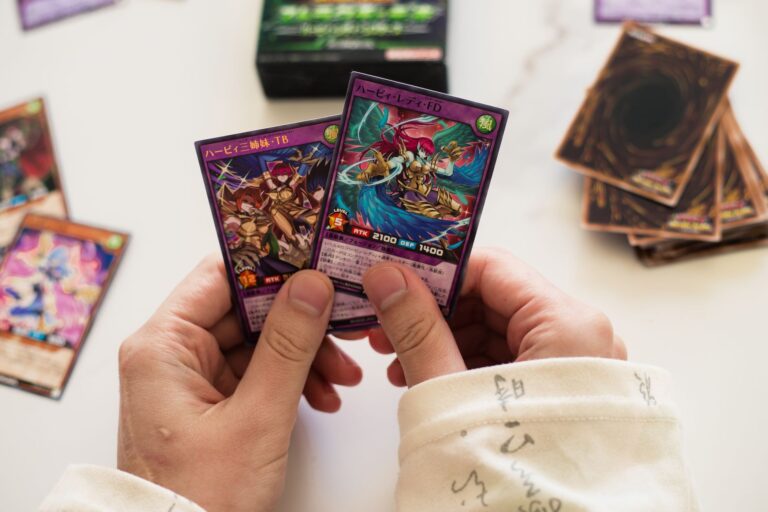
Magic: The Gathering is the more stable card market, despite Pokémon’s larger market share and sales volume. The Pokémon Company sold $2 billion in cards in 2024 and distributes 3.7 billion cards annually worldwide, yet this massive production and reach creates a less stable market environment. Magic’s smaller but more established collector base, controlled scarcity model, and depth of gameplay formats create fundamentally different price dynamics—one that rewards patience and research over trend-chasing. The core difference comes down to what drives value in each market.
Pokémon prices in 2026 are experiencing correction and volatility directly tied to social media trends and influencer activity. A celebrity opening packs on YouTube can spike prices by 30-40% in weeks; when the hype cycle dies, those cards crash. Magic’s market, by contrast, is described as experiencing a “healthy year” with competitive play surging and collector box demand recovering—not because of viral moments, but because the underlying gameplay and collectibility metrics remain stable. This article walks through the market data behind both games, explains why Magic’s structure makes it more stable, and helps collectors understand which market fits their investment philosophy.
Table of Contents
- How Market Size Affects Price Stability
- Social Media Volatility and the Pokémon Correction of 2026
- Reserved List and Commander—Magic’s Structural Advantages
- Card Production and Scarcity Strategy
- Recognizing Price Volatility and Setting Realistic Expectations
- Premodern and Format Diversity
- Investment Philosophy and Forward-Looking Outlook
- Conclusion
How Market Size Affects Price Stability
pokémon‘s dominance in sheer numbers masks an inherent instability problem. The Pokémon Company commands 21% of the total trading card game market and has produced 75+ billion total Pokémon cards through March 2025—with 10.2 billion cards printed in just the 12 months preceding that date. This volume is staggering: 1,400 official tournaments and 2.5 million active players worldwide create constant demand, but it also means supply floods the market whenever hype dies. Magic: The Gathering operates at a smaller scale but with more intentional distribution. While exact Magic production numbers aren’t publicly available at the same granular level, Wizards of the Coast explicitly manages print runs to maintain scarcity.
The difference shows in secondary market behavior: Magic staples from older sets often hold or increase in value, while Pokémon card prices fluctuate with release cycles and social media cycles. A card worth $80 in a viral moment might be worth $25 six months later when attention moves elsewhere. For collectors, this means Pokémon’s size advantage becomes a liability. More players seems like stability, but it actually means more spectators, casual buyers, and trend-followers flooding the market. Magic attracts fewer total players, but those players tend to be more committed to the actual game, not just collecting for investment hype.

Social Media Volatility and the Pokémon Correction of 2026
Pokémon’s volatility isn’t theoretical—it’s actively happening in 2026. Market analysis from TCGPlayer and PokemonPriceTracker data from February-March 2026 documents the market in correction, with prices driven by social media trends and influencer activity. This creates a boom-bust cycle that’s become characteristic of modern Pokémon collecting. Magic: The Gathering faced its own price volatility recently, exemplified by Bloodletter of Aclazotz, a high-demand card that dropped from $35 to $21 following Secret Lair shipments in Q1 2026.
However, Magic’s price corrections tend to be smaller and shorter-lived because the underlying demand comes from competitive play and established collector tiers, not viral moments. A card like Bloodletter fell because supply increased, not because influencers moved to a different card or format. This is the critical warning for Pokémon collectors: don’t confuse popularity with stability. Pokémon’s 2.5 million-player community creates real demand, but it’s constantly competing for attention with other collectibles, entertainment, and trends. Magic’s players are less numerous but more locked-in—they’re building decks for formats that require specific cards, which creates baseline demand that social media can’t easily destroy. If you’re looking for predictable returns, Pokémon’s correction phase in 2026 is a stark reminder that timing the market is nearly impossible.
Reserved List and Commander—Magic’s Structural Advantages
Magic’s stability ultimately rests on two structural features Pokémon doesn’t have: the Reserved List and the Commander format. The Reserved List is a 1996 pledge that Wizards of the Coast will never reprint approximately 10,000 cards. This creates permanent scarcity for some of Magic’s oldest and most valuable cards. Original dual lands, Power Nine pieces, and early rares maintain or appreciate in value because their supply is mathematically fixed. There’s no newer printing coming. Pokémon has no equivalent—any card can be reprinted in a new set, product line, or special edition, which is exactly why Pokémon staples experience sudden price crashes.
Commander, Magic’s most popular format, also drives stability. It’s a 100-card singleton format that requires specific cards for specific strategies, and it never rotates. A card legal in Commander in 2020 is still legal in 2026, creating evergreen demand. Players spend years building decks, making purchasing decisions based on long-term viability. Pokémon Expanded format does exist, but Standard rotation and the constant release of power-creeping new cards make collecting for long-term gameplay less appealing. You’re always aware that next year’s set might make your investment obsolete.

Card Production and Scarcity Strategy
The numbers reveal a fundamental difference in how both companies approach production. Pokémon printed 10.2 billion cards in a single 12-month period, yet prices still crashed in 2026—not from insufficient demand, but from market saturation and volatility. When the base product is that abundant, price is entirely dependent on secondary demand, which is fickle. Magic’s production is opaque by comparison, but reports and market analysis from MTGStocks indicate that newer sets receive smaller print runs than older ones, and special products (like Collector Boosters and Secret Lairs) are deliberately limited. The trade-off is that Magic cards are generally more expensive at retail and in secondary markets.
A Pokémon booster pack costs about the same as a Magic booster pack, but Magic cards often cost more because Magic doesn’t flood the market with 10 billion units annually. For price stability, this matters enormously. Pokémon’s strategy maximizes accessibility and short-term revenue; Magic’s strategy maximizes long-term value preservation. If you’re buying cards to keep and resell in 5-10 years, Magic’s scarcity model is more predictable. If you’re buying to play within 2-3 years, Pokémon’s availability is an advantage—you can find the cards you want cheaply, but don’t expect appreciation.
Recognizing Price Volatility and Setting Realistic Expectations
Both markets experience corrections, but the timing and severity differ significantly. Pokémon’s 2026 correction is ongoing, suggesting that overheated valuations from 2023-2024 are still unwinding. TCGPlayer’s price trends for that period show dramatic swings—popular cards spiking 50-100% then falling 40-60%. This pattern repeats every 6-12 months in Pokémon, often triggered by set releases, influencer attention, or speculation cycles. Magic’s volatility tends to be set-specific rather than market-wide. The Bloodletter drop in Q1 2026 happened because that card’s supply increased, not because the entire market lost confidence in Magic cards.
Older Magic cards often increase in price or stay stable regardless of what’s happening with new releases. This is the practical difference: in Pokémon, you need to own the “right” card at the “right” time. In Magic, owning cards from established formats (Commander, Premodern) works as a hedge against volatility. A critical limitation both markets share: neither is immune to economic downturns, cultural shifts, or oversupply disasters. Magic experienced print-to-demand mismatches in 2023-2024 that flooded the market with unsold inventory. Pokémon’s 75+ billion card production is already approaching market saturation. Don’t buy either expecting guaranteed returns—buy what you actually want to collect or play, and accept that price appreciation is a bonus, not a promise.

Premodern and Format Diversity
Magic’s format ecosystem provides unexpected stability benefits. Premodern—Magic’s late-1990s format—is gaining traction in 2026, and original printings from that era are becoming more expensive and more volatile. This sounds like instability, but it’s actually evidence of healthy long-term value. Older cards become valuable because they’re irreplaceable. There’s no reprint coming. Demand compounds as nostalgia and gameplay interest grow.
Pokémon has no real equivalent to this. The game’s format structure doesn’t embrace older cards the same way. Expanded format exists but is less popular and less stable than Standard. Most Pokémon value comes from the most recent 2-3 years of releases. Cards from 2019 are often bulk unless they’re chase holos or nostalgia pieces. This means Pokémon’s value lifecycle is shorter and more violent. A card is hot, then cold, then maybe nostalgic and warm again—but rarely does it appreciate steadily like Magic’s older staples.
Investment Philosophy and Forward-Looking Outlook
The global trading card game market is projected to reach USD 9.2 billion in 2026 and grow to USD 16.9 billion by 2035 at a 6.9% CAGR—or potentially USD 24.36 billion by 2031 at a 10.03% CAGR, depending on which analyst you trust. Both Pokémon and Magic will benefit from this growth, but they’ll experience it differently. Pokémon’s advantage is market share and accessibility. If the TCG market grows 7-10% annually, Pokémon’s 12%+ market share will capture a significant portion.
However, this growth will continue to be uneven, with price corrections and volatility as defining features. New collectors and investors will make money occasionally, but others will buy peaks. Magic’s advantage is stability—smaller growth, but more predictable. The global market is shifting toward digital gaming and NFTs, but Magic’s Commander format and Reserved List create a floor under card values that Pokémon doesn’t match. If you’re planning a 5-10 year investment window, Magic’s slower, steadier appreciation is more reliable than Pokémon’s boom-bust cycles.
Conclusion
Magic: The Gathering is objectively the more stable card market, even though Pokémon is larger, more popular, and faster-growing. Stability comes from scarcity (the Reserved List), gameplay depth (Commander format), and a collector base that values long-term value over viral hype. Pokémon’s $2 billion in annual sales, 2.5 million players, and 10+ billion cards distributed annually create abundance that breeds volatility. In 2026, that volatility is on full display as the market corrects from prior speculation. For collectors deciding between the two: if you want to build something long-term that appreciates reliably, Magic is the safer bet.
If you want to play a game with more players and more recent products, Pokémon is the right choice—just manage expectations about price stability. Neither market is a get-rich-quick scheme. Neither is completely stable. Magic’s advantage is that it rewards patience; Pokémon’s advantage is that it rewards timing and trend-spotting. Choose the one that matches your temperament and goals.