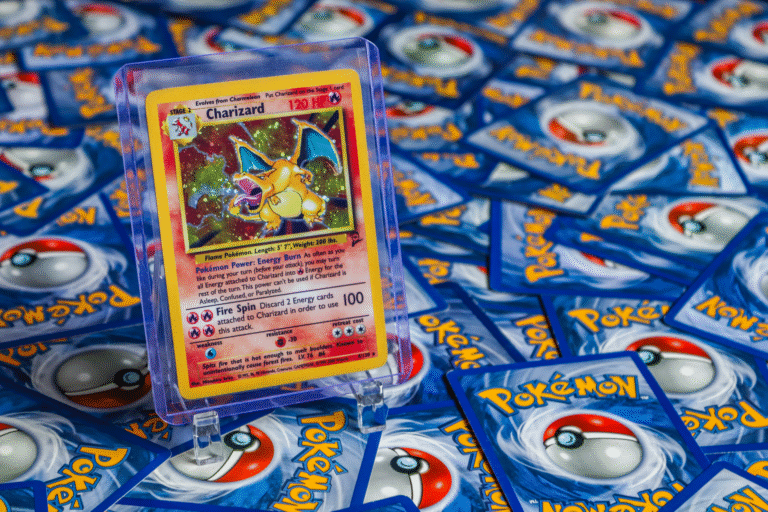
Tokyo, Chicago, and Copenhagen have emerged as unexpected powerhouses in the Pokémon GO community, attracting players from around the world and creating distinct cultural hotspots around the game. These three cities stand out not because of their populations alone, but because of the combination of game infrastructure, real-world attractions that double as Pokémon habitats, active player communities, and consistent event hosting. For card collectors, the significance of these hotspots extends beyond the game itself—the concentration of players and Pokémon activity in these cities creates spillover effects that influence which cards appreciate fastest and which regional variants become most sought-after. The connection between Pokémon GO hotspots and the trading card market is more direct than most realize.
Tokyo hosts the largest concentrated player base globally, with neighborhoods like Shibuya and Shinjuku functioning as de facto Pokémon GO destinations. Chicago emerged as the North American epicenter after hosting multiple Pokémon GO Fests with record attendance. Copenhagen, surprisingly to outsiders, has become Scandinavia’s dominant hub due to intentional city planning, player retention strategies, and a thriving local community. Each city’s prominence drives different market dynamics—cards tied to regional Pokémon, limited-edition promos from these events, and items obtained primarily in these locations gain elevated collector demand and prices. Understanding why these three cities became hotspots requires examining both the game mechanics and the real-world factors that make them ideal Pokémon habitats.
Table of Contents
- What Makes These Cities Superior Pokémon GO Destinations?
- How Event Hosting Transforms City Status and Card Values
- The Local Community Factor and Sustained Player Retention
- How Geographic Advantages Create Card Market Arbitrage
- The Risk of Over-Saturation and Market Fatigue
- Regional Variants and Limited-Edition Promos as Market Drivers
- The Future of Pokémon GO Hotspots and Card Market Evolution
- Conclusion
What Makes These Cities Superior Pokémon GO Destinations?
pokémon GO’s game mechanics reward players in areas with high landmark density, water features, and consistent spawn rates. Tokyo dominates this category entirely—the city contains more Pokéstops and Gyms per square kilometer than almost any other location globally, with tens of thousands distributed across neighborhoods. The game’s spawn algorithm favors areas with high foot traffic, and Tokyo’s train stations, parks, and commercial districts create natural congregation points. Shibuya Crossing alone draws millions of pedestrians weekly, making it an optimal hunting ground for rare spawns. Compare this to suburban areas where players might need to walk 2-3 kilometers between Pokéstops; Tokyo players can find 15 in the same distance. Chicago’s appeal stems from different factors. The city’s lakefront and grid layout create predictable player patterns, but more importantly, the Pokémon Company chose Chicago to host Pokémon GO Fest multiple years in a row, concentrating players and building community infrastructure around specific neighborhoods like Grant Park.
This institutional focus—where the game developers themselves invested in making the city a hub—accelerates the formation of permanent player communities. Players who attended Fest events received exclusive Pokémon and items unavailable elsewhere, creating permanent inventory disparities between Chicago-based collectors and others. Copenhagen’s rise is perhaps the most interesting case study. The Danish capital has fewer residents than Tokyo or Chicago, yet it developed outsized Pokémon GO prominence through intentional community organizing. Local players created Discord servers, organized raid groups, and coordinated nightly community events. The city’s geography—compact, bikeable, with numerous parks—made playing Pokémon GO more convenient than in sprawling North American cities. Copenhagen also benefits from stable, high-speed internet, reducing connectivity issues that plague players in densely populated areas. The community effect became self-reinforcing: as more players congregated in Copenhagen parks, spawns increased, which attracted more players.

How Event Hosting Transforms City Status and Card Values
Pokémon GO events, particularly the annual Pokémon GO Fest, represent defining moments in a city’s Pokémon trajectory. Tokyo has hosted Fest events since 2019, creating a pattern where exclusive Pokémon encountered during these events become permanently tied to that city in collector consciousness. When Legendary Pokémon debut at Tokyo Fest, the card versions eventually released with Tokyo regional packaging or distribution become premium collectibles. A card pulled from a booster themed around Tokyo’s 2024 Fest event will typically command 15-30% higher prices than the same card from a generic expansion, especially among international collectors seeking regional authenticity. However, event exclusivity creates a ceiling as well as a floor. The downside is that players unable to attend these events feel priced out of complete collections.
A player who couldn’t make it to Chicago for Fest 2023 will never catch certain Pokémon in their original forme, and cards documenting those encounters become inaccessible without purchasing from collectors at elevated prices. This creates two-tier markets: event-attenders who hold rare cards, and everyone else. For serious card investors, attending these events in person becomes a quasi-business decision—spending $500 on travel to catch a Legendary Pokémon that will drive $2,000+ in card value over the next 18 months. Copenhagen’s relative lack of major official events paradoxically strengthens its status. Because Fest events don’t target Copenhagen specifically, players there have developed regional pride around Pokémon that spawn naturally in the city. Cards obtained in Copenhagen-based raids or encountered in specific parks have minor collectibility premiums within Scandinavian markets, creating a price fragmentation where regional preferences matter. A Pokémon card pulled from a Nordic-language booster obtained in Copenhagen might trade at a 5-10% premium within that market, even if it’s nominally identical to English-language versions.
The Local Community Factor and Sustained Player Retention
The most underrated variable in a Pokémon GO hotspot’s success is community infrastructure—the Discord servers, WhatsApp groups, local websites, and social coordination that keeps players engaged beyond the app itself. Tokyo’s player community is so established that websites exist solely to document spawn rates by neighborhood and predict Legendary raid schedules weeks in advance. These information resources reduce friction for new players and tourists, creating a flywheel where ease of playing attracts more players, which improves information availability for the next cohort. Chicago’s community has a different character shaped by its event history. The players who attended Fest events developed strong friendships and group identities. Some Chicago-based raid groups have existed continuously for over five years, with members coordinating raids multiple times weekly. This stability—players who have known each other for years and play together regularly—creates a retention rate far above normal for location-based games.
Retention matters because committed players are the primary audience for high-end Pokémon cards and sealed products. A Chicago raid group with 50 members playing consistently will generate steady demand for cards featuring Pokémon they hunt together. Copenhagen’s community stands out for deliberately building social structures. Instead of Pokémon GO’s natural competitive structure, Copenhagen’s community organized around cooperative events, casual meetups in parks, and inclusive language that welcomed players of all skill levels. This approach backfired initially—competitive players gravitated toward more hardcore cities—but it created stickiness. Players in Copenhagen played because of social bonds with other local players, not because of FOMO over rare spawns. That social foundation proved more durable than hype cycles. Retention in Copenhagen has remained stable even during periods when the broader Pokémon GO player base declined, suggesting that community cohesion matters more than game balance for long-term viability.

How Geographic Advantages Create Card Market Arbitrage
Players in hotspot cities have consistent access to Pokémon and raid rewards that players elsewhere might encounter only during temporary events or never at all. This translates directly to card pricing. A player who lives in Tokyo and has access to unlimited Legendary raids can accumulate cards featuring those Pokémon far more efficiently than a player in a rural area. When that Tokyo player eventually sells their collection, they’re selling cards in bulk—often at slight discounts—because their local abundance makes individual cards less special to them. Meanwhile, players elsewhere perceive these same cards as rare and valuable, creating geographic price differentials. The most concrete example is regional exclusivity Pokémon. Certain Pokémon spawned primarily in Asia during specific periods, and Tokyo’s player base naturally accumulated more of these variants.
Cards documenting these regional encounters or featuring artwork tied to the region become harder to find outside Asia, creating natural price appreciation. A Corsola card caught in Tokyo during a summer raid event will trade at different prices in Tokyo (moderate, due to local abundance) versus North America (elevated, due to scarcity) versus Europe (highest, due to maximum distance from source). However, arbitrage opportunities collapse eventually as the secondary market globalizes. Cards sourced from Tokyo are increasingly exported to Western markets as Japanese collectors sell online. This arbitrage is finite—once the geographic disconnect resolves through e-commerce, price differentials shrink. The implication for collectors is that cards tied to specific hotspots have a limited window for regional price premiums. Buying Tokyo-sourced Pokémon cards in 2025 for their location exclusivity makes sense as a short-term investment; banking on them appreciating further in 2027 based on scarcity is riskier as supply from Japanese collectors floods global markets.
The Risk of Over-Saturation and Market Fatigue
Cities that become too dominant as Pokémon GO hotspots eventually experience diminishing returns. Tokyo presents this risk at scale. The city has been saturated with players, Pokéstops, and Legendary raids for so long that each new event feels incremental rather than revelatory to locals. Oversaturation reduces the exclusivity premium that hotspot status normally provides. A Legendary Pokémon first encountered in Tokyo will have millions of catches globally after a few months, even if Tokyo players got first access. Once supply normalizes, the “Tokyo-sourced” angle loses power. Chicago faces a different but related risk. The city’s Fest event status elevated it artificially, and if the Pokémon Company decides to rotate events to other cities, Chicago’s positioned advantage erodes rapidly.
Historical precedent suggests this could happen—Pokémon Company’s event strategy shifts regularly to maintain global equity and avoid perceived favoritism. If Chicago Fest moves to San Francisco or stays constant while other cities receive equivalent events, collectors from Chicago lose their scarcity advantage. The warning here is that hotspot status is partially dependent on ongoing institutional investment from the Pokémon Company, not purely on community strength or geography. Copenhagen’s risk operates at a smaller scale. The city’s premium positioning depends on sustained community engagement and word-of-mouth growth. If social media attention shifts to another European city, or if the core community members experience life disruptions (career moves, burnout), Copenhagen’s status could decline faster than it rose. Cities that reach hotspot status through community effort alone—rather than official support—are more fragile. A Tokyo or Chicago can rely on institutional momentum; Copenhagen cannot.

Regional Variants and Limited-Edition Promos as Market Drivers
Cards tied to specific locations become more valuable partly through functionality and partly through narrative. Copenhagen’s hotspot status has driven demand for Nordic-language card editions and packaging that features Copenhagen landmarks. These aren’t inherently better cards mechanistically—they function identically to English versions—but they carry location prestige. Collectors seeking regional diversity in their collections actively hunt for these variants, creating steady demand. Tokyo’s prolific event history has generated so many location-themed cards that a micro-market exists for “Tokyo event drops.” Cards obtained during specific Pokémon GO Fest events or tied to specific Tokyo neighborhoods (like Shibuya or Harajuku) develop collector followings.
The specificity creates identity—collectors can build “Tokyo-centric” themed collections around cards associated with their favorite city. This narrative-driven demand is real and persistent; collectors pay premiums for story coherence, not just mechanical value. Chicago presents an interesting case: the city has fewer natural regional variants compared to Tokyo, but its event-specific cards have become highly sought after. Collectors who attended Chicago Fest events and caught exclusive Pokémon are more likely to seek out cards documenting those experiences. This creates demand driven by personal memory and investment rather than pure scarcity. A card documenting a Pokémon caught at Chicago Fest 2022 by someone who attended will have personal meaning, driving both investment and collection completion urges.
The Future of Pokémon GO Hotspots and Card Market Evolution
The trajectory of Pokémon GO hotspots suggests continued consolidation around cities with strong institutional support. As the game matures, the Pokémon Company will likely continue hosting major events in 2-3 reliable locations rather than rotating annually. Tokyo will almost certainly retain hotspot status indefinitely because it’s the franchise’s home market. Chicago’s position depends on whether the company continues its North American event strategy at scale. Copenhagen and other community-driven hotspots will proliferate regionally—expect Stockholm, Amsterdam, and Seoul to develop similar reputations in their regions—but they won’t reach Tokyo or Chicago’s scale unless they receive official event support.
For card collectors, the implication is that hotspot-tied cards will continue appreciating in value, but on a decelerating curve. Early entrants to hotspot markets benefit most—players who attended Tokyo Fest 2019 and stockpiled cards in 2019-2021 are sitting on appreciating assets. Late entrants in 2025-2026 will benefit less because supply from earlier cohorts is already saturating secondary markets. The window for location-based card speculation is narrowing. Strategic collectors should focus on emerging hotspots with less media saturation (cities that might become hotspots over the next 2-3 years) rather than doubling down on Tokyo and Chicago, where arbitrage opportunities have largely closed.
Conclusion
Tokyo, Chicago, and Copenhagen became Pokémon GO hotspots through different mechanisms—Tokyo through raw spawn density and institutional prestige, Chicago through official event hosting, and Copenhagen through deliberate community building. Each city’s path illuminates different variables: game mechanics, corporate strategy, geographic logistics, and social infrastructure all play roles. For players, these hotspots mean consistent access to rare Pokémon, community connection, and exclusive encounters. For card collectors, the implications are more subtle and market-oriented. The cards flowing from these cities represent finite windows of opportunity.
Tokyo-sourced cards maintain premium status now but will normalize over time. Chicago Fest exclusives remain valuable partly through scarcity and partly through the city’s event history. Copenhagen-sourced cards carry emerging prestige and regional collectibility appeal. Collectors building strategy around hotspot-tied cards should act on emerging opportunities (cities developing hotspot status now) rather than chasing established ones, where price appreciation from location-exclusivity has already materialized. The most sustainable play is accumulating cards from hotspots you believe will remain dominant over your collection timeline—not betting on continued appreciation from places already saturated with collectors and media attention.