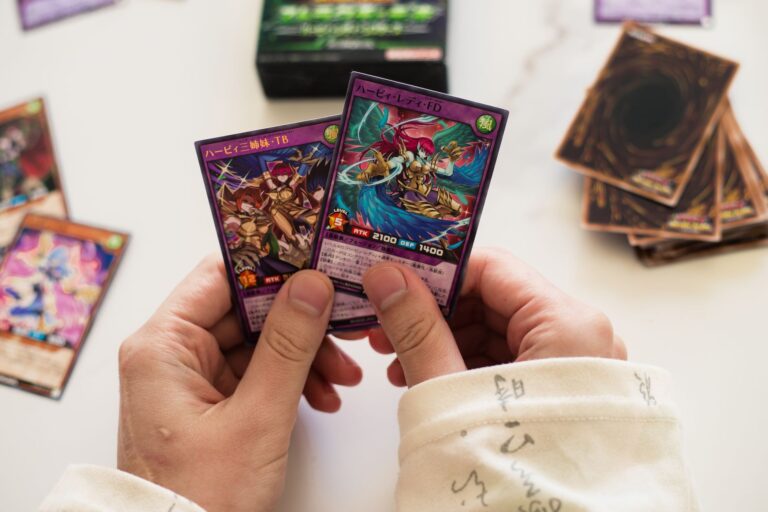
The Base Set Pokemon card market may indeed still be early compared to traditional collectibles, despite strong recent performance. While a 1999 Base Set 1st Edition Charizard graded PSA 10 commanded $550,000 at auction in late 2025, the entire Pokemon Trading Card Game ecosystem sits at approximately $2.7 billion annually as of March 2026. Compare this to the global collectibles market, valued at $320.30 billion in 2025 and projected to reach $535.50 billion by 2033. This scale difference suggests Base Set cards occupy a relatively small but fast-growing niche within a vastly larger collectibles landscape dominated by traditional art, antiques, and vintage goods that command 32.9% and 39.9% of market share respectively.
What signals early-stage development is not weakness, but growth trajectory. The trading card games market as a whole is projected to expand from $52.1 billion in 2026 to $90.2 billion by 2034, representing a compound annual growth rate of 7.1%. Base Set specifically has shown 15-25% annual appreciation in high-grade specimens, with some vintage cards like PSA 9 Charizards posting 37.5% annual returns. These figures outpace the broader collectibles market’s projected 6.9% CAGR, suggesting that Pokemon’s moment is still gathering momentum rather than reaching saturation.
Table of Contents
- How Does Pokemon’s Market Share Compare to Established Collectible Categories?
- What Growth Trends Indicate Market Expansion Rather Than Maturity?
- How Does Institutional Capital Shape Base Set’s Growth Potential?
- What Are the Practical Advantages of Entering Base Set Now Versus Later?
- Where Are the Key Limitations and Risks in Base Set Valuation?
- How Is the Pokemon 30th Anniversary Creating a Market Catalyst?
- What Does the Five-Year Outlook Tell Us About Base Set’s Early Position?
- Conclusion
How Does Pokemon’s Market Share Compare to Established Collectible Categories?
Pokemon holds 12% of the trading card games market as of 2025, which itself represents a specialized corner of the broader collectibles world. By contrast, art and antiques—categories with centuries of institutional backing, museum prominence, and wealth-preservation history—control nearly one-third of the global collectibles market. This disparity reveals opportunity rather than weakness. Traditional collectibles benefited from decades of infrastructure development: auction houses, insurance protocols, professional grading systems, and cultural legitimacy.
Pokemon’s professional grading system through PSA and BGS is less than two decades old in its modern form, and institutional capital only recently began flowing into vintage cards as investment vehicles. The institutional adoption curve mirrors that of sports cards in the 1990s, before memorabilia became a fixture in mainstream portfolios. A PSA 10 1st Edition base Set Blastoise sold for approximately $88,000 in July 2025, commanding prices that rival sports cards while remaining accessible to a broader audience than elite art. The difference is that Pokemon reached this valuation milestone within a much shorter timeframe and with far less established infrastructure. As AI-driven valuation platforms bring tens of thousands of new participants to previously specialist collectibles markets, Base Set stands positioned to capture disproportionate flows.

What Growth Trends Indicate Market Expansion Rather Than Maturity?
January 2026 marked a turning point: average Pokemon card prices rose 46% year-over-year, signaling accelerating mainstream interest beyond traditional collectors. February 2026 search data showed “Pokemon TCG Base Set” searches reaching peak intensity, reflecting both sustained organic demand and algorithmic amplification as the 30th anniversary of the Pokemon franchise approaches. These near-real-time metrics suggest the market is in an adoption phase rather than consolidation. The planned product launches surrounding Pokemon’s 30th anniversary in 2026 are expected to maintain strong retail performance, creating both downside pressure on common cards and upside pressure on scarcity premiums for graded vintage material. However, a significant caveat applies: the Pokemon card market remains highly dependent on speculative demand and nostalgia cycles.
The 46% price spike in early 2026 came after years of volatile sentiment. Ungraded or low-grade Base Set commons have minimal intrinsic value outside the collectibles context, unlike art or antiques that hold utility or cultural significance. Investors should recognize that Base Set’s early-stage position does not guarantee future appreciation. The market could easily consolidate around fewer iconic cards—primarily Charizard and a handful of graded first editions—while flooding the market with mid-tier product that generates minimal returns. This concentration risk distinguishes Pokemon from diversified collectible categories offering wider pools of appreciation potential.
How Does Institutional Capital Shape Base Set’s Growth Potential?
The modern trading card market is increasingly supported by institutional capital, global liquidity, and data transparency tracked as rigorously as financial assets. Heritage Auctions, which has long handled fine art and rare coins, now operates dedicated Pokemon card auctions. This parallel infrastructure mirrors how sports cards transitioned from hobby to asset class over the past fifteen years. Base Set benefits from this established framework without having built it itself—a significant advantage over traditional collectibles that preceded professional grading and transparent pricing.
The entrance of AI-driven valuation platforms represents the next inflection point. These systems are expected to democratize access to card pricing data and investment metrics, potentially bringing tens of thousands of new market participants into trading card speculation. For Base Set, this could accelerate price discovery on premium graded cards while simultaneously making it easier for retail participants to identify undervalued or overvalued inventory. The tradeoff is that increased transparency may also compress spreads and reduce arbitrage opportunities that currently benefit early-stage investors.

What Are the Practical Advantages of Entering Base Set Now Versus Later?
Investors entering the Base Set market today have the advantage of lower absolute entry prices compared to where the market likely heads if mainstream adoption accelerates. A high-grade Base Set 1st Edition PSA 10 Blastoise at $88,000 is expensive in absolute terms but inexpensive relative to comparable sports memorabilia or fine art. Entry points for mid-tier cards—graded PSA 7 and PSA 8 copies of desirable cards—remain accessible to retail collectors with portfolios under $10,000. This contrasts sharply with established collectible categories where entry barriers have consolidated into dealer networks and auction houses. The timing advantage also extends to documentation.
The Pokemon Base Set market benefits from over two decades of production records, grading data, and sales history. Unlike emerging collectible categories where valuation models are speculative, Base Set can be analyzed through comparable transactions with measurable frequency. However, prospective investors should recognize that Base Set’s accessibility compared to fine art also means greater retail participation and sentiment-driven volatility. The market is less insulated from retail boom-bust cycles than traditional collectibles benefiting from wealth-preservation demand among institutional holders. This democratization cuts both ways: faster growth potential alongside higher downside risk during market corrections.
Where Are the Key Limitations and Risks in Base Set Valuation?
The Base Set market remains dependent on a handful of anchor cards for price discovery. The 1999 Base Set 1st Edition PSA 10 Charizard reaching $550,000 in late 2025 created a valuation ceiling that influences the entire category. However, only a few dozen copies exist in this condition, making the pricing highly subject to wealthy collector sentiment and auction dynamics. A single high-profile sale can shift market expectations for entire grade ranges, whereas traditional collectibles like art or antiques benefit from broader liquidity pools and more gradual price discovery. This concentration risk means Base Set early movers may face significant volatility as the market matures. Grading standards also present a lurking risk.
Professional grading services have continuously refined their criteria over decades, and PSA’s standards for older cards have shifted multiple times. A card graded PSA 9 in 2010 might be regraded PSA 8 under modern scrutiny. Collectors who purchased heavily in earlier grading eras may discover their investments compromised by technical regrading. Additionally, the permanence of plastic slabs is unproven over multi-decade timescales. While economic theory suggests vintage baseball cards prove durability, Base Set has not yet survived fifty years in slabs. The infrastructure supporting traditional collectibles includes centuries of precedent; Pokemon card preservation is still writing its first chapters.

How Is the Pokemon 30th Anniversary Creating a Market Catalyst?
Pokemon’s 30th anniversary in 2026 represents a significant moment for Base Set valuation. The franchise is planned to launch anniversary-themed products, marketing campaigns, and media initiatives that will inject fresh consumer attention into the category. Historical precedent from other nostalgic properties suggests anniversary years drive upticks in both speculative interest and mainstream media coverage. For Base Set specifically, increased retail demand for new products typically reduces speculative pressure on vintage cards as new capital enters the ecosystem.
This shifting composition can create micro-opportunities for disciplined buyers and sellers. The risk is that anniversary momentum fades quickly, as it has with other Pokemon resurgence cycles. The Pokemon TCG experienced significant demand spikes in 2020-2021 before consolidating. Investors who chase anniversary-driven rallies often find themselves holding inventory as momentum shifts. Smart Base Set investors should distinguish between sustainable adoption trends (30th anniversary creating demographic crossover into older collectibles) and temporary spikes (retail mania around anniversary product releases).
What Does the Five-Year Outlook Tell Us About Base Set’s Early Position?
The trading card games market’s projected growth from $52.1 billion to $90.2 billion by 2034 creates a structural tailwind for all premium Pokemon inventory, but especially Base Set. If market growth proceeds at the projected 7.1% CAGR, and Pokemon maintains its current 12% market share, the absolute dollar pool for Pokemon TCG could exceed $10 billion annually by 2034—nearly four times current levels. Within that expanding ecosystem, graded vintage Base Set would likely capture disproportionate share as new entrants learn that investing in modern releases generates minimal returns compared to scarcity-driven appreciation in first editions.
The earlier maturation timeline for Pokemon—reaching $550,000 auction prices within three decades versus the centuries required for traditional art and antiques—suggests the category’s entire investment thesis may compress into 10-15 years rather than generations. This acceleration creates urgency for early participants while simultaneously suggesting Base Set’s current position is genuinely early. The market has not yet entered stabilization phase where returns normalize to collectibles market averages. Whether this growth window extends for another 5 years or 20 years remains the critical unknown variable.
Conclusion
The Base Set Pokemon market remains early compared to traditional collectibles measured by absolute market size, institutional capital penetration, and cultural legitimacy. A $320 billion global collectibles market with Pokemon representing approximately 0.8% of that total leaves substantial room for category expansion. Growth rates of 15-25% annually for premium Base Set cards significantly exceed the 6.9% projected CAGR for the broader collectibles market, a divergence that typically indicates an immature asset class still in adoption phase. The infrastructure supporting Base Set investment—professional grading, transparent auctions, AI-driven valuation—is mature enough to support sophisticated participation but young enough that significant infrastructure gaps remain compared to centuries-old collectible categories.
Investors considering Base Set should view the current moment through the lens of market timing rather than fundamental value certainty. The category offers genuine growth potential driven by demographic nostalgia, institutional capital flows, and structural market expansion. However, that potential comes coupled with concentration risk, volatility dependency, and unproven multi-decade preservation outcomes. Early movers benefit from lower absolute prices and documented supply scarcity, but must accept the volatility that characterizes markets transitioning from hobby to asset class. The next 3-5 years will likely prove decisive in determining whether Base Set follows the sports card trajectory toward mainstream acceptance or consolidates into a niche enthusiast category.