
Rare Pokémon cards have outperformed the S&P 500 by a staggering margin over the past two decades, and the numbers are not even close. According to Peter Earle, Director of Economics and Economic Freedom at the American Institute for Economic Research, Pokémon cards as a group are up 3,800% since 2004. Over that same stretch, the S&P 500 returned about 483%. That gap widened dramatically in February 2026 when Logan Paul’s PSA 10 Pikachu Illustrator card sold at Goldin Auctions for $16,492,000, setting a new Guinness World Record for the most expensive trading card ever sold at auction and delivering Paul a roughly 213% return on his original $5.275 million purchase.
But headline-grabbing auction results only tell part of the story. Card Ladder data shows Pokémon cards up 3,261% over 20 years, the largest long-term increase among all trading card categories, outpacing even Meta Platforms’ roughly 1,800% return since its 2012 IPO. In 2025 alone, the average Pokémon card rose nearly 46% year-over-year, dwarfing the S&P 500’s typical annual return of around 12%. These are real, tracked numbers from established indices, not cherry-picked outliers. This article breaks down the hard performance data behind Pokémon cards versus traditional equities, explores what is driving demand, examines which segments of the market are actually delivering these returns, and lays out the very real risks that most breathless coverage ignores.
Table of Contents
- How Are Rare Pokémon Cards Actually Outperforming the Stock Market?
- What Is Driving Pokémon Card Prices to Record Highs?
- The 2026 Anniversary Effect and Sealed Product Appreciation
- Vintage Cards vs. Modern Cards as Investments
- The Risks That Could Deflate the Pokémon Card Market
- How Grading and Authentication Shape Returns
- Where the Pokémon Card Market Goes From Here
- Conclusion
- Frequently Asked Questions
How Are Rare Pokémon Cards Actually Outperforming the Stock Market?
The comparison between pokémon cards and Wall Street is no longer a novelty argument made by hobbyists. The PWCC Top 500 Index, which tracks a basket of high-end Pokémon cards, posted a 10-year return on investment that was 94% higher than the S&P 500 over the same period. Vintage card compound annual growth rates range from 20% to 40% annually, numbers that would make most hedge fund managers uncomfortable to promise. For context, Warren Buffett’s Berkshire Hathaway has averaged roughly 20% annually over its lifetime, and that is considered one of the greatest investing track records in history. The key distinction here is between vintage cards and the broader market.
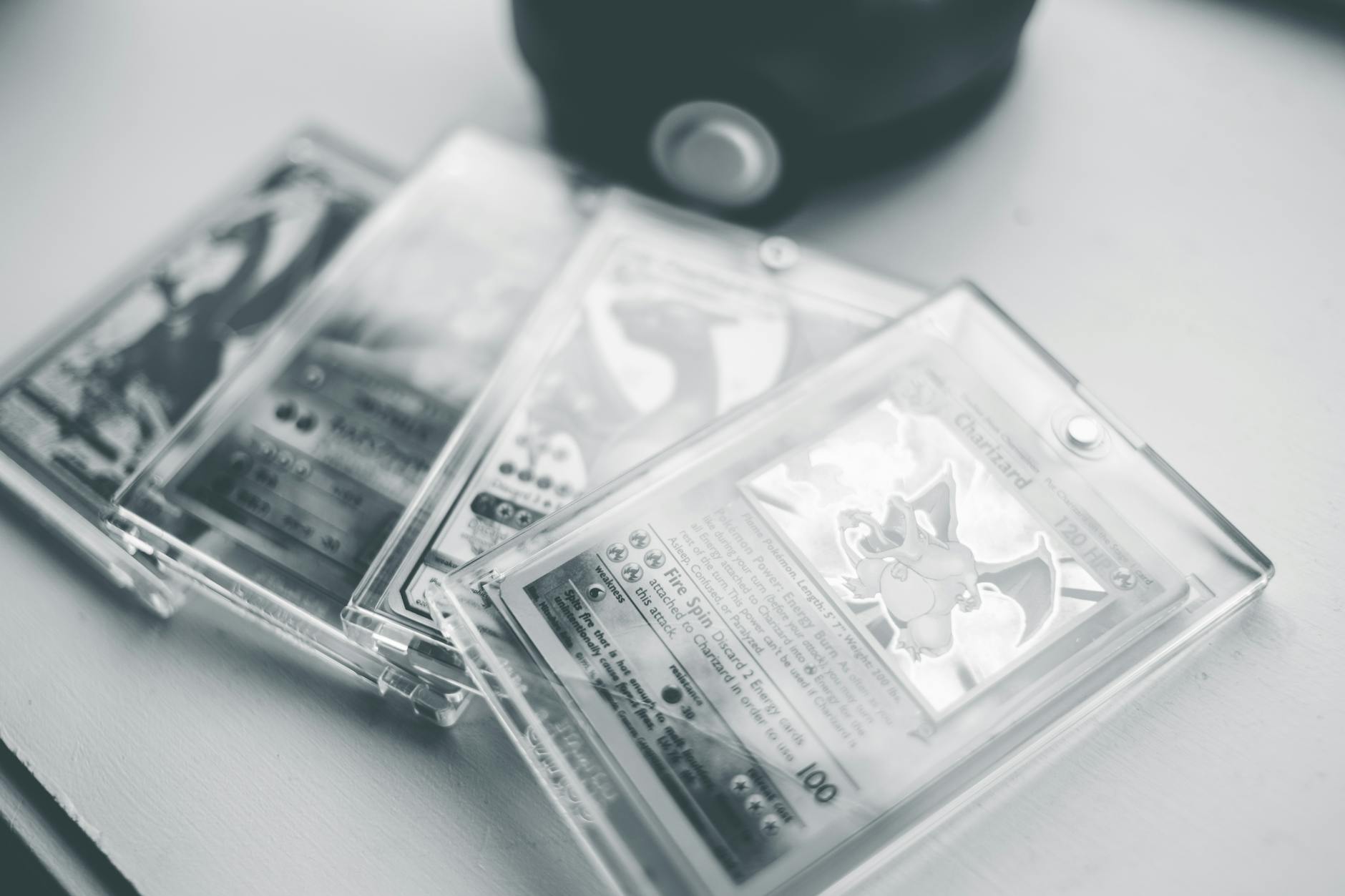
A 1st Edition Base Set Charizard in PSA 10 Shadowless condition sold in February 2025 for $45,322. That card could have been pulled from a $4 booster pack in 1999. The Pikachu Illustrator, released in 1998 as a Japanese contest prize with only 39 known copies in existence and just one grading PSA 10, represents the extreme end of scarcity-driven appreciation. These are not typical returns, but they illustrate the ceiling for cards that combine rarity, condition, and cultural significance. However, it is critical to separate the performance of rare, graded vintage singles from the broader Pokémon card market. Modern cards printed in the millions do not follow the same trajectory, and conflating the two is one of the most common mistakes new entrants to this market make.

What Is Driving Pokémon Card Prices to Record Highs?
The single largest force behind these prices is nostalgia economics. Millennials who grew up tearing open base Set packs in the late 1990s are now in their 30s and 40s, hitting their peak earning years. They have disposable income and an emotional connection to these cards that no stock ticker can replicate. This is not speculative psychology. It is a measurable demographic wave that auction houses and market analysts have tracked for years, and it maps closely onto the price acceleration that began around 2020. Institutional legitimacy has accelerated the trend.
Major auction houses including Heritage Auctions, Sotheby’s, and Goldin now regularly feature Pokémon cards alongside fine art and sports memorabilia, attracting serious investors who treat these items as alternative assets. The overall trading card market was valued at $21.4 billion in 2024 and is projected to reach $58.2 billion by 2034, reflecting a compound annual growth rate of roughly 13%. Pokémon TCG global sales alone surpassed $1.8 billion in 2024. However, if you are buying cards purely because of these macro trends without understanding grading, print runs, and edition specifics, you are likely to overpay. The institutional money flowing into this space is sophisticated and targeted. It gravitates toward verified scarcity, not general enthusiasm. A rising tide lifts many boats, but this particular tide has been far more generous to vintage than to modern.
The 2026 Anniversary Effect and Sealed Product Appreciation
Pokémon’s 30th anniversary in 2026 is fueling additional interest and price speculation across vintage and sealed products. Anniversary years historically generate media coverage, new collector interest, and upward price pressure on both the oldest cards and sealed product from popular sets. This cycle has played out before, and market participants are positioning for it now. Sealed products have quietly become one of the strongest performing segments in the Pokémon investment landscape. Booster boxes and elite trainer boxes from out-of-print sets have shown compound annual growth rates of 15% to 35%. A concrete example: Pokémon 151 Elite Trainer Boxes rose from a retail price of $50 to roughly $200 within a single year, a 300% increase.
The logic is straightforward. Sealed product is a finite, shrinking supply, since every box opened for cards is one fewer box available for collectors. This creates a natural deflationary pressure on supply that most financial assets do not share. That said, sealed product investing requires storage, insurance considerations, and a willingness to hold through periods where liquidity dries up entirely. You cannot sell a booster box as quickly as you can sell a share of Apple stock. The spread between buy and sell prices can be substantial, especially for less sought-after sets.

Vintage Cards vs. Modern Cards as Investments
The distinction between vintage and modern Pokémon cards as investment vehicles is not a matter of preference. It is a fundamentally different risk and return profile. Vintage cards from the Wizards of the Coast era, particularly 1st Edition Base Set, Jungle, Fossil, and Team Rocket, were printed in far smaller quantities than anything produced today. The Pokémon Company printed 10.2 billion cards in 2025 alone, down from 11.9 billion in 2024. Compare that to the relatively modest print runs of the late 1990s, and you begin to understand why a PSA 10 Base Set Charizard appreciates while a modern Illustration Rare from a set printed into the ground often does not. The PWCC Top 500 Index and Card Ladder data both skew heavily toward vintage and high-grade cards. When you hear that Pokémon cards returned 3,800% since 2004, that figure is driven primarily by the top end of the market.
Modern cards can and do appreciate, particularly chase cards from limited sets, but the runway for growth is constrained by supply. A card that exists in 500,000 copies will never behave like one that exists in 500. The tradeoff is accessibility. Vintage cards in high grades require significant capital to acquire. A PSA 10 1st Edition Charizard costs tens of thousands of dollars. Modern cards offer a lower entry point but come with higher supply risk and a less proven track record. Investors need to be honest about which game they are playing.
The Risks That Could Deflate the Pokémon Card Market
The numbers above are real, but they come with serious caveats that most bullish coverage downplays. Over 80% of recent sales in the Pokémon card market are driven by flippers chasing quick profits rather than collectors building long-term holdings. That ratio creates fragility. When sentiment shifts, flippers exit simultaneously, and prices can drop fast. A correction is already underway in parts of the market. Early 2025 saw a 10% to 15% pullback in Sword and Shield-era cards, with some Illustration Rares dropping 20%. Analysts have predicted a 20% to 30% correction in modern cards by early 2026.
The expert consensus, however, frames this as a healthy correction rather than a collapse. Overproduction of modern sets created supply pressure, and the market is repricing accordingly. Vintage cards and graded singles have remained far more resilient through this turbulence. There is also the liquidity problem. Unlike stocks, which can be sold in seconds at a known market price, Pokémon cards require finding a buyer, negotiating terms, and often paying significant platform fees or auction house premiums. The 24% buyer’s premium on Logan Paul’s Pikachu Illustrator sale added over $3 million to the final price. Transaction costs in this market are real and can meaningfully erode returns, especially on lower-value cards.
How Grading and Authentication Shape Returns
Grading is the single most important variable in determining a card’s investment potential. The difference between a PSA 9 and a PSA 10 on a vintage card can be a multiple of 5x to 10x or more in price. The Pikachu Illustrator card that sold for $16.49 million is the only known copy graded PSA 10 out of 39 known to exist. If it had graded a 9, the sale price would have been dramatically lower.
For investors, this means that raw, ungraded cards carry substantial uncertainty, and the grading process itself introduces both cost and delay. Professional grading from PSA, BGS, or CGC has become table stakes for any card positioned as an investment. But grading backlogs, subjective evaluation criteria, and the potential for grade inflation over time all represent risks. A card graded a 10 today might not receive the same grade under future, potentially stricter standards. Understanding grading is not optional for anyone treating this market seriously.
Where the Pokémon Card Market Goes From Here
The structural forces driving Pokémon card appreciation are not disappearing. The franchise generates new fans every generation, the 30th anniversary in 2026 is bringing renewed attention, and the projected growth of the broader trading card market to $58.2 billion by 2034 suggests sustained institutional and retail interest. Vintage supply will only continue to shrink as cards are lost, damaged, or locked into long-term collections.
The more important question is whether the market can mature without the boom-and-bust cycles that characterize most alternative asset classes. The current correction in modern cards may actually be constructive if it flushes out short-term speculators and leaves a more stable base of collectors and long-term investors. For those with patience, knowledge of the market’s nuances, and the discipline to buy quality over hype, rare Pokémon cards have demonstrated a track record that most traditional asset classes simply cannot match.
Conclusion
The data is clear. Rare Pokémon cards have delivered returns that dwarf the S&P 500 over 10-year and 20-year horizons, with vintage graded cards leading the charge. From the 3,800% appreciation since 2004 to the record-setting $16.49 million Pikachu Illustrator sale, this is no longer a niche hobby market. It is an alternative asset class with real price discovery, institutional participation, and a demographic tailwind that still has years to run. But this market rewards knowledge and punishes ignorance.
Modern overproduced cards are correcting. Flippers dominate short-term volume. Liquidity is thin compared to equities. Transaction costs are high. The cards that beat Wall Street are the rare ones, the graded ones, the ones with genuine scarcity and cultural weight. If you are going to treat Pokémon cards as investments, treat the research with the same seriousness you would bring to any other financial decision.
Frequently Asked Questions
Are all Pokémon cards good investments?
No. The vast majority of Pokémon cards are not investment-grade. The returns that outpace the stock market are concentrated in vintage cards, particularly those from the original Base Set, Jungle, and Fossil eras in high grades (PSA 9 or 10). Modern cards printed in the billions face significant supply pressure and are currently experiencing a 10-20% correction.
How much has the most expensive Pokémon card ever sold for?
The record was set on February 16, 2026, when Logan Paul’s PSA 10 Pikachu Illustrator card sold at Goldin Auctions for $16,492,000 (including the 24% buyer’s premium). It is the only known PSA 10 copy out of just 39 Pikachu Illustrator cards known to exist. This sale set a new Guinness World Record for the most expensive trading card ever sold at auction.
Is the Pokémon card market in a bubble?
The market is showing signs of correction in the modern card segment, with analysts predicting a 20-30% pullback in modern cards. However, experts characterize this as a healthy correction rather than a bubble collapse. Vintage cards and high-grade singles have remained resilient. Over 80% of recent sales are driven by flippers, which does create fragility, but the underlying demand from millennial collectors in their peak earning years provides structural support.
How do Pokémon card returns compare to the S&P 500?
Pokémon cards as a group are up approximately 3,800% since 2004, compared to roughly 483% for the S&P 500 over the same period. In 2025, the average Pokémon card rose nearly 46% year-over-year versus the S&P 500’s typical 12% annual return. The PWCC Top 500 Index posted a 10-year ROI that was 94% higher than the S&P 500.
Are sealed Pokémon products a good investment?
Sealed booster boxes and elite trainer boxes from out-of-print sets have shown compound annual growth rates of 15-35%. For example, Pokémon 151 ETBs rose from $50 to $200 within a year. However, sealed products require proper storage, are less liquid than stocks, and not all sets appreciate equally. Sets with strong nostalgic appeal and limited print runs tend to perform best.
What role does grading play in Pokémon card investing?
Grading is arguably the most important factor in a card’s investment potential. The difference between a PSA 9 and PSA 10 can represent a 5x to 10x price difference on vintage cards. Professional grading from PSA, BGS, or CGC provides authentication and condition verification that the market demands for high-value transactions. Ungraded cards carry substantial pricing uncertainty.
You Might Also Like
- Are Pokémon Cards the New Status Symbol for Young Investors
- Why Pokémon Cards Have Increased 3,200% Over Two Decades
- Gen Z Investors Turn to Pokémon Cards as Alternative Assets