
Pokémon cards have outperformed TikTok accounts as investments by a factor that makes the comparison almost unfair. While the Pokémon Trading Card Game market has grown 3,800% since 2004 and continues appreciating at rates between 15-46% annually depending on card type, TikTok creators struggle to generate meaningful returns through the platform’s monetization programs. A micro-influencer with 50,000 followers on TikTok might earn $50-$150 per sponsored post, while a well-preserved vintage Pokémon card from the same era has likely appreciated thousands of dollars in value. The fundamental difference comes down to tangible assets versus volatile attention metrics.
The distinction becomes even clearer when examining the infrastructure required to succeed on each platform. Building a monetizable TikTok account demands consistent content creation, algorithm awareness, and the ability to maintain relevance in a platform controlled entirely by a foreign company with uncertain regulatory future. Meanwhile, Pokémon cards sit in a safe deposit box or graded slab, gaining value without demanding your time, attention, or algorithm cooperation. A PSA 10 1st Edition Shadowless Charizard sold for $347,328 in 2024—a single card that required no content calendar, no trending sound effects, and no fear of account suspension.
Table of Contents
- How Do Pokémon Cards Generate Returns While TikTok Accounts Generate Minimal Earnings?
- Why Pokémon Cards Offer Stability That Social Media Accounts Cannot Match
- Market Growth Trajectories: Comparing Pokémon Card Appreciation to TikTok Earnings Potential
- Building an Investment Portfolio: Why Cards Require Less Maintenance Than Content Accounts
- Platform Risk and Market Saturation: The Hidden Vulnerabilities in Digital Accounts
- Tangible Assets Versus Intangible Digital Properties
- The Future of Card Investing Versus Platform-Dependent Income
- Conclusion
How Do Pokémon Cards Generate Returns While TikTok Accounts Generate Minimal Earnings?
The Pokémon card market has delivered compound annual growth rates between 30-40% for vintage cards and 15-35% for sealed booster boxes over the past two decades. These returns arrive entirely passively—the card appreciates whether you post about it or not. Compare this to TikTok’s Creator Rewards Program, which pays creators $0.40-$1.00 per 1,000 views on original long-form content. To earn $1,000 per month through TikTok’s direct platform payment, you’d need to generate 1 million to 2.5 million views consistently. Most creators never achieve this threshold.
The average Pokémon card appreciates at nearly 46% annually according to recent analysis, while TikTok platform payments typically yield between $0.02-$6.00 per 1,000 views depending on program tier and content category. Even sponsored content, which represents TikTok’s most lucrative opportunity, caps out at $2,000-$5,000 per post for macro-influencers with half a million followers. A single high-grade Pokémon card from the Mega Evolution series can exceed $3,500 in value today, and that appreciation happens without negotiating with brand partners or risking engagement metrics. The Pokémon TCG market reached $2.2 billion in 2024, up 25% year-over-year, reflecting genuine scarcity and collector demand. TikTok’s creator compensation depends entirely on maintaining algorithmic visibility, something creators cannot control and that can evaporate overnight if the algorithm shifts or the platform’s policies change.

Why Pokémon Cards Offer Stability That Social Media Accounts Cannot Match
Pokémon cards benefit from finite supply and tangible rarity. The Pokémon Company produced 9.7 billion cards in their previous fiscal year—a number worth noting, but still representing a finite product that cannot be infinitely reproduced. Older cards from the early 2000s have genuinely limited supply because many were opened and played with, reducing graded inventory. A TikTok account, by contrast, exists in a digital ecosystem where the platform controls everything from monetization rates to account longevity to eligibility requirements. Consider the volatility: TikTok’s Creator Rewards Program requires maintaining 10,000 followers, achieving 1,000,000 views in the last 30 days, and staying in perfect good standing with community guidelines. A single policy shift, algorithm change, or controversial moment can demolish months of growth and earning potential.
Pokémon cards require none of these conditions. The PSA 10 1st Edition Shadowless Charizard that sold for $347,328 didn’t need to worry about platform policy updates or viral trends. It simply existed as a collectible with historical significance and documented scarcity. The real limitation with Pokémon cards is the barrier to entry—high-value vintage cards require significant capital upfront, and grading services add time and cost. But this limitation protects your investment by creating genuine scarcity. TikTok’s apparent accessibility masks a harsh reality: monetization remains inaccessible to most creators, and even those who achieve it face constant pressure to maintain engagement metrics that determine their income.
Market Growth Trajectories: Comparing Pokémon Card Appreciation to TikTok Earnings Potential
The Pokémon card market has grown with remarkable consistency. From 2004 to 2025, cards increased 3,800% in value, while the broader TCG market reached $2.2 billion in 2024 with 25% year-over-year growth. Vintage cards show compound annual growth rates of 30-40%, sealed booster boxes appreciate at 15-35% annually, and the overall market averaged nearly 46% annual appreciation. These numbers reflect a market driven by finite supply, generational nostalgia, and speculative demand from serious investors. TikTok monetization, by contrast, shows no clear growth trajectory for individual creators. Sponsored content rates haven’t increased substantially despite platform growth, and the gap between micro-influencers ($50-$150 per post) and macro-influencers ($2,000-$5,000 per post) reveals how brutally concentrated earnings become.
An account needs to maintain exceptional performance standards indefinitely just to generate a modest income. A mid-tier influencer with 100,000 followers earning $200-$2,000 per sponsored post must secure these deals consistently while managing the underlying content demands. The market for Pokémon cards continues expanding because new collectors enter constantly while vintage supply contracts. TikTok’s market for creator income has plateaued because platform economics heavily favor the rare top-performing accounts while excluding the vast majority. The 25% year-over-year growth in the Pokémon TCG market reflects genuine expansion. TikTok monetization remains a zero-sum game where most creators generate minimal returns regardless of effort.

Building an Investment Portfolio: Why Cards Require Less Maintenance Than Content Accounts
Creating a Pokémon card investment portfolio involves making strategic purchases and then letting time do the work. A collector might invest $5,000 in a sealed booster box expected to appreciate 15-35% annually, or acquire graded vintage cards with proven appreciation trajectories. After purchase, the investment requires secure storage and nothing else—no daily content creation, no algorithm optimization, no brand negotiations. The card’s value depends on market fundamentals: scarcity, condition, and collector demand. Building a TikTok account for income requires content creation, audience building, algorithm optimization, and constant engagement with platform dynamics. Even creators earning substantial sponsorship money must treat it like a part-time job, posting multiple times per week and staying attuned to trending sounds, formats, and topics.
The barrier to earning is not just follower count but maintaining the velocity and relevance that algorithms reward. By the time most creators reach 50,000 followers, they’ve invested hundreds of hours that generated zero monetizable income. The practical advantage goes entirely to Pokémon cards. You can invest the same amount of capital in either vehicle, but cards offer passive appreciation while TikTok demands active labor indefinitely. A $5,000 sealed booster box investment might appreciate to $7,500-$9,000 over three years. A TikTok account generating $200-$2,000 per sponsored post requires years of building before earning equivalent returns, and that income continues only if the account maintains its position in an increasingly crowded platform.
Platform Risk and Market Saturation: The Hidden Vulnerabilities in Digital Accounts
TikTok creators face regulatory uncertainty that Pokémon card collectors do not. The platform operates under constant scrutiny from governments worldwide, particularly regarding data privacy and content moderation. A significant regulatory shift could change monetization structures, reduce advertiser participation, or even restrict the platform in certain markets. Your $5,000 investment in building a TikTok audience could become worthless if platform policies shift unexpectedly. This isn’t speculation—creators have already experienced dramatic changes to algorithm performance, monetization rates, and eligibility requirements multiple times in the platform’s history. The Pokémon card market faces a different saturation concern: the Pokémon Company produced 9.7 billion cards in their previous fiscal year, up 6 billion from the prior year.
This massive production creates genuine concerns about market flooding and future appreciation. However, the core advantage remains: vintage cards cannot be reprinted, and modern cards from this era of oversupply will eventually become scarce. The market already distinguishes between contemporary bulk product and investment-grade cards, with collectors seeking first editions, special sets, and graded examples specifically because mass production has cheapened the base product. TikTok’s saturation problem is different—it’s about attention, not product. With millions of creators competing for views and advertiser partnerships, a new creator entering today faces dramatically worse odds than creators who arrived five years ago. Pokémon card investment benefits from scarcity of historical product, while TikTok accounts suffer from abundance of contemporary supply.
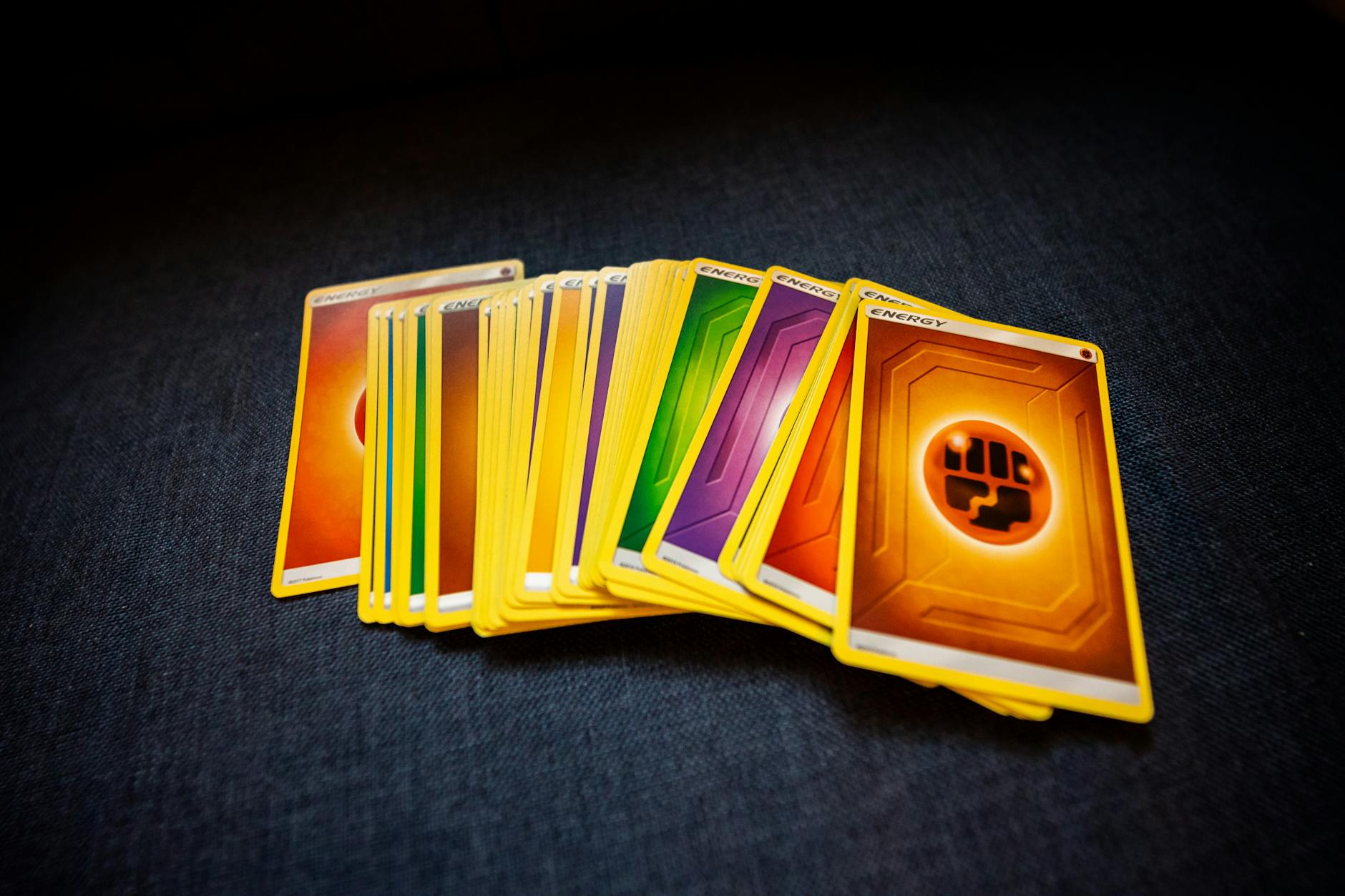
Tangible Assets Versus Intangible Digital Properties
Pokémon cards represent genuine tangible assets. You can hold a graded card in your hand, insure it, store it safely, and sell it through established markets. Auction houses, specialized dealers, and certification graders like PSA have created transparent pricing and authentication infrastructure.
When that Shadowless Charizard sold for $347,328 in 2024, it represented a documented transaction in an asset class with centuries of collectible precedent. A TikTok account exists entirely in digital space controlled by a company that could theoretically terminate your account at any time, and the account has no transferable value outside TikTok’s ecosystem. You cannot sell your TikTok account on secondary markets legally, you cannot borrow against it, and you cannot pass it to heirs with confidence that its income-generating capacity will remain intact. The monetization depends entirely on continued platform operation, which cannot be assumed indefinitely.
The Future of Card Investing Versus Platform-Dependent Income
The Pokémon card market continues attracting serious investors because the asset class has demonstrated 20+ years of appreciation, institutional interest is increasing, and major auction houses now handle significant sales. Grading services have professionalized the market, making authentication and valuation reliable. Even if the Pokémon Company continues producing cards at unprecedented volumes, vintage scarcity will only increase as older cards gradually leave circulation through damage, loss, and hoarding.
TikTok’s future as a creator income source remains uncertain. Platform algorithms evolve unpredictably, regulatory pressure continues mounting, and the platform has already shifted monetization structures multiple times. Creators who built careers on TikTok income have experienced sudden drops in earnings when algorithm changes reduced their reach, or when follower metrics changed without warning. Pokémon cards, by contrast, have weathered company leadership changes, economic recessions, and shifting collector demographics while maintaining long-term appreciation.
Conclusion
Pokémon cards outperform TikTok accounts as investments across every meaningful metric: historical returns, appreciation rates, risk profile, passive income generation, and stability. A Pokémon card appreciates at 15-46% annually without demanding your time, attention, or algorithmic cooperation, while even the most successful TikTok creators must labor indefinitely to maintain income and face constant platform-imposed uncertainties. The 3,800% appreciation from 2004 to 2025, the $347,328 sale of a single graded card, and the $2.2 billion market size demonstrate that tangible collectibles with genuine scarcity create investment opportunities that digital platforms simply cannot match.
If you have capital to invest, the choice is clear. A Pokémon card sits safely in grading service custody or your own secure storage, appreciating passively through market demand. A TikTok account demands ongoing content creation, carries regulatory risk, depends on algorithm behavior outside your control, and generates earnings that remain concentrated among the most elite creators. For long-term investment building, Pokémon cards provide what TikTok accounts cannot: genuine scarcity, transparent markets, passive appreciation, and freedom from platform dependency.


