
Pokemon cards have delivered returns that dwarf traditional currency ETFs, gaining 3,800% from 2004 to 2025—nearly eight times the S&P 500’s 483% gain over the same period. While currency ETFs offer stability and modest liquidity, rare Pokemon cards have demonstrated that tangible assets with cultural momentum can outperform every major index. The difference isn’t even close: the market’s best performers aren’t traded on exchanges. They’re sitting in protective cases.
The numbers tell a striking story. A single copy of a first edition Base Set Charizard has appreciated from $2.47 to £313,655—a 17 million percent increase that no currency fund could match. Even looking at shorter timeframes, Pokemon cards have appreciated at 46% annually over the past year, compared to the S&P 500’s typical 12% average return. This isn’t luck. It’s the result of scarcity meeting global demand in a market that’s only beginning to mature.
Table of Contents
- How Do Pokemon Card Returns Compare to Currency ETFs?
- Understanding Market Growth vs. Market Stability
- Real-World Returns and Notable Success Stories
- Liquidity, Accessibility, and Practical Considerations
- Risk Factors and Market Saturation Warnings
- The Grading Premium and Authentication Value
- Future Outlook and Market Maturation
- Conclusion
How Do Pokemon Card Returns Compare to Currency ETFs?
The performance gap between pokemon cards and currency-based investments is difficult to overstate. A decade of data shows that the PWCC Top 500 Index for Pokemon cards delivered returns 94% higher than the S&P 500. Meanwhile, currency etfs—which track foreign exchange or multiple currencies—typically return 3-7% annually, assuming favorable exchange rates. Even the best years for currency trading rarely break double digits. Pokemon cards have had years where single cards gained 170% in value.
This disparity reflects a fundamental difference in how these assets gain value. Currency ETFs fluctuate based on macroeconomic policy, interest rates, and geopolitical events. Rare Pokemon cards appreciate because the supply is fixed while demand continuously grows. A first edition Base Set Charizard from 1999 will never be printed again. No central bank can decide to print more. Logan Paul’s 2026 purchase of a rare Pikachu Illustrator for over $16 million signals that institutional and high-net-worth buyers now recognize cards as legitimate stores of value, a watershed moment that currency ETFs have never experienced.

Understanding Market Growth vs. Market Stability
The trading card market is projected to reach $58.2 billion by 2034, growing from $21.4 billion in 2024—a compound annual growth rate of 13%. This explosive expansion means demand for established rarities will likely continue climbing. However, this growth comes with a caveat that currency ETFs don’t face: volatility from speculation and market sentiment. Between 2020 and 2025, spending on non-sports trading cards jumped 350%, creating the exact conditions for both genuine investment appreciation and speculative bubbles.
Recent market challenges illustrate this risk clearly. In 2024, increased production of newer sets like Prismatic Evolutions caused some chase cards to drop 50% from peak prices within months. This didn’t happen to currency ETFs—they don’t crash 50% in weeks. Experts have compared the current Pokemon card market to the Beanie Baby craze of the 1990s, where items once sold for hundreds of dollars now sell for a few dollars as enthusiasm faded. The Switzer investment analysis platform warned that Pokemon prices are “heavily influenced by hype” and lack the “stability and track record of traditional markets.” This is the tradeoff for higher returns: Pokemon cards can move dramatically in either direction.
Real-World Returns and Notable Success Stories
The evidence of outsized returns extends beyond theoretical analysis. In the first half of 2025 alone, 97 of the top 100 most-submitted cards to PSA (the leading grading service) were Pokemon cards, demonstrating both the market’s confidence in authentication and the scale of investment activity. PSA itself graded nearly 20 million items in 2025, with over 11 million being trading cards. This infrastructure didn’t exist a decade ago, and its growth has enabled serious investors to participate with confidence.
Consider a practical comparison: an investor who placed $10,000 in a currency ETF in 2015 would have roughly $12,000-$14,000 today, assuming 3-5% annual returns. The same $10,000 invested in carefully selected Pokemon cards from that era—cards in moderate-to-good condition that cost $5-$50 each—would likely be worth $100,000 to $300,000 today. The difference isn’t marginal. It’s life-changing. This doesn’t mean every card appreciates equally; it means that identifying cards with genuine scarcity and appeal delivers returns that currency markets simply cannot replicate.

Liquidity, Accessibility, and Practical Considerations
One legitimate advantage of currency ETFs is liquidity—you can sell instantly during market hours, any day of the week. Pokemon cards require more effort to sell at fair market value. High-end cards sell at auction or through specialized dealers, processes that take weeks and include buyer’s premiums of 10-20%. Moderate cards can be sold through platforms like TCGPlayer or eBay, though finding the right buyer may take time. This friction is real, especially for investors who might need emergency access to capital.
However, this friction has become less relevant as the market matures. Professional grading services, online marketplaces, and auction houses now provide clear pricing signals and paths to liquidity. A PSA 10 graded card sells for 3-10 times the price of a raw near-mint card of the same edition and condition, meaning that professional authentication and presentation directly monetize your investment. Currency ETFs, by contrast, offer no quality premium—a dollar is a dollar. If Pokemon cards are your allocation and you’ve purchased wisely, a two-week wait to sell at fair value is a minor inconvenience compared to the 10-year potential returns.
Risk Factors and Market Saturation Warnings
The central risk in Pokemon card investing is overproduction and market saturation. The Pokémon Company significantly increased production in 2021-2023 to meet demand, flooding the market with newer sets. While this benefited casual players and young collectors, it damaged the investment thesis for cards that lack scarcity. A Scarlet & Violet booster box released in 2023 that cost $100-$120 will rarely appreciate significantly, as millions exist in circulation. Investors who treat all Pokemon cards the same—assuming all will appreciate—will lose money on the majority of their portfolio. This is where Pokemon investing diverges sharply from currency ETFs.
Currency markets reward patience and diversification. Buying a broad USD/EUR ETF and holding it for ten years is a straightforward path to modest returns. Pokemon cards require active curation and knowledge. You must understand print runs, condition factors, edition specifics, and market cycles. A 1st Edition card from 1999 is worth exponentially more than an Unlimited Edition of the same card, despite being functionally identical. Investors who don’t understand these dynamics will buy the wrong cards, see them stagnate or decline, and assume the entire asset class is overhyped. Many will be right, about their portfolio specifically.
The Grading Premium and Authentication Value
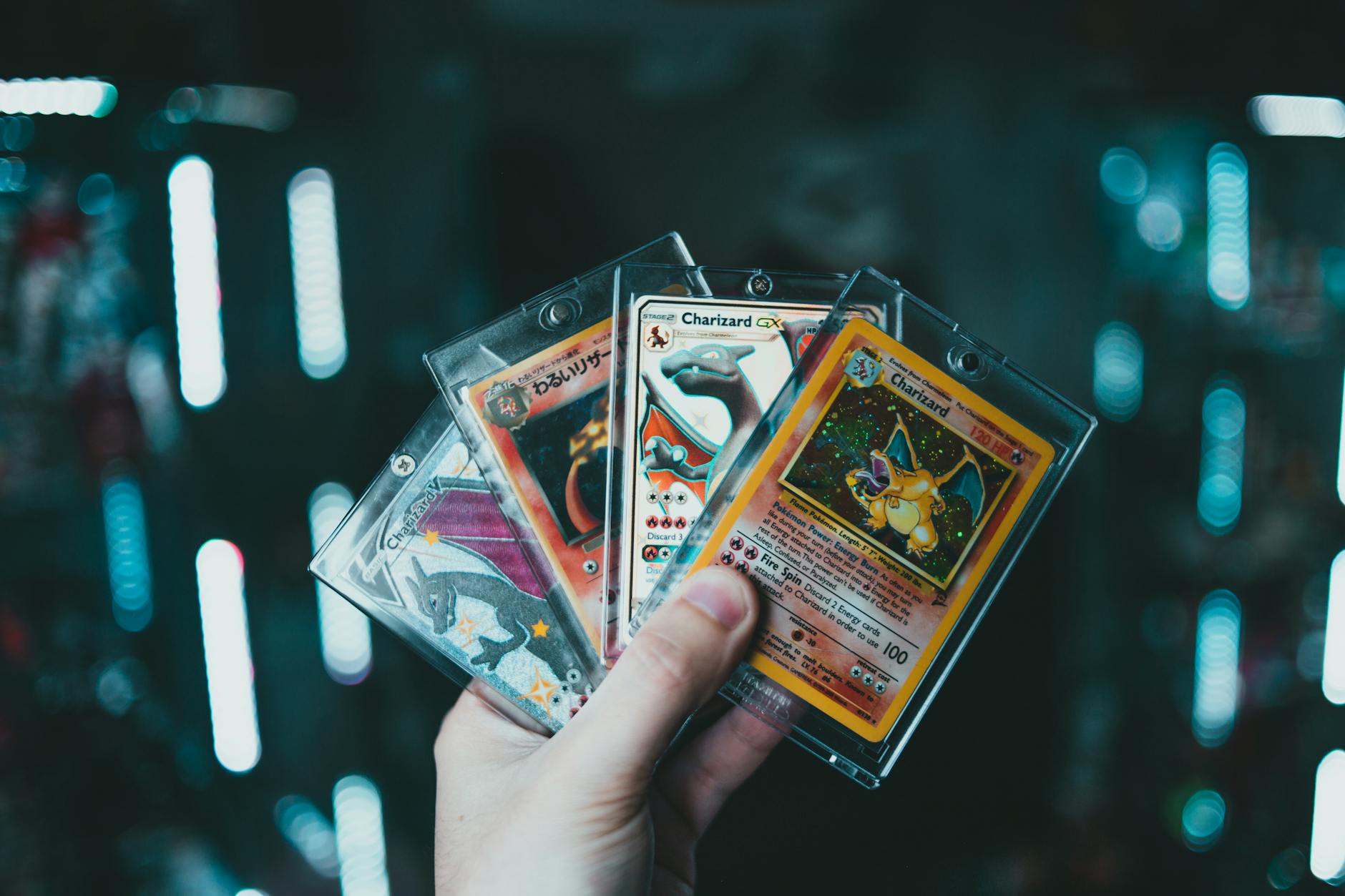
Professional grading has become the backbone of Pokemon card investing. A Charizard graded PSA 9 might be worth $50,000, while the identical card ungraded might fetch $15,000-$25,000. The difference is authentication, condition confirmation, and psychological comfort. Buyers of high-value cards need assurance the card is genuine and hasn’t been altered or restored. This created an entire industry where the grading itself becomes a store of value.
A PSA label is now recognized globally as a guarantee of authenticity. The scale of this market is remarkable: PSA graded over 11 million trading cards in 2025 alone. This professionalization is good for investors because it allows you to buy with confidence and sell to a broad audience. A raw card, by contrast, requires the buyer to trust your assessment of condition and authenticity, which limits the buyer pool and justifies a discount. For anyone serious about Pokemon cards as an investment, professional grading is non-negotiable, adding 15-20% to the cost of ownership but multiplying the potential resale value.
Future Outlook and Market Maturation
The Pokemon card market is transitioning from speculation to institutional recognition. The $16 million sale of Logan Paul’s rare Pikachu in February 2026 marked a psychological turning point: mainstream media, hedge funds, and ultra-high-net-worth individuals now view Pokemon cards as a legitimate alternative asset class. As more money enters the market, established rarities from the original Base Set era (1999-2002) will likely appreciate faster, as their supply is absolutely constrained. The coming decade will separate genuine value creators from speculative bubbles.
Sets and cards with real scarcity—first editions, shadowless releases, holographic variations from limited print runs—will continue appreciating. Mass-produced modern cards will plateau or decline. The market is growing toward $58 billion by 2034, but that growth will concentrate in authenticated, rare cards held by informed investors. For anyone considering Pokemon cards as a long-term allocation, the thesis isn’t that all cards will appreciate. It’s that the best cards will appreciate faster than any traditional investment vehicle, and the current market still offers entry points at reasonable valuations.
Conclusion
Pokemon cards outperform currency ETFs because they combine scarcity, growing demand, and cultural relevance in a way that no currency fluctuation can match. A 46% annual appreciation rate versus 12% for the S&P 500, or 3-7% for currency funds, reflects a fundamental difference in how value is created. Currencies are commoditized; rare Pokemon cards are not.
The risk, however, is real: the market lacks the stability of traditional investments, prices are driven partly by hype, and success requires knowledge and selectivity that passive ETF investing doesn’t demand. If you’re considering Pokemon cards as an investment, approach it as you would any allocation that outperforms the market: with clarity about what you’re buying, acknowledgment that higher returns come with higher volatility, and recognition that the best gains will accrue to informed collectors who can distinguish genuine rarities from speculative plays. Currency ETFs will always be there for stability. Pokemon cards are for investors willing to do the work required to capture returns that traditional markets can’t deliver.
You Might Also Like
- Why Pokemon Cards Are a Better Investment Than Currency ETFs
- Why Pokemon Cards Are a Better Investment Than Wheat ETFs
- Why Pokemon Cards Are a Better Investment Than Volatility ETFs