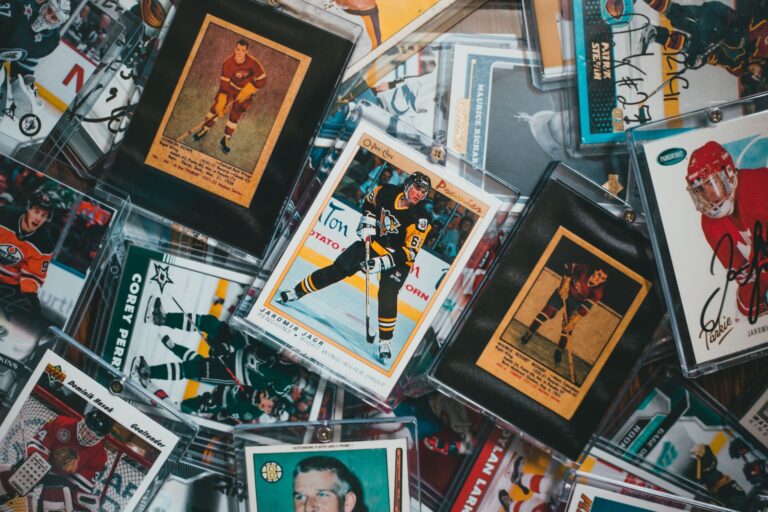
Financial discipline makes you a better card collector because it forces you to think strategically rather than emotionally, which directly improves the quality of cards you acquire and the overall health of your collection. When you approach collecting with a budget, clear purchase criteria, and a long-term plan, you naturally avoid the trap of buying mediocre cards at inflated prices just because they’re available. Instead, you develop the patience and selectivity that separates serious collectors from impulse buyers who end up with shelves full of worthless bulk.
Consider the collector who starts with $2,000 to spend on Pokemon cards. Without discipline, they might blow through the budget on booster box openings and random graded cards, walking away with 300 low-grade cards spread across fifty different sets. With discipline, that same $2,000 gets allocated strategically—maybe $1,200 on three high-quality vintage holos, $600 on building a focused set, and $200 held in reserve. Five years later, the disciplined collector owns appreciating assets worth $5,000 while the impulsive one’s collection sits stagnant at $1,500.
Table of Contents
- How Does Financial Discipline Help You Buy Better Cards?
- Building Real Wealth Through Disciplined Card Purchases
- Why Avoiding Costly Mistakes Matters More Than Finding Hot Cards
- Practical Budgeting Strategies That Make You a Better Collector
- Common Pitfalls That Even Disciplined Collectors Face
- Market Timing and Financial Awareness
- Long-Term Wealth and the Compound Effect of Disciplined Collecting
- Conclusion
How Does Financial Discipline Help You Buy Better Cards?
Financial discipline forces you to develop selection criteria before you spend money, which is the foundation of building a quality collection. When you’ve budgeted $400 for a purchase, you can’t waste it on the first shiny card you see—you have to evaluate whether that card actually fits your collection goals and represents fair market value. This discipline naturally trains you to recognize undervalued cards, avoid overpaying for hype, and understand the difference between a card that looks good and a card that holds value. Disciplined collectors also develop the skill of waiting. They track pricing over weeks or months, learning seasonal trends and market cycles.
A collector with a flexible budget might impulse-buy a Charizard Base set at $800 because they want it now, but a disciplined collector watches the market, sets a price alert at $700, and buys it three months later when the market dips. The disciplined approach saves $100 on that single card—money that compounds when applied across dozens of purchases over a collecting lifetime. The limitation here is that extreme financial discipline can actually hurt your collection enjoyment. If you’re so focused on ROI that you never buy cards you genuinely love, collecting stops being fun and becomes a joyless spreadsheet exercise. The sweet spot is disciplined flexibility—you have guidelines, but you allow yourself calculated purchases for cards that genuinely excite you, as long as they don’t blow your overall strategy.

Building Real Wealth Through Disciplined Card Purchases
A disciplined approach to card collecting treats your purchases like a portfolio rather than a gambling habit, which fundamentally changes your wealth-building trajectory. Instead of spreading money across dozens of mediocre cards, you concentrate your resources on cards with genuine scarcity, demand, and growth potential. This portfolio mindset—favoring quality over quantity—is exactly what separates collectors who build real wealth from those who just accumulate stuff. When you apply financial discipline, you start thinking about allocation. Maybe 40% of your budget goes to foundational pieces (high-grade vintage cards that hold steady value), 30% to growth plays (undervalued modern cards with potential), 20% to set completion (cards you need to finish meaningful collections), and 10% to experimental purchases.
This isn’t rigid—it’s a framework that prevents you from going all-in on one trend. A collector who dropped $10,000 into Charizard cards in 2020 when prices spiked is now underwater, while the disciplined collector who allocated only 15% of their budget to Charizards did fine because that money came from a diversified approach. The warning here is that portfolios can underperform. The Charizard collector who went all-in actually did better than the diversified collector during the 2020-2021 boom. Financial discipline means accepting that you’ll sometimes miss explosive gains on individual cards—that’s the price of stability. You’re trading the fantasy of 10x returns for the reality of consistent 10-15% annual growth, which is excellent over a decade but feels slow in the moment.
Why Avoiding Costly Mistakes Matters More Than Finding Hot Cards
The biggest financial advantage of discipline isn’t finding hidden gems—it’s avoiding catastrophic mistakes. Every collector has stories of cards they overpaid for, trends they chased at the peak, or purchases they made when desperate to complete a set at any price. A disciplined collector has fewer of these stories because financial planning creates guardrails that prevent panic buying. Consider the real mistake many collectors make: chasing PSA population reports. A card that’s PSA-9 with only 15 copies in existence looks like a sure investment, so the undisciplined collector pays $1,200 hoping to flip it. But what they didn’t research was that the next PSA-8 copy sold for $400 six months prior, and there’s no actual buyer demand above $600.
The card sits in their collection, dead money. A disciplined collector does the research first: they check actual sale prices, bid history, and demand before committing. They might pass on the card entirely, realizing the population scarcity doesn’t translate to market demand. Financial discipline also protects you from the “completion premium.” A collector needs one last card to finish their Base Set near-mint collection. That final card is a common worth $8 normally, but in their desperation and with completion bonus psychology, they pay $25. Multiply this across dozens of collections, and that’s where real money disappears. Disciplined collectors set maximum prices for completion cards and walk away if the market won’t cooperate—they’d rather have 95% of a set at fair prices than 100% at inflated ones.

Practical Budgeting Strategies That Make You a Better Collector
Effective financial discipline starts with simple systems: a monthly collecting budget, a price watch list, and a clear list of target cards organized by priority. This sounds boring, but it’s the infrastructure that separates planning from wishing. A collector with a $400 monthly budget and a priority list will make better purchases than a collector with a $5,000 annual budget and no plan. One proven strategy is the 50-30-20 approach adapted for collecting: 50% of your budget goes to core collection-building (cards aligned with your main collecting focus), 30% to opportunistic purchases (undervalued cards or temporary needs), and 20% to experimental buys or set completion. This framework prevents you from overcommitting to any single strategy.
You might have a run of months where great vintage cards appear at fair prices—the framework lets you capitalize because you have 50% of budget reserved for those opportunities—but it also prevents you from spending 90% of your year’s budget in one month. The tradeoff is that structured budgeting requires tracking and adjustment. You need to maintain a spreadsheet, update prices weekly, and make regular decisions about whether to pursue cards on your list. A casual collector who just buys what they want spends 30 minutes a month on collecting; a disciplined collector spends 3-4 hours monthly on research and planning. That time investment is exactly why they make better purchasing decisions.
Common Pitfalls That Even Disciplined Collectors Face
One major pitfall is overestimating the data you have. A disciplined collector reviews comps and sets a target price of $650 for a Near Mint Dark Blastoise, but the last three sales were $580, $620, and $710—that spread is huge. Averaging those or focusing on the high comp can lead to overpaying even with financial discipline. The solution is understanding which comps matter (recent, verified sales to real collectors matter more than auction house estimates) and being willing to wait for cards at the right price rather than forcing purchases. Another pitfall is market blindness. You can be disciplined about tracking individual card prices and still miss macro trends.
Collectors who were disciplined about buying bulk common holos at $2-3 each in 2019 got crushed in 2020 when the market crashed 70% during supply inflation. Financial discipline within your strategy doesn’t protect you if your strategy itself is wrong. This is why even disciplined collectors should periodically (every 6-12 months) step back and ask whether their approach is still working. The harsh limitation is that financial discipline requires capital to work with. A collector with $300 to spend annually will build very slowly no matter how disciplined they are. Those working with smaller budgets can still apply these principles, but realistic expectations matter—you might take 10 years to build what a collector with $5,000 annually builds in 3. Discipline helps you get maximum value from whatever capital you have, but it doesn’t create capital.

Market Timing and Financial Awareness
Financial discipline includes understanding market cycles and seasonality in Pokemon card pricing. Prices typically dip slightly after holidays (January and early February) when people are selling cards received as gifts or trying to liquidate for cash. They spike in November-December as holiday shopping drives demand. Smart collectors with financial discipline time major purchases around these patterns—building their budget to have capital available in February, not December.
A real example: a collector who wanted to build a complete First Edition Jungle set noticed prices were 15-20% higher in October (media buzz around vintage) than in April (post-holidays, collector fatigue). By disciplining themselves to build capital through spring, they had $4,000 ready in April instead of $3,400 in October. That same purchasing power meant they completed their set three months faster on the same annual budget. This isn’t fancy—it’s just patience combined with awareness of when the market favors buyers.
Long-Term Wealth and the Compound Effect of Disciplined Collecting
Over a decade, financial discipline in collecting creates results that look almost miraculous compared to casual collecting. A collector who invests $400 monthly ($4,800 annually) with a focused strategy and 8% average annual appreciation on their portfolio value will see their collection grow from $57,600 to over $125,000 in value. That’s not because they picked the perfect cards—it’s because they were consistent, avoided major mistakes, and let compound growth work. The casual collector who spent the same amount on impulse purchases might have half that value.
This long-term view is what separates collectors from speculators. Speculators want big wins fast—they’re looking for that $500 card that becomes $5,000. Disciplined collectors are building toward generational wealth. They’re thinking about passing a meaningful collection to their children, selling strategically for major life events, or building enough value to fund their retirement hobby spending. That mindset—discipline focused on decades, not quarters—is what actually builds wealth in card collecting.
Conclusion
Financial discipline makes you a better card collector because it removes emotion from purchasing decisions and forces you to think strategically about allocation, value, and long-term goals. The disciplined collector buys fewer cards of higher quality, avoids catastrophic mistakes, and builds wealth that actually compounds over time. They understand market cycles, research before buying, and maintain the patience to wait for cards at fair prices instead of overpaying out of desperation or hype.
Start building discipline now by setting a monthly budget, creating a priority list of cards you actually want, and committing to research before any purchase over $100. Track your spending monthly and evaluate whether your purchases are moving you toward your collection goals. The collectors winning at this hobby are the ones who treat it with financial seriousness—not because collecting is a money game, but because financial discipline itself teaches the patience, selectivity, and strategic thinking that separates great collectors from everyone else.