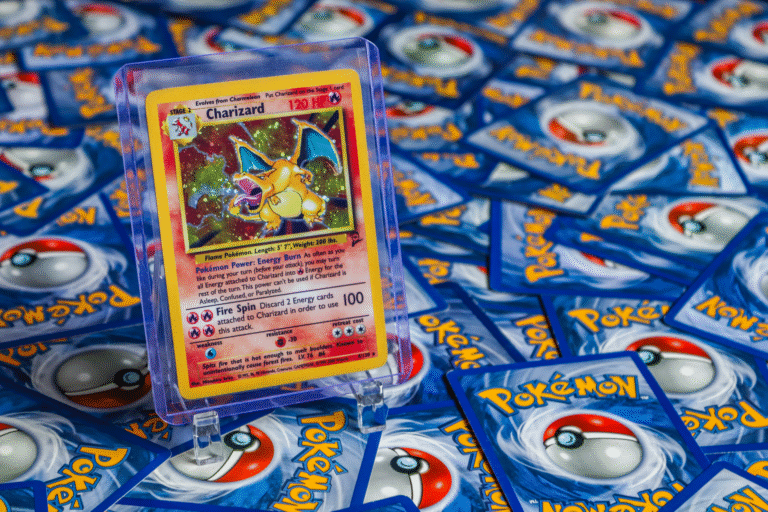
Collectors commonly misunderstand holo bleed by confusing it with a manufacturing defect or authenticity issue, when in reality it’s a legitimate printing variant that does not affect card grades or collectibility. Many still believe holo bleed prevents cards from receiving perfect grades or that grading companies refuse to authenticate these cards—both outdated beliefs disproven since 2021. A Base Set Charizard with visible holo bleed in the white border area, for example, can still achieve a PSA 10 grade and command premium prices because the holo bleed itself is not classified as damage or a flaw by any major grading company.
The core misunderstanding stems from historical gatekeeping around holo bleed. For roughly a decade after its appearance in early Pokemon expansions, collectors and even grading companies treated visible holo bleed as a red flag. Today in 2026, the TCG community has largely accepted holo bleed as an inherent characteristic of certain production runs rather than an error requiring exclusion. Understanding what holo bleed actually represents—and what it does not—is essential for anyone building or valuing a Pokemon card collection.
Table of Contents
- Is Holo Bleed a Sign of Counterfeit Cards?
- The Grading Stigma That No Longer Exists
- How Holo Bleed Affects Card Valuation
- Evaluating Holo Bleed When Buying Sealed and Graded Cards
- Why Holo Bleed Is Becoming More Common, Not Rarer
- Spotting the Difference Between Holo Bleed and Other Foil Defects
- The Future of Holo Bleed in Pokemon Collecting
- Conclusion
Is Holo Bleed a Sign of Counterfeit Cards?
The most damaging misconception is that holo bleed indicates a fake card. This is demonstrably false for pokemon TCG products. Holo bleed is a print quality issue caused by the white opaque ink layer—printed first to prevent the foil from showing through unwanted areas—being applied too thin during production. When this layer lacks sufficient coverage, the holographic treatment bleeds into zones where it should remain matte white. This happens on authentic cards produced at full manufacturing capacity, especially on holo patterns prone to this behavior, such as the confetti holo used in many modern sets.
In sports cards, the situation differs significantly. Sports card counterfeits do frequently exhibit holo bleed as a telltale flaw, which is why collectors in that category remain rightfully suspicious. However, Pokemon’s production scale and the commonality of holo bleed across legitimate sealed products mean this rule does not transfer. An authentic Base Set Blastoise with holo visible in the white border area is not a fake—it’s a variant of normal production. Conflating Pokemon holo bleed with sports card counterfeits has led countless collectors to dismiss or underprice perfectly authentic cards.

The Grading Stigma That No Longer Exists
Many collectors still operate under the outdated belief that PSA and other grading companies refuse to grade pokemon cards with holo bleed, a concern that held validity until 2021. PSA historically rejected TCG submissions featuring holo bleed, treating the cards as ungraded cases. This policy created a two-tier market where holo bleed cards were considered unslabbed or ungradable, dampening their appeal and resale value. However, in 2021, PSA resumed grading TCG cards with any degree of holo bleed, publicly reversing its long-standing restriction.
As of 2026, PSA, CGC, BGS, and all other legitimate Pokemon grading companies now accept and grade cards with holo bleed without hesitation. A card with moderate to severe holo bleed can receive a 10 if all other criteria—corners, centering, surface quality—meet that standard. The critical limitation here is recognizing that holo bleed does not protect against other flaws. A card with holo bleed and visible wear on the corners will not achieve a high grade, not because of the bleed itself but because of the wear. Understanding this distinction prevents collectors from expecting inflated grades when holo bleed exists alongside genuine damage.
How Holo Bleed Affects Card Valuation
Contrary to collector lore, holo bleed does not drive down a card’s market value in the modern era. Light to moderate holo bleed on popular cards like Shadowless or early base set holos may add novelty value rather than diminish it, particularly if the card is otherwise clean. Severe holo bleed, visible as a thick ring of holographic effect around the entire white border or border text, is rarer and can actually be sought by variant collectors who specifically hunt these printing characteristics. The pricing depends heavily on context.
A pristine 1999 Base Set Charizard with light holo bleed in the lower border might sell for roughly the same price as a similar copy without bleed, or potentially more if documented as a printing variant. By contrast, a Shadowless holo Blastoise with heavy holo bleed and moderate centering issues will price based on the centering and wear, not the bleed itself. The warning here is not to assume holo bleed automatically decreases value. Instead, price cards based on overall condition, rarity, and the specific market demand for that card in that grade.

Evaluating Holo Bleed When Buying Sealed and Graded Cards
When purchasing graded cards, inspect the slab’s label or accompanying notes to see if holo bleed is mentioned; many grading companies now document it. For raw cards, use controlled lighting—a single light source at a low angle across the white borders—to spot holo bleed. Run the light across the bottom border, text area, and upper border to catch subtle bleed that can be missed under direct overhead lighting. This evaluation method helps collectors distinguish intentional holo patterns from unintended bleed before purchase.
For sealed products, holo bleed becomes a post-opening variable you cannot control. Booster boxes and sealed decks from the early 2000s through present day contain cards that may or may not exhibit bleed. Collectors seeking to avoid holo bleed entirely should understand this introduces uncertainty into sealed product investment. Conversely, some collectors specifically hunt sealed product, open it, and search for holo bleed variants as a form of variant hunting comparable to looking for miscuts or printing errors. The practical tradeoff is between accepting bleed as a normal characteristic and minimizing exposure by prioritizing near-mint graded cards from reliable sellers.
Why Holo Bleed Is Becoming More Common, Not Rarer
A widespread false belief among collectors is that holo bleed was a problem primarily in the 1990s and early 2000s, with the Pokemon Company fixing the issue in recent years. The opposite is true. Holo bleed has become more common in recent years due to the explosive demand and full-capacity production runs initiated after the 2020 Pokemon TCG surge. When the Pokemon Company scales production to meet market demand, manufacturing tolerances tighten—including the white opaque ink layer thickness that prevents holo bleed.
The Pokemon Company has publicly acknowledged running production at full capacity during this period, a state that naturally increases the frequency of minor printing variants including holo bleed. Modern sets like Scarlet and Violet feature holo bleed on certain cards at similar or higher rates than early sets, contradicting the belief that manufacturing quality has improved uniformly. This reality should inform collector expectations. Cards from recent years are just as likely to exhibit holo bleed as vintage cards, making it impossible to dismiss modern holo bleed as uncommon or a sign of reduced production quality.

Spotting the Difference Between Holo Bleed and Other Foil Defects
Collectors often conflate holo bleed with other foil-related issues like peeling, scratching, or discoloration. Holo bleed is specifically the holographic effect showing through the white ink where it shouldn’t—a cosmetic but acceptable characteristic. Peeling, where the foil layer lifts away from the card stock, is different and considered actual damage. A card with peeling will receive a lower grade and legitimately see reduced value because the structural integrity is compromised. Similarly, heavy scratches to the foil surface or discoloration are separate defects.
To distinguish holo bleed from these issues, check whether the holo effect sits flat against the white border or if the foil itself is separating or scraped. Holo bleed will feel smooth to the touch, while peeling may catch a fingernail or feel raised. This distinction matters when negotiating prices or deciding whether a card is collectible or damaged. A card with light holo bleed and smooth foil across its surface remains grading-eligible and collectible. A card with peeling foil or deep scratches, even without holo bleed, should be evaluated based on that damage regardless of how the foil pattern looks.
The Future of Holo Bleed in Pokemon Collecting
Looking forward to the remainder of 2026 and beyond, holo bleed is now cemented as a standard characteristic of Pokemon card production rather than an anomaly or defect. As demand remains high and production continues at scale, collectors should expect holo bleed to persist at current or higher frequencies. The normalization of holo bleed in grading standards and the collector community’s acceptance of it as a printing variant suggests the stigma will continue to fade, potentially opening holo bleed cards to new collector bases interested in documented printing variants.
Future investments in Pokemon cards should factor holo bleed as a neutral or potentially positive characteristic rather than a liability. Collectors who spent years avoiding holo bleed cards have likely passed up reasonably priced holos and vintage cards that perform just as well in graded slabs as unblemished copies. As the market matures and historical misconceptions fade further, holo bleed cards will increasingly compete on condition and rarity rather than on whether the holo pattern extends slightly beyond its intended zone.
Conclusion
Collectors get multiple critical aspects of holo bleed wrong, from believing it signals counterfeits to assuming it prevents grading or reduces value. In reality, holo bleed is a normal printing variant that occurs when the white opaque ink layer is applied too thinly during manufacturing, allowing the holographic foil to show through in unintended areas. All major grading companies have accepted holo bleed since 2021, and the variant is now widely recognized as legitimate by the TCG community.
Moving forward, approach holo bleed with the same neutrality you would apply to any cosmetic characteristic that does not impact card integrity. Evaluate cards based on overall condition, centering, and surface quality—not on whether holo bleed is present. By shedding these outdated misconceptions, collectors can make more informed purchasing decisions and potentially identify undervalued cards that possess excellent condition and grading potential despite carrying holo bleed.