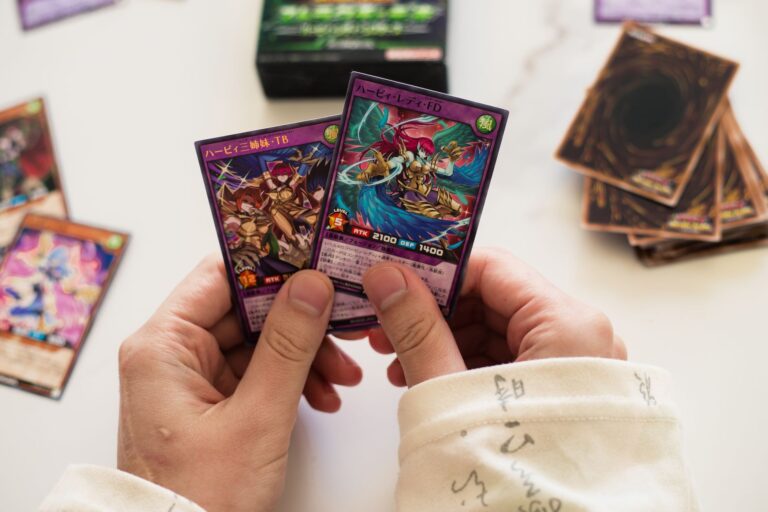
The Pokémon card variant many collectors ignore until prices jump is the Prize Pack exclusive—a limited print run released through specific retail channels that sits quietly in the secondary market until supply constraints force valuations upward. Prize Pack cards like Mew V have demonstrated this pattern repeatedly, commanding $30 or more on the secondary market despite minimal trading volume, with recent sales showing only four Near Mint copies available across the entire market. What makes these variants particularly overlooked is that collectors focused on chase cards and mainstream holos often miss them entirely, viewing Prize Pack releases as novelty items rather than genuine collectibles with supply-driven value.
Reverse holofoil variants and special holo patterns share this same trajectory. These cards were historically dismissed as less desirable than their full-art and alternate-illustration counterparts, yet they’re experiencing a quiet but measurable resurgence in collector recognition and market pricing. The pattern is consistent: low initial demand masks the real value waiting to emerge once collectors realize how scarce these prints actually are.
Table of Contents
- What Variants Fly Under the Collector Radar Until Values Spike?
- Why Collectors and Investors Overlook These Variants Until It’s Too Late
- Documented Price Jumps Show the Pattern in Action
- How to Identify Neglected Variants Before the Price Correction
- Common Mistakes Collectors Make When Dealing With Variants
- How Supply Scarcity Drives Outsized Price Increases
- The Collector Market’s Growing Recognition of Variant Value
- Conclusion
What Variants Fly Under the Collector Radar Until Values Spike?
Most pokémon collectors focus their attention on the obvious chase cards—first edition base set Charizards, Rainbow Rares, and Full-Art Alternate Illustration cards. These draw collector interest and command premium prices from day one. But Prize Pack exclusives and reverse holofoil editions operate in a different market dynamic entirely, one where low demand initially suppresses pricing despite genuinely limited supply. Prize Pack cards occupy a strange middle ground. They’re produced in smaller quantities than standard set releases because they’re only available through specific retail bundles or promotional channels.
A Prize Pack Mew V sitting at $30+ with minimal transaction history tells a story about how few copies have actually circulated through the market. Unlike chase cards that see repeated sales and transparent price discovery, Prize Pack variants develop pricing based on infrequent transactions and limited seller inventory. When one does sell, it often reveals that the market has been undervalued for months or years. Reverse holofoil variants, historically viewed as inferior to normal holos, are finally getting recognition as legitimate collectible variants. These feature the holographic treatment on the entire card except the artwork center, creating a distinctive visual that some collectors actively prefer. The gap between their perceived value and actual scarcity is narrowing as the community acknowledges them as genuine collectible editions alongside their full-holo counterparts.

Why Collectors and Investors Overlook These Variants Until It’s Too Late
The psychology of pokémon card collecting creates blind spots around certain variant categories. Collectors follow established hierarchies—chase cards are graded and tracked obsessively, while limited-print variants get ignored because there’s no visible “hype” pushing them. Social media and YouTube card-opening channels amplify certain cards (Rainbows, Alts, Gold Stars) while barely mentioning Prize Packs or reverse holos. this visibility disparity keeps pricing artificially suppressed. Market fragmentation worsens the problem. Prize Pack cards are scattered across dozens of retail channels, promo events, and regional releases.
A collector might own one without fully understanding it’s legitimately scarce compared to a standard print-run card. Without centralized hype or graded population reports highlighting the rarity, these variants remain invisible to price speculation. The market only recognizes their value once a few sales suddenly appear, triggering alert notifications on price-tracking tools and awakening collector interest. A critical limitation: by the time casual collectors realize a variant is undervalued, the earliest opportunity has already passed. The first handful of sales at the new higher price point typically come from informed collectors or dealers who identified the scarcity pattern earlier. Collectors jumping in after price spikes are essentially buying into the tail end of a correction, not the ground-floor discovery that early-mover collectors experienced.
Documented Price Jumps Show the Pattern in Action
Alt-Art Latias & Latios-GX provides a concrete example of how variant price appreciation unfolds. This card increased from $2,199 to $2,699.93 across the market, with completed sales reaching $2,400. The jump wasn’t driven by sudden demand from casual collectors—it was driven by supply recognition and a handful of high-value sales that reset the market’s price floor upward. Once those transactions hit the market, all remaining copies began asking for similar prices. The dynamics differ from mainstream chase cards. A Charizard price increase happens in real time as hundreds of collectors compete for limited copies.
An Alt-Art variant price increase often happens invisibly, with only a handful of sales recorded before prices stabilize at the new level. This makes it extremely difficult for casual collectors to identify the trend in progress. By the time they notice the price change, the low-supply window has already closed. Prize Pack Mew V’s trajectory illustrates the scarcity-based valuation model. With only four Near Mint copies available and minimal historical trading data, the $30+ asking price isn’t supported by recent transaction volume—it’s supported by the mathematics of true scarcity. A collector attempting to acquire one at that price point faces a genuine shortage, not artificial hype. This represents exactly the kind of variant that typically sits ignored until a collector searching for “Mew V” variants finally realizes the Prize Pack edition isn’t just common—it’s actually impossible to find at original retail value.

How to Identify Neglected Variants Before the Price Correction
The first step is understanding variant categories beyond the obvious chase cards. Beyond Rainbows and Alts, most sets include Prize Pack exclusives, promos with special holo patterns, and reverse holofoil editions. These variant types appear in set documentation but receive minimal collector attention. Checking set release notes and retail bundle contents reveals which variants exist and how limited their distribution actually was. Price-to-rarity comparison is the practical diagnostic. If a variant is difficult to locate on secondary markets but shows modest price tags, scarcity hasn’t yet registered with the collector base. Prize Pack cards fitting this profile—hard to find but priced as if they’re common—represent the sweet spot for identifying potential corrections.
Compare listings across TCGPlayer, eBay, and specialty card sites. High asking prices with zero sales history suggest the market hasn’t discovered the variant yet. Low prices with zero available inventory suggest the same thing in reverse—low initial demand suppressed pricing, then copies disappeared. First edition variants operate by a different set of rules. First edition cards are produced in genuinely lower quantities than unlimited printings, creating naturally higher collectible value. If you encounter a first edition variant at only a modest premium over unlimited, you’ve identified a version likely to appreciate as the market corrects for rarity. First editions of overlooked variants represent some of the most undervalued territory in the hobby.
Common Mistakes Collectors Make When Dealing With Variants
The most critical mistake is assuming that low demand means low value. A Prize Pack card with no recent sales isn’t worthless—it’s potentially undiscovered. Collectors often use transaction frequency as a proxy for desirability, not understanding that limited supply naturally suppresses trading volume. This creates a feedback loop where variants appear valueless because few people own them, which prevents people from buying them, which keeps transaction volume artificially low. Grading decisions compound the problem. Many collectors leave variant cards raw because they perceive lower value.
Once a variant begins gaining collector recognition, graded copies suddenly become much harder to locate and command premiums. The collectors who graded Prize Pack cards two years ago, before anyone cared about them, often end up with the most valuable specimens when the market eventually corrects. Waiting until the variant is “proven” valuable before grading typically means higher grading costs and longer turnaround times during peak demand periods. Another limitation: authentication and condition assessment become much more difficult with variants that lack transaction history. You can’t easily compare your Prize Pack card against recent sales comps if no recent sales exist. This uncertainty keeps some collectors cautious about investing in variants, even when the scarcity case is legitimate. Be prepared to do deeper research on condition standards and establish your own baselines rather than relying on recent market comparisons.

How Supply Scarcity Drives Outsized Price Increases
The mathematical relationship between supply scarcity and price volatility isn’t linear—it’s exponential. A mainstream chase card losing 20% of available inventory might move 5% in price. A Prize Pack variant losing 30% of available inventory can trigger 30-50% price increases because the remaining copies face dramatically reduced competition from alternative sellers. When only a handful of copies exist, each additional sale to a new collector reduces the available pool further, accelerating price movements. This dynamic explains why variant price jumps feel sudden to observers who weren’t tracking the supply erosion.
Four Near Mint Prize Pack Mew V copies available at $20 might not trigger collector interest. But when one sells and inventory drops to three copies, the next seller lists at $25. Another sale happens, and the third copy goes for $28. By the time the fourth copy enters the market, there’s established price history at elevated levels, and new collectors willing to pay $30+ to complete their set. The price jump appears abrupt because the transaction frequency was low, but the scarcity-driven math was operating the entire time.
The Collector Market’s Growing Recognition of Variant Value
The Pokémon card community’s sophistication is increasing year over year. Population reports, price-tracking APIs, and specialized variant discussion forums have emerged over the past 18-24 months. These resources make it progressively harder to find genuinely undiscovered variants, but they haven’t eliminated them entirely. Variants released through unconventional channels—international exclusives, limited regional printings, special retail partnerships—still fly under most collectors’ radars.
Looking forward, the window for discovering undervalued variants before the market corrects continues to narrow. However, the influx of new collectors entering the hobby each year means that older, less-discussed variants (like reverse holos from sets released 10+ years ago) periodically come back into focus. The variants being ignored today will likely be the examples cited in articles about “variants everyone should have seen coming” five years from now. The key advantage belongs to collectors willing to do granular research into population data, variant distribution methods, and historical scarcity—not those chasing after variants that have already completed their price correction.
Conclusion
The Pokémon card variant many collectors ignore until prices jump is fundamentally any card type that serves genuine scarcity without corresponding hype. Prize Pack exclusives, reverse holofoils, and special variant editions from limited distribution channels consistently demonstrate this pattern. The variants aren’t worthless before the price correction—they’re simply waiting for the market to recognize scarcity as a value driver rather than treating it as irrelevance.
The practical lesson is straightforward: the next variant to experience significant price appreciation is likely one currently sitting invisible in specialty listings with minimal transaction history. Collectors who invest time in understanding variant distribution, identifying genuine scarcity, and accumulating copies before the market discovers them will own the variants everyone else wishes they’d recognized sooner. That recognition typically comes too late to repeat the process again on the same card.