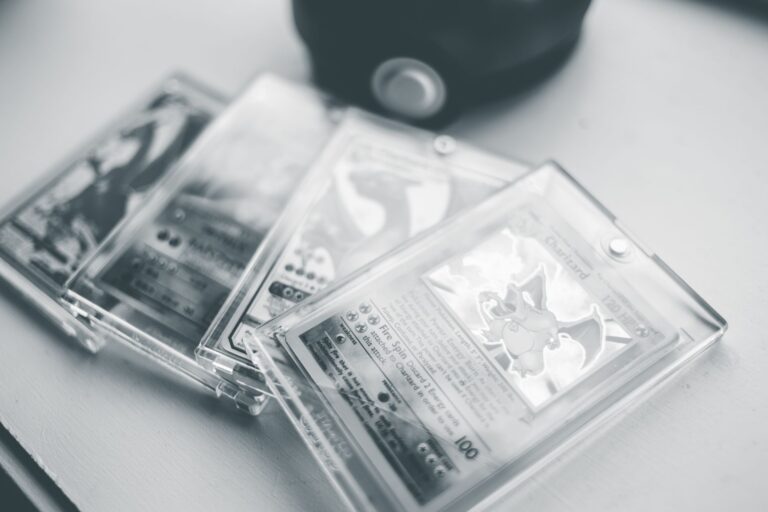
Keep the suspected Pokémon card slab intact and immediately photograph the holder, label, card, and certification details. A slab is a sealed grading holder, so do not crack it open or attempt a repair. A swapped card is possible, but suspicion is not proof. PSA documents schemes involving lower-grade, altered, or counterfeit replacement cards, while warning that removing a card from its holder voids Guarantee coverage.
Table of Contents
- Preserve the slab before handling it again
- What does the certification record show?
- Use holder and label features carefully
- Preserve the transaction trail
- Report the discrepancy without destroying evidence
Preserve the slab before handling it again
Place the slab on a clean, stable surface and document its condition before moving, cleaning, or packaging it. Photograph both full sides, then capture close views under clear, even lighting.
Record every area that could show damage or tampering: Do not separate the card from the holder to inspect it. Under PSA's current Guarantee terms, a removed card is treated as never authenticated or graded. Those terms also exclude partly opened, damaged, tampered, or fraudulent holders and labels.
- All four edges and corners
- Every seam and welded area
- Cracks, gaps, chips, or partly opened sections
- The front and back of the label
- Label edges and alignment
What does the certification record show?
Enter the certification number directly into PSA's verification system. Save a dated screenshot of the complete result, including the described card, grade, certification number, and any displayed images. A matching database entry does not establish that the slab in your hand is genuine.
PSA's Cert Verification page warns that counterfeit inserts can use real certification numbers copied from public records. Compare the visible card with any official certification images. Focus on card-specific details rather than the set name alone: One matching mark can be useful; several marks in the same positions are more persuasive. A major mismatch is an inconsistency worth documenting, but images may not reveal every defect or prove how the difference occurred.
- Holo placement and recognizable reflective shapes
- Print marks, dots, or surface features
- Edge wear, whitening, and corner shapes
- Centering and border proportions
- Scratches or other visible defects
Use holder and label features carefully
Inspect the slab's security features without treating any single feature as a pass-or-fail test. psa describes its holder as tamper-evident and says its LightHouse label uses UV features, fugitive ink, and a QR code. These features provide comparison clues, not certainty.
PSA's SecureScan program stores high-resolution front-and-back images for eligible encapsulated items in Certification Verification. According to PSA's security information, those images can provide a reference for comparing the card's print, surface, edges, and holo details. Photograph anything unusual before testing a QR code or examining the slab under different light. Record what you observed in neutral terms, such as "gap visible along lower-right seam," instead of declaring the holder fake.
Preserve the transaction trail
Save the original listing as both screenshots and a downloaded or printed copy if available. Include every photograph, the description, seller identity, price, order number, payment record, delivery tracking, and all messages. For an eBay purchase, retain the authentication status and related order pages.
eBay's trading-card Authenticity Guarantee terms say eligible cards or sealed holders are compared with the listing and photographed before reaching the buyer. Those records may show whether the slab received matches the item advertised or authenticated. Create a brief dated timeline covering the purchase, delivery, first inspection, discovery of each concern, and every contact with the seller or marketplace. Keep original files unchanged; make separate copies for annotations, circles, or side-by-side comparisons.
Report the discrepancy without destroying evidence
Contact the seller, marketplace, payment provider, or grading company in writing. Describe the observable mismatch, attach representative photographs, and request instructions while keeping the slab sealed.
If you submitted the card to PSA yourself and recently received it back, act immediately. PSA's Submission Services Terms require prompt inspection of returned cards, labels, documents, and electronic images, with discrepancies reported in writing within five calendar days.