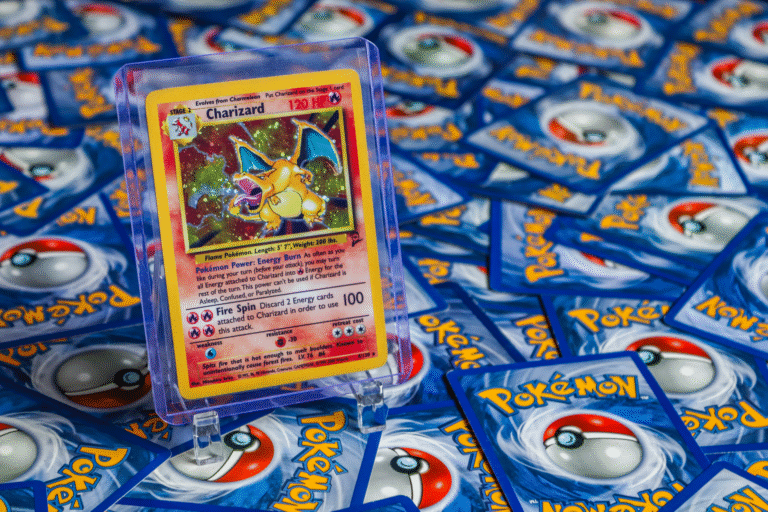
Murkrow cards from the Pokémon Diamond and Pearl era range from $0.07 to $37.46 across 48 tracked listings as of July 2026, with an average card value of $2.73. The variation in price depends heavily on the specific set, edition, condition, and holo treatment of the card you’re looking at—a Neo Revelation #46 in unlimited print might sell for anywhere from $0.20 to $22.00, while a Scarlet & Violet prerelease staff version commands nearly $40. For collectors and investors tracking Murkrow specifically, the market has been strong: the Pokédex #198 Dark/Flying type has gained 33.5% year-to-date and 158.8% since its earliest printed versions hit the market.
Understanding Murkrow’s pricing landscape requires more than just checking the highest listed price. The card appears across dozens of different printings—from the classic Neo-era releases to modern competitive reprints—and each version tells a different story about supply, demand, and collector interest. A $0.07 bulk common is fundamentally different from a $37.46 prerelease promotional card, even though both feature the same Pokémon.
Table of Contents
- Which Murkrow Cards Are Actually Worth Money?
- Price Variation Across Sets and Editions
- Year-to-Date Performance and Market Trends
- How to Evaluate Murkrow Cards for Your Budget
- Red Flags and Pricing Traps to Avoid
- High-Value Murkrow Cards Worth Tracking
- Understanding Price Momentum in the Murkrow Market
- Frequently Asked Questions
Which Murkrow Cards Are Actually Worth Money?
The most valuable Murkrow card currently tracked is the Scarlet & Violet Prerelease Staff version (#021) at $37.46—a promotional card with limited distribution that appeals to collectors seeking complete prerelease sets. This card stands out precisely because of its scarcity; prerelease promos were given to staff and judges at major tournaments, making them far less common than retail pack pulls. In contrast, the average Murkrow card sitting at $2.73 reflects the bulk of the market: standard holo, non-holo, and reverse holo versions from modern or well-printed older sets.
The EX: Unseen Forces #030/115 reverse holo from 2005 represents the type of card that moves prices actively. cards from the EX era (2003–2007) occupy a middle ground—old enough to feel collectible and nostalgic, but not so ancient that they command the premium of truly vintage first editions. Reverse holo versions of EX cards tend to outprice their standard holo counterparts because the reverse holo treatment was less common in pack pulls and appeals to a specific collector preference for the reversed text and art frame effect.
Price Variation Across Sets and Editions
Murkrow appears in multiple sets spanning different eras, and edition matters enormously. A first edition Neo Revelation #46 will cost significantly more than an unlimited version of the same card, even if both cards are in identical condition. The 2005 EX: Unseen Forces version exists in both regular and reverse holo, with the reverse commanding a premium that can be 2–3× the standard version depending on market conditions.
Newer reprints from Scarlet & Violet (like the #131/193 reverse holo) tend to price lower because they’re more recent, more printed, and lack the nostalgia factor of older cards. One limitation collectors face is authentication risk with older, higher-priced Murkrow cards. A Neo-era card listed at $15–$22 needs careful scrutiny for signs of counterfeiting, print defects, or condition issues that might justify a lower selling price. Pokemon Wizard and other pricing aggregators track recent sales data, but a card’s listed price doesn’t always reflect what it actually sold for—sales ranges like $0.20–$22.00 for the same Neo Revelation version show how much condition and individual buyer preferences can swing the final price.
Year-to-Date Performance and Market Trends
Murkrow as a category has appreciated 33.5% year-to-date as of July 2026, with a longer-term trend of +158.8% since initial release. This outpaces general Pokémon TCG inflation, suggesting specific collector interest in the Pokédex #198 line—likely driven by Honchkrow, Murkrow’s evolution via Dusk Stone, gaining competitive relevance or representation in popular media. The 30-day movement of +2.8% indicates steady but modest recent price climbing rather than speculative spikes.
This performance varies by individual card. Reverse holo versions and older EX-era prints are driving much of the gains, while bulk common versions remain relatively flat. Collectors relying on Pokemon Wizard’s live pricing data should note that aggregate trends mask individual card trajectories; a single prerelease promo spiking to $37.46 skews the average upward, but the majority of Murkrow inventory appreciates more modestly.
How to Evaluate Murkrow Cards for Your Budget
When hunting Murkrow cards, start by defining whether you’re collecting for nostalgia, competitive appeal, or pure investment. A complete collector might prioritize different printings across eras—Neo Revelation, EX: Unseen Forces, and a modern reverse holo from Scarlet & Violet—spending roughly $0.50 to $3.00 per card depending on edition. An investor with a $50 budget might chase a single EX-era reverse holo or look for underpriced unlimited editions that could appreciate as interest in older printings grows.
The risk-reward tradeoff is steep at the extremes. Paying $37.46 for a prerelease staff card makes sense only if you specifically need that version for a set collection; the same $37.46 buys 10–15 quality Murkrow cards across different printings if your goal is breadth. Conversely, bulk $0.07–$0.15 versions carry minimal downside but also minimal upside, making them suitable only for low-priority filler slots in large collections.
Red Flags and Pricing Traps to Avoid
A common mistake is assuming that an older card is automatically more valuable. Neo Revelation #46 ranges from $0.88 market price to outlier sales of $22.00, but the bulk of sales cluster below $5.00 unless the card is first edition or in exceptional condition. Unlimited printings from the same set price far lower, and buying an unlimited expecting Neo-era nostalgia premiums will disappoint. Always verify edition and print run before committing to a higher price tier.
Another trap is overpaying for condition when the market doesn’t reward it. A lightly played EX: Unseen Forces reverse holo might list at $4.00, but a near-mint version might command only $5.50—suggesting the market sees diminishing returns at high grades. Pokemon Wizard’s pricing data shows trends, but individual sales can be outliers driven by urgent seller circumstances or bidding wars. Limitless TCG and direct sales tracking provide better insight into what cards actually move at, rather than relying solely on asking prices.
High-Value Murkrow Cards Worth Tracking
The Scarlet & Violet Prerelease Staff (#021) at $37.46 is the market leader, but tracking its supply matters. Prerelease promos become scarcer over time as packs get opened and cards get lost or damaged, so this version could appreciate further—or it could remain static if new reprints emerge. The EX: Unseen Forces #030/115 reverse holo is the more accessible “chase card” for most collectors, priced in the $4–$8 range and showing consistent year-over-year appreciation alongside the broader EX-era market recovery.
Neo Revelation #46 first edition represents the entry point to true vintage Murkrow collecting. First editions from the Neo era typically command 2–5× the unlimited version depending on the card’s desirability. Murkrow isn’t a chase Pokémon like Charizard or Blastoise, so first editions tend to price more reasonably—$10–$30 for quality copies rather than $50–$500—making it a more approachable vintage card for new collectors.
Understanding Price Momentum in the Murkrow Market
The +158.8% long-term appreciation reflects both the general Pokémon TCG market recovery and the specific nostalgia cycle around Diamond and Pearl era cards. This era (2006–2009) is now old enough to trigger collector sentiment without being prohibitively rare or expensive. Murkrow’s evolution line (Honchkrow) gained practical value in competitive play and media representation in recent years, indirectly lifting demand for its pre-evolution across all printings.
Recent sales data from Pokemon Wizard show that Murkrow’s price floor has held steady near $0.07–$0.15 for bulk versions, while the ceiling (driven by prerelease and first edition variants) has climbed. The market’s 30-day +2.8% suggests this trend is continuing but slowing—typical of a maturing category that has already captured most upside from early recovery. Collectors buying now should expect single-digit annual appreciation on standard versions, with prerelease and first edition cards potentially outpacing general market trends if Honchkrow’s competitive or cultural relevance increases further.
Frequently Asked Questions
What’s the most expensive Murkrow card right now?
The Scarlet & Violet Prerelease Staff (#021) at $37.46 as of July 2026. Prerelease promos have limited distribution, making them scarce and collectible.
Should I buy Murkrow cards as an investment?
Murkrow has appreciated 33.5% year-to-date and 158.8% long-term, but it’s not a chase Pokémon. Expect steady but modest gains on standard versions; prerelease and first editions may outpace general trends if competitive interest grows.
How much does condition matter for Murkrow cards?
Condition matters less for Murkrow than it does for true chase cards like Charizard. A lightly played EX reverse holo might sell for nearly the same as near-mint, so don’t overpay for pristine grades unless you’re building a top-tier collection.
Which Murkrow set should I target?
Neo Revelation and EX: Unseen Forces are the most collectible eras. EX reverse holos are accessible entry points ($4–$8), while first edition Neo versions command a nostalgia premium ($10–$30).
Where can I check Murkrow prices reliably?
Pokemon Wizard tracks live TCG pricing across 48 Murkrow listings. Limitless TCG and recent sales data provide better insight into actual sale prices rather than asking prices.
Why did Murkrow prices jump so much?
The Neo and EX eras (2003–2007) trigger nostalgia cycles every 5–10 years, and Honchkrow’s evolution has gained competitive relevance, lifting demand across Murkrow printings.