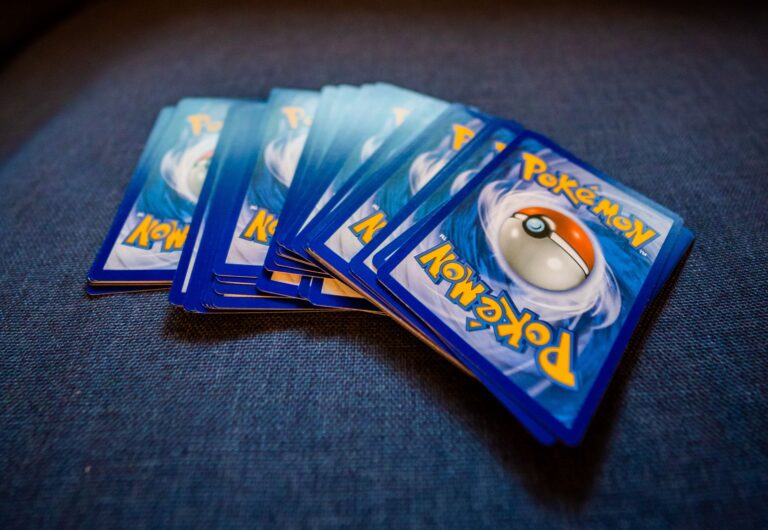
New matchmaking platforms are demonstrating that sophisticated algorithms can significantly improve how people and communities connect—and these advances could reshape how Pokemon card collectors find trading partners, dealers, and fellow enthusiasts. Platforms ranging from dating apps to gaming ecosystems are already proving that behavioral data, preference mapping, and machine learning can surface meaningful matches in seconds.
For a Pokemon card community, where finding the right collector to buy that vintage holographic card or the ideal trading partner can currently require hours of forum hunting and social media scrolling, these emerging technologies represent a genuine opportunity to streamline connections and improve collection outcomes. This article explores how matchmaking technology is advancing across multiple domains—dating, competitive gaming, and business networking—and what these breakthroughs mean for specialized communities. We’ll examine the algorithms powering these platforms, the real-world results they’re achieving, and the practical limitations collectors should understand before expecting similar tools in their own niche.
Table of Contents
- How AI-Powered Algorithms Are Transforming Matchmaking
- Matchmaking Platforms Are Emerging Across Diverse Industries
- Behavioral Data and Real-Time Preferences Drive Better Matches
- Applying Matchmaking Technology to Specialized Communities
- Understanding the Limitations and Data Privacy Tradeoffs
- Real-World Examples Show Measurable Improvements
- The Future of Matchmaking in Specialized Communities
- Conclusion
How AI-Powered Algorithms Are Transforming Matchmaking
Modern matchmaking platforms are moving far beyond simple keyword matching or manual curation. League of Legends, one of the world’s largest multiplayer gaming platforms, processes millions of matchmaking requests daily using machine learning algorithms that analyze player skill metrics, champion preferences, role selections, and behavioral patterns to construct balanced matches within seconds. This level of sophistication—instantly pairing thousands of players into competitive teams—represents a massive shift in what’s technically possible.
The principle scales across domains. A platform’s ability to ingest hundreds of data points about a user and surface relevant matches in real time means that communities with large populations can finally solve the “discovery problem”—the difficulty of finding exactly what you need among a vast pool of options. For Pokemon collectors, this could mean a system that understands you collect base set holos in near-mint condition, tracks which cards you’re actively seeking, notes other collectors with complementary inventory gaps, and surfaces opportunities automatically rather than requiring you to monitor dozens of Discord channels and Facebook groups.

Matchmaking Platforms Are Emerging Across Diverse Industries
Matchmaking technology is no longer confined to a single use case. Date Drop, a compatibility-based matchmaking platform launched at UC Davis in January 2026, demonstrates how curation can enhance niche communities: it pairs students based on compatibility algorithms and delivers curated matches weekly rather than overwhelming users with endless options. Meanwhile, business networking platforms like Brella are using advanced algorithms to analyze attendee profiles and professional goals to surface commercially meaningful matches at events, moving beyond random mingling toward intentional connections.
Even social dating apps are investing heavily in AI. Grindr is rolling out an AI “wingman” tool by 2027 that writes responses for users, identifies suitable matches, and helps plan dates—suggesting that the future of matchmaking isn’t just better algorithms but AI assistance throughout the connection process. However, each platform reveals an important caveat: the quality of matches depends entirely on the quality of the data and preferences captured. If a platform doesn’t understand what collectors actually want, or if users don’t articulate their goals, the algorithm’s sophistication becomes irrelevant.
Behavioral Data and Real-Time Preferences Drive Better Matches
The most effective modern matchmaking systems don’t rely solely on stated preferences. Virtual event platforms in 2026 are combining behavioral data, stated preferences, and real-time interactions to surface matches—meaning a platform learns not just what you say you want, but what you actually engage with and value in practice. This distinction matters: a Pokemon collector might say they’re interested in trading base set cards, but if platform data shows they consistently purchase high-grade vintage cards instead, the matching algorithm learns the actual priority.
This approach has real power. League of Legends’ system analyzes not just skill rank but also which champions specific players excel with, which roles they prefer, and even behavioral patterns around how they play—whether they’re aggressive or cautious, communicate well with teammates, or tend to underperform under pressure. The platform uses this to construct teams more likely to be competitive and cohesive than random selection would produce. For Pokemon, an equivalent system could track not just stated interests but purchase history, trade completion rates, response times, and feedback patterns to identify collectors likely to complete satisfying transactions together.

Applying Matchmaking Technology to Specialized Communities
The question for specialized communities like Pokemon collecting is whether the matchmaking infrastructure emerging in larger markets will eventually filter down. Platforms like Brella demonstrate that even smaller professional networks can support sophisticated matching—Brella’s system is built specifically to handle matchmaking at conferences and events ranging from niche technical gatherings to large industry conferences. This suggests the technology exists and could, in principle, be deployed in card collecting communities. However, a critical limitation exists: matchmaking platforms require sufficient population density to function well.
League of Legends can instantly match millions of players because millions are online simultaneously. A regional Pokemon card collecting community might have hundreds of active members, not millions. This doesn’t make matchmaking impossible—Date Drop functions successfully at UC Davis with a student population of roughly 40,000, delivering curated matches weekly—but it does change the implementation. Rather than real-time instant matching, a platform might function through weekly or monthly curation batches, more aligned with how physical card shows and trading events already operate.
Understanding the Limitations and Data Privacy Tradeoffs
Sophisticated matchmaking requires collecting and analyzing significant data about users. This creates an inherent tension: the more detailed a platform’s understanding of a collector’s preferences, buying behavior, and collection status, the better the matches it can surface—but the more sensitive the data it must handle. A matchmaking system that knows your entire collection, your budget constraints, the specific cards you’re seeking, and your negotiation history is powerful but also represents valuable information that competitors might want or that could be misused if accessed by bad actors.
Additionally, matchmaking algorithms can reflect and amplify existing biases in their training data. If a platform’s historical data shows that certain collectors are less likely to complete trades, the algorithm might systematically deprioritize matching them with others—even if the pattern was coincidental or circumstantial rather than predictive. League of Legends has had to continuously refine its matching to prevent smurfing (experienced players using low-rank accounts to dominate new players) and other exploits. Any platform deployed in collecting communities would need similar ongoing oversight to prevent the algorithm from becoming gamed or weaponized.

Real-World Examples Show Measurable Improvements
Platforms that have implemented sophisticated matchmaking are seeing concrete results. Brella reports successful matchmaking at hundreds of events worldwide, with documented improvements in attendee satisfaction and networking outcomes compared to unguided networking. Date Drop at UC Davis has achieved notable adoption among the student body, suggesting that thoughtful curation genuinely improves the user experience compared to status-quo approaches.
League of Legends’ matchmaking serves as the largest-scale proof of concept. Processing millions of requests daily while maintaining competitive balance and player satisfaction represents an enormous technical accomplishment. The platform continues to evolve its algorithms, releasing regular updates that address specific player concerns—such as role-fill consistency or reducing queue times while maintaining match quality. This iterative approach shows that even sophisticated systems require continuous refinement based on real-world outcomes.
The Future of Matchmaking in Specialized Communities
As matchmaking technology matures and becomes more accessible, specialized communities will face increasing pressure to adopt similar systems or risk losing members to platforms that offer superior discovery. The Pokemon collecting community already uses Discord servers, Facebook groups, and specialized trading forums—but these are essentially unstructured discovery mechanisms. A platform that applied proven matchmaking algorithms to this existing ecosystem could provide substantial value.
The timeline is unclear. Grindr’s advanced AI tools won’t roll out broadly until 2027, suggesting that even well-funded platforms with large user bases move deliberately when implementing complex new systems. For smaller communities, adoption might come through third-party services that specialize in matchmaking infrastructure rather than through proprietary platform development. Regardless of the specific path, the trajectory is clear: communities that enable better discovery and matching of collectors with cards, traders, and deals will likely outcompete those that rely on manual searching and random serendipity.
Conclusion
Matchmaking platforms are advancing rapidly across dating, gaming, and business networking—all proof points that sophisticated algorithms can meaningfully improve how people find what and whom they’re seeking. The technology is real, it’s working at scale, and the principles underlying it could absolutely be applied to Pokemon card collecting communities. The limiting factors aren’t technological but practical: whether sufficient population density exists to make matching worthwhile, whether community members would embrace data-driven matching systems, and whether the platforms operating in this space choose to prioritize collection communities as a market opportunity.
For collectors today, the practical takeaway is straightforward: continue using existing trading platforms, Discord communities, and forums—these remain effective—but stay attentive to new tools that emerge. When a platform claiming better matchmaking arrives in your collecting community, you’ll recognize the underlying technology as something already proven elsewhere. The first successful implementation in card collecting won’t be revolutionary; it will simply apply what League of Legends, Brella, and Date Drop have already demonstrated works.