
Yes, your Base Set Charizard could easily be a 1999–2000 print without you realizing it, and this print date absolutely affects its value—but not always in the way collectors expect. Cards dated “1999-2000” at the bottom represent 4th Print or UK Print cards from 2000, making them significantly more common than the 1999 prints that came before them. The critical factor isn’t just the print date itself, but what edition marker accompanies it. A 1999-2000 Unlimited Charizard is worth approximately $300 in Near Mint condition.
However, if that same card displays Shadowless characteristics (no gray drop shadow on the artwork border), you’re looking at $2,000–$4,000 for a Near Mint example, or $40,000–$60,000+ for a PSA 10 grade. The confusion arises because collectors often assume a 1999 date means rarity and high value, when in reality the print identification matters far more. Millions of 1999-2000 Unlimited Charizards were printed globally, especially in the UK market. A 1999-2000 dated card in your collection is likely one of these common later prints, not a valuable early release. Understanding whether your card is Shadowless (1999, pre-shadow border) or Unlimited (1999-2000, with shadow border) will determine if you’re holding a $300 card or a $40,000 card.
Table of Contents
- How to Identify Whether Your Charizard Is Really a 1999–2000 Print
- Why Print Date Alone Is a Misleading Value Indicator
- Real-World Examples and Price Comparisons
- Practical Steps to Identify Your Card’s True Print Status
- Common Grading Mistakes Collectors Make with Later Prints
- How Condition Grade Multiplies Value Across All Printings
- The Long-Term Market for 1999–2000 Base Set Charizards
- Conclusion
How to Identify Whether Your Charizard Is Really a 1999–2000 Print
The print date stamped on the bottom of your card is only half the identification puzzle. A 1999-2000 Charizard typically belongs to what collectors call the “Unlimited Edition”—cards that lack the “1st Edition” circle stamp on the lower left corner. The 1st Edition variant, which does carry a circle with a “1” stamp, represents the very first printing from 1999 and is far rarer and more valuable. If your card has no edition stamp at all, and the date reads “1999-2000,” you almost certainly have an Unlimited card from the 2000 printing run.
The visual difference extends beyond just the edition stamp. Shadowless cards from 1999 display a clean artwork border with no gray drop shadow effect, while Unlimited cards from 1999-2000 feature a pronounced gray shadow on the right edge of the frame, creating a 3D depth effect. The HP text on Shadowless cards is also noticeably thinner. These details require close inspection, but they’re reliable indicators. many collectors overlook these visual cues and focus solely on the year, missing the actual edition classification that determines rarity and price.

Why Print Date Alone Is a Misleading Value Indicator
Collectors frequently make the mistake of treating print date as the primary value driver, when in fact it’s a secondary factor at best. The 1999-2000 date became so common because The Pokémon Company substantially expanded production after the initial 1999 release due to overwhelming demand. These later prints reached Europe, the UK, and Australia in larger quantities. A 1999-2000 Unlimited Charizard, despite its vintage appearance, is fundamentally a mass-produced card from the height of the Pokémon boom.
The real value hierarchy works like this: 1st Edition (1999) commands $5,000+ in Near Mint condition and $162,000–$220,000 for psa 10 copies at auction. Shadowless (1999, no edition stamp) fetches $2,000–$4,000 NM, with PSA 10 examples reaching $40,000–$60,000+. Unlimited (1999-2000) sits at roughly $300 NM. A collector holding a 1999-2000 card is almost certainly in the Unlimited category, making the actual value significantly lower than the date might suggest. This gap in understanding leads many people to overvalue their cards or pursue grading on cards that won’t justify the submission cost.
Real-World Examples and Price Comparisons
Consider a concrete scenario: two collectors each own a Base set Charizard. Both cards are in Near Mint condition. The first collector’s card shows no edition stamp and no gray shadow on the artwork border—a Shadowless 1999 card worth approximately $3,500. The second collector’s card has the same clear condition but features the gray shadow border and no edition stamp, marking it as 1999-2000 Unlimited, worth roughly $300. Visually, to an untrained eye, these cards look nearly identical. The difference is a subtle shadow effect and understanding which printing wave produced the card. That single visual detail represents a $3,200 difference in value.
The PSA grading market amplifies these differences dramatically. A PSA 10-graded card commands exponentially higher value than PSA 9 or lower—often 5–10 times the price for the same print. A PSA 10 Shadowless Charizard recently sold for $60,000, while a PSA 9 of the same type might fetch $12,000–$18,000. For Unlimited cards, a PSA 10 might reach $500–$800, while a PSA 9 drops to $150–$250. Submitting a 1999-2000 Unlimited Charizard for grading typically costs $50–$150 depending on the service. If your card grades PSA 9, you might recover $200–$300 total, resulting in a net loss after submission costs. This is why knowing your card’s true print status matters before spending on grading.

Practical Steps to Identify Your Card’s True Print Status
Start by examining the bottom border of your card. Look for a circular stamp containing “1” on the lower left corner. If it exists, you have a 1st Edition card, which is extremely valuable regardless of condition. If no edition stamp appears, move to the next test. Hold the card at an angle and study the artwork border on the right side. Shadowless cards have a clean, flat border. Unlimited cards display a noticeable gray drop shadow that creates a beveled or 3D appearance. This shadow is the most reliable visual identifier between Shadowless and Unlimited editions.
Compare your card’s HP text with reference images online. The HP font size and weight differ subtly between Shadowless and Unlimited printings. Shadowless cards feature thinner, more delicate lettering, while Unlimited cards have slightly bolder text. These micro-details require good lighting and ideally a magnifying glass or loupe to see clearly. Another practical step is to research the card’s origin. If you acquired it from a European collection, a bulk lot, or a shop in the UK or Australia during the early 2000s, it’s almost certainly 1999-2000 Unlimited. If you pulled it from a booster box purchased in North America in 1999, it has a higher probability of being Shadowless or 1st Edition. Your card’s provenance, combined with visual inspection, typically provides enough evidence to classify it accurately.
Common Grading Mistakes Collectors Make with Later Prints
One of the costliest mistakes collectors make is submitting 1999-2000 Unlimited Charizards for professional grading without understanding the value threshold. Grading a card costs money upfront—typically $50 to $150 depending on turnaround time and service tier. For a card worth $300 in raw NM condition, a PSA grade of 8 or 9 might increase the value to $400–$500, which doesn’t offset the grading cost and shipping expenses. Many collectors have paid $100 to grade a card that increases in value by only $75, resulting in a net negative return. Another warning: condition is exponentially more important for lower-value printings than for rare editions.
An Unlimited Charizard that grades PSA 7 is worth roughly $100; PSA 8 reaches $150–$200; PSA 9 climbs to $250–$350. The jump from raw NM to PSA 10 on an Unlimited card might add $200–$300 of value. For Shadowless cards, a PSA 9 to PSA 10 jump might add $20,000–$30,000 of value. This exponential multiplier means submitting a lower-rarity print requires near-perfect condition to justify the cost. A 1999-2000 card with any visible wear, centering issues, or corner softness is almost never worth grading professionally.
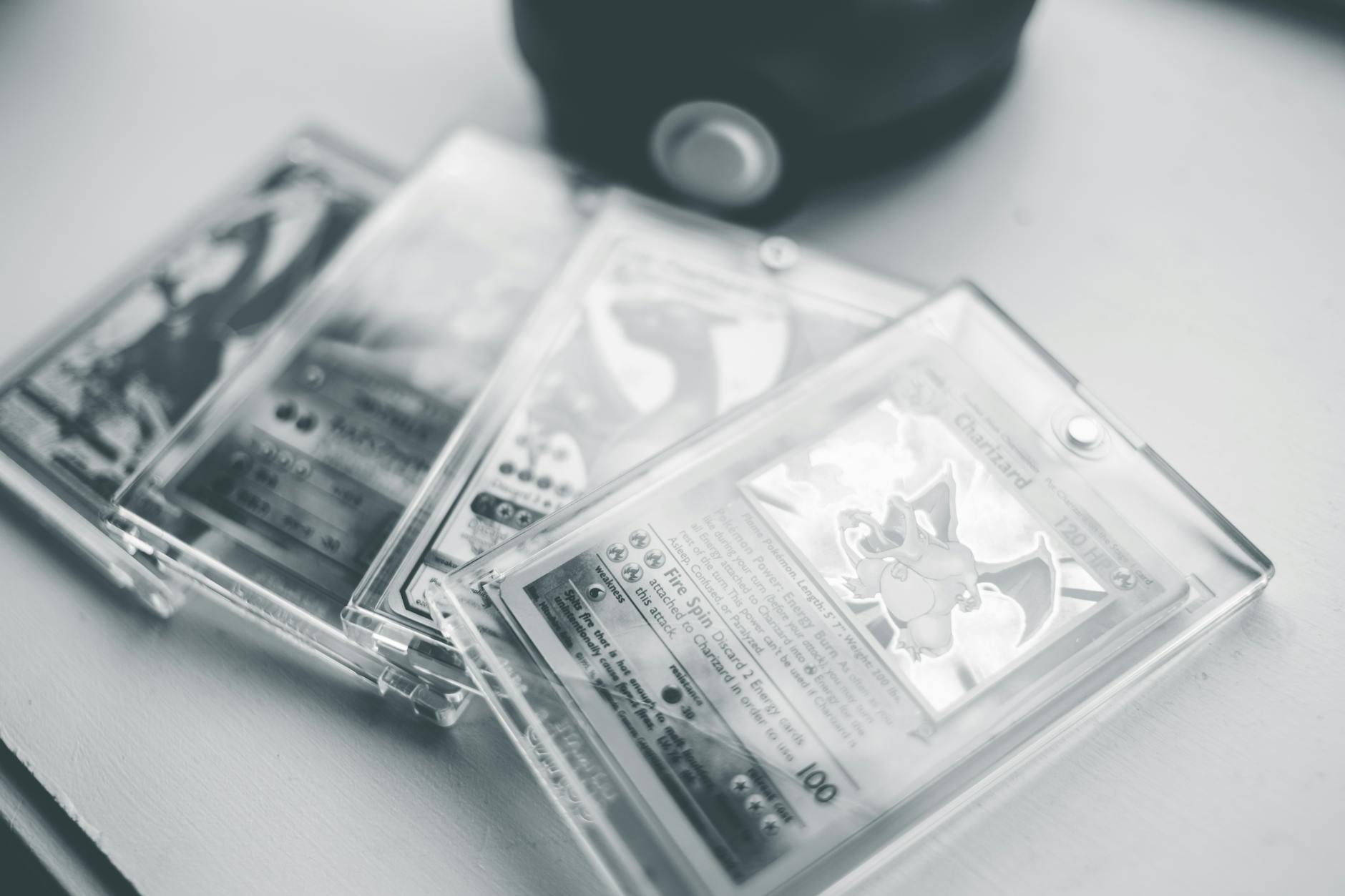
How Condition Grade Multiplies Value Across All Printings
Grading services use a 1–10 scale, with 10 being pristine and factory condition. For any Charizard variant, the gap between grades is not linear—it’s exponential. A PSA 8 Unlimited Charizard might sell for $200, while a PSA 9 of the same card fetches $350, and a PSA 10 reaches $500–$800. The jump from 8 to 9 adds roughly $150; the jump from 9 to 10 adds another $150–$450. For Shadowless cards, the same scenario results in $8,000 (PSA 8), $15,000 (PSA 9), and $50,000–$60,000 (PSA 10).
A single grade point on a rare print can mean the difference between a four-figure card and a five-figure card. This multiplicative effect is why collectors obsess over condition and storage. A 1999-2000 Charizard kept in a top-loader for twenty years might be PSA 7 or 8, worth $150–$250. The same card stored in an acid-free sleeve and stored flat in a cool, dark environment might grade PSA 9, worth $300–$400. The difference is proper preservation. For Shadowless or 1st Edition cards, this gap becomes life-changing—the difference between $20,000 and $60,000 often comes down to whether a collector stored the card properly decades ago.
The Long-Term Market for 1999–2000 Base Set Charizards
The market for 1999-2000 Unlimited Base Set Charizards has remained relatively stable over the past five years, fluctuating between $250 and $400 for Near Mint raw examples, depending on market sentiment. Unlike 1st Edition and Shadowless variants, which have experienced significant appreciation due to scarcity and mainstream collector interest, Unlimited prints represent a more accessible entry point for newer collectors. As the Pokémon Trading Card Game continues to grow and attract investment capital, the demand for even common vintage cards has increased slightly, though the appreciation rate lags far behind rarer printings.
Future value for 1999-2000 cards will likely remain tied to the overall health of the hobby and general nostalgia-driven collecting. These cards are unlikely to experience the explosive growth seen in early printings, but they serve an important role in making vintage Charizards accessible to collectors with modest budgets. As print scarcity becomes increasingly recognized as the true driver of value, accurately identifying whether your card is from 1999 or 1999-2000 will become more important for making informed buying and selling decisions.
Conclusion
Your Base Set Charizard is likely a 1999–2000 print, but that date alone tells you very little about its actual value. The determining factors are whether it bears a 1st Edition stamp (extremely rare and valuable), whether it displays Shadowless characteristics (rare and valuable), or whether it’s an Unlimited edition (common and modestly valued). A 1999-2000 Unlimited Charizard is worth approximately $300 in Near Mint condition—still a respectable vintage card, but not the five-figure treasure that newer collectors sometimes imagine. The print date is simply one data point; the edition classification, visual characteristics, and condition grade determine true market value.
Before pursuing professional grading or listing your card for sale, inspect it carefully for the gray shadow border and check for edition stamps. Research the specific variant you own, compare its condition to grading standards, and calculate whether professional grading makes financial sense. Many 1999-2000 Charizards are best left as raw cards, valued for their nostalgia and presence in a collection rather than as investment vehicles. Understanding this reality will help you appreciate what you own and make smarter decisions about preservation, selling, or upgrading your collection.
You Might Also Like
- How Different Generations See the Value of Base Set Charmeleon
- Chansey Base Set Pricing May 2026: Are Values Rising Since April 2026?
- Alakazam Base Set Pricing May 2026: Is It Growing Since April 2026?