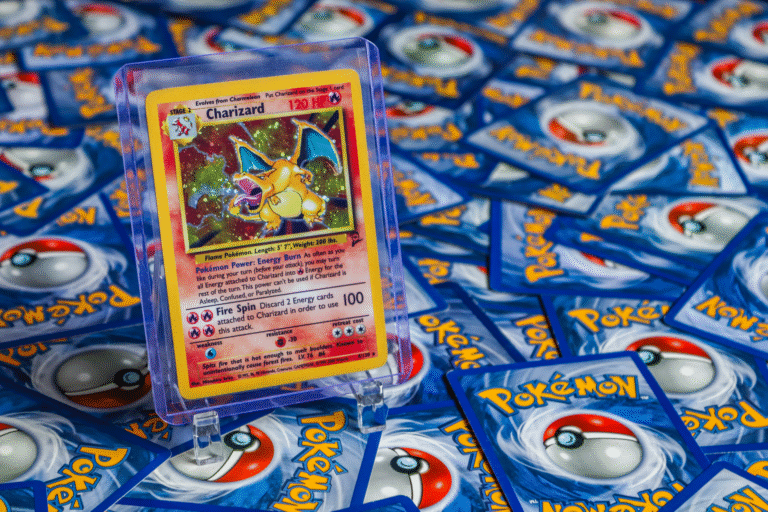
Understanding the total number of Base Set Charizards across all runs involves delving into the history of the Pokémon Trading Card Game (TCG) and the specifics of card production during its early years. The Base Set, released in 1999, was the first set of cards for the official Pokémon TCG in the United States and included the highly sought-after Charizard card.
The Base Set was initially printed in large quantities, but it was divided into several print runs, each with distinct characteristics. The most valuable and sought-after version is the **First Edition Charizard**, which is part of the early print run marked with a “1st Edition” stamp. This version is particularly rare because it lacks the drop shadow on the right side of the Pokémon’s image, a feature added in later printings. The absence of this shadow, combined with the “1st Edition” stamp, makes these cards highly valuable among collectors.
Following the First Edition, subsequent print runs included the **Unlimited Edition**, which did not have the “1st Edition” stamp and included the drop shadow. Despite the larger print run of Unlimited Editions, the Charizard card remained highly popular due to its iconic status as one of the most powerful and recognizable Pokémon.
Determining the exact number of Base Set Charizards produced across all runs is challenging due to the lack of detailed production records from the time. However, it is known that the Base Set had a significant print run, with millions of cards produced. The Charizard card, being one of the most popular, was likely printed in substantial quantities, but the exact figure remains unknown.
The value of these cards is influenced by factors such as rarity, condition, and demand. The First Edition Charizard, especially in mint condition, can fetch extremely high prices. For example, a PSA 10 mint condition First Edition Shadowless Charizard sold for $420,000 in 2022, highlighting its status as one of the most valuable Pokémon cards.
In terms of medical references, there are no direct connections between Pokémon cards and medical information. However, for any health-related queries or concerns, it is essential to consult authoritative sources such as the World Health Organization (WHO) or peer-reviewed medical journals like the New England Journal of Medicine (NEJM) or the Journal of the American Medical Association (JAMA).
The popularity of Pokémon cards, including the Charizard, has endured over decades, with their value fluctuating based on market demand and collector interest. The cultural significance of these cards, particularly the First Edition Charizard, has cemented their place in both the Pokémon franchise and the broader world of collectibles. As the market for collectible cards continues to evolve, the value and rarity of these early Pokémon cards remain a topic of interest for collectors and enthusiasts alike.