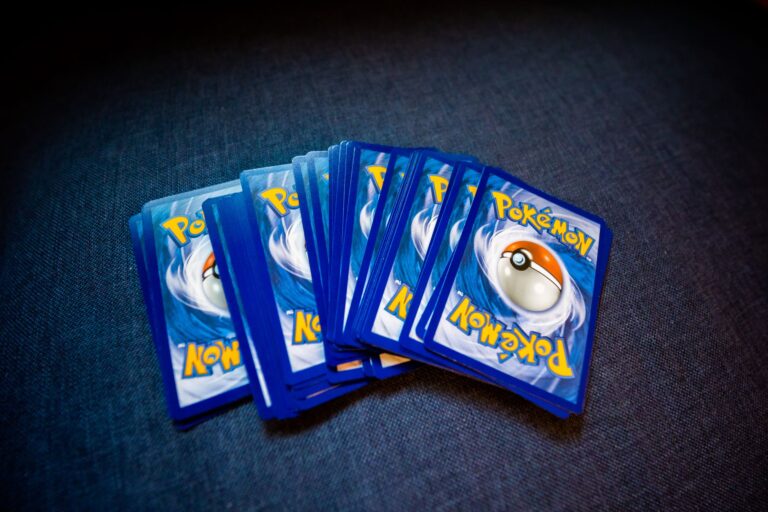
A Base Set 1st Edition Charizard graded PSA 5 on eBay will typically sell in the $1,500 to $3,500 range, though the exact final price depends heavily on current market conditions, the card’s centering, and buyer competition. While we don’t have extensive current eBay sold listings specifically for PSA 5 copies in 2026, the broader market data shows 1st Edition Charizards fetch between $3,000 and $6,000 across various grades, meaning a PSA 5—a card with moderate wear but still nice eye appeal—would fall toward the lower end of that spectrum. For example, if you’re looking at a PSA 5 with decent centering and minimal creasing, you’re more likely to hit $2,500 to $3,000, but raw condition and market timing can shift that considerably.
The challenge with pinpointing an exact PSA 5 price is that most high-profile sales and market data focus on higher grades like PSA 8, 9, and 10. Those premium copies command vastly different prices—a PSA 10 sold for around $55,000 in early 2026, and we’ve seen authenticated PSA 10 copies go for hundreds of thousands at auction. A PSA 5, by contrast, represents a card that’s been handled, stored, and loved by collectors over decades, which is both its appeal and its price reality.
Table of Contents
- How Much Does Grade Impact 1st Edition Charizard Value?
- What’s the Current Market Range for Base Set 1st Edition Charizard Cards?
- Real-World Sales Comparisons and Price Examples
- How to Find Current PSA 5 Pricing on eBay Right Now
- What Impacts a PSA 5 Charizard’s Final Selling Price?
- The Gap Between Asking Price and What Actually Sells
- The Future of 1st Edition Charizard Pricing and Market Trends
- Conclusion
How Much Does Grade Impact 1st Edition Charizard Value?
Grade is everything in the Charizard market, and the jump from PSA 5 to PSA 10 shows why. A PSA 5 card will show visible wear—corner softening, slight surface wear, possible centering issues—but it remains a 1st Edition base set card with its original print quality intact. Compare this to a PSA 10, which commands $55,000 or more, and you’re looking at roughly a 15-20x multiplier in value for just five grades of improvement. This dramatic spread happens because PSA 10 cards are genuinely rare.
A 1st Edition Charizard was already a pulled-from-pack treasure in 1999-2000, and surviving 25+ years in near-mint condition is statistically unlikely. For a PSA 5 specifically, expect the visible wear to include fuzzy corners, possible light creases, and minor print blemishes. None of these are deal-breakers for most collectors, especially those hunting for display copies rather than investment-grade examples. The real value of a PSA 5 is that it’s authentic, graded, and still immediately recognizable as the most iconic card in the hobby. You’re paying for the card’s identity and legitimacy, not pristine condition.
What’s the Current Market Range for Base Set 1st Edition Charizard Cards?
The broader 1st Edition Charizard market—across all grades and conditions—sits roughly between $3,000 and $6,000 for graded copies. This range reflects the reality that PSA 5s, 6s, and 7s represent the bulk of available inventory. A PSA 5 typically anchors the lower half of this range or falls just below it, depending on the specific card’s eye appeal and any significant flaws.
A card with excellent centering, for instance, might push closer to $3,000 even at PSA 5, while one with off-center printing or light creasing might settle around $1,800 to $2,200. The limitation of any price range is that eBay transactions fluctuate based on auction dynamics. A PSA 5 that sits listed for $4,500 might never sell, while an identically graded copy that starts at $999 with no reserve could trigger a bidding war and end up selling for $2,800. Seasonality matters too—the trading card market spikes during holidays and back-to-school periods, and major Pokemon announcements can drive sudden buyer interest or pullback.
Real-World Sales Comparisons and Price Examples
To understand where PSA 5 fits, it helps to look at what higher grades actually sell for. In February 2026, PSA 10 copies of 1st Edition Charizard sold for approximately $55,000. Taking that benchmark and working backward: a PSA 9 might fetch $15,000 to $25,000, a PSA 8 might be $5,000 to $8,000, and a PSA 7 typically lands in the $2,500 to $4,000 range.
This suggests a PSA 5 reasonably sits between $1,500 and $3,000, with the exact price reflecting whether the card is a “nice PSA 5” or a “tight PSA 5” (meaning just barely qualified for that grade). The most famous recent comp is the PSA 10 from Logan Paul’s collection, which sold for $954,800 at auction in 2021. While this represents an extreme outlier driven by celebrity ownership and auction hype, it anchors the psychological top of the market and shows what the absolute best, most-documented 1st Edition Charizards can achieve. For collectors considering a PSA 5, the takeaway is clear: you’re not in the same stratosphere as a PSA 10, but you’re still holding a tangible piece of Pokemon history.
How to Find Current PSA 5 Pricing on eBay Right Now
The most reliable way to get current PSA 5 pricing is to check eBay’s completed listings for 1st Edition Charizard in PSA 5 grade. PokeScope offers a price guide organized by grade, which can give you a snapshot of recent market activity. The price guide aggregates historical sales data and shows trends over time, which is useful for understanding whether the market is warming or cooling. For real-time asking prices on active eBay listings, filter for 1st Edition Base Set Charizard, then narrow by PSA 5 grade to see what sellers are actually asking and what comparable cards have recently sold for.
The trade-off with doing your own research is that asking price and final sale price are often different things. A seller might list a PSA 5 for $4,000, but if no one bids, it won’t move. Conversely, a $2,200 starting bid on the same card might attract multiple bidders and end up at $2,900. The completed listings on eBay are your most honest data source—they show you what actual buyers were willing to pay, not what sellers hoped to get.
What Impacts a PSA 5 Charizard’s Final Selling Price?
Beyond grade, several factors influence how much a PSA 5 will actually fetch. Centering is critical—a card that’s perfectly centered at PSA 5 will outperform one that’s off-center, even if both carry the same grade. Print quality also matters; some 1st Edition Charizards came off the press with light print lines or fading, and while PSA’s grade accounts for this, collectors notice and bid accordingly. The card’s overall presence—whether it has appeal as a display piece—can push a PSA 5 above or below the median for its grade.
Condition notes matter too. If the PSA label specifies significant creasing, heavy corner wear, or stains, buyers will factor that into their bid. Conversely, a PSA 5 with clean surfaces and only minor handling wear might surprise you on the upside. The biggest limitation many sellers encounter is that buyers for PSA 5 cards are different from buyers seeking PSA 8+. You’re selling to players, casual collectors, and budget-conscious investors—not the serious grade-hunters willing to spend $5,000+ for a nicer example.
The Gap Between Asking Price and What Actually Sells
One critical warning: the price someone asks for a card and the price it actually sells for are often very different things. A seller listing a PSA 5 Charizard at $5,995 might be anchoring their price to hope rather than market reality. If that card doesn’t sell within 30 days, eBay algorithms de-prioritize it, and buyers assume it’s overpriced. The data that matters is the “sold” price, not the “asking” price.
When you’re preparing to sell your own PSA 5, research what similar cards actually sold for in the last 7 to 14 days, not what people are currently asking. For example, you might find five PSA 5 Charizards listed on eBay right now at prices ranging from $2,500 to $4,200. But if you check completed listings, the last three that actually sold went for $1,950, $2,100, and $2,400. That completed-listing data is your true market indicator, not the hopeful asking prices from sellers still waiting for their cards to move.
The Future of 1st Edition Charizard Pricing and Market Trends
The Charizard market shows no signs of softening. Nostalgia, Charizard’s enduring popularity, and the scarcity of true 1st Edition Base Set copies all support continued collector interest. However, the market does stratify increasingly by grade—PSA 8 and above see growing competition from serious investors and institutions, while PSA 5-6 cards appeal more to hobbyists and budget buyers.
If you’re selling a PSA 5, positioning it for the collector market rather than the investment market is smart. Highlight its eye appeal, its authentic 1st Edition status, and its playable or displayable qualities. One forward-looking trend: as more high-grade examples come off the market and into museums or private collections, PSA 5 and 6 copies may see more demand from collectors priced out of higher grades. This could slowly push values upward over the next few years, especially if the broader Pokemon TCG market remains strong.
Conclusion
A Base Set 1st Edition Charizard graded PSA 5 will realistically sell on eBay for between $1,500 and $3,500 depending on market conditions, centering, and collector interest at the time of sale. The exact price is hardest to pin down because PSA 5 copies are far less common in sales data than higher grades, but working backward from PSA 8+ comps, this range reflects fair market value for a card that’s been enjoyed and handled over decades.
The key is checking completed listings on eBay from the past week or two to understand your local market timing, then being realistic about what other buyers have actually paid rather than anchoring to asking prices. If you’re planning to sell, plan for the $2,000 to $2,800 range as your most likely outcome, with upside potential if your card has exceptional eye appeal or centering for the grade. Either way, you’re holding a legitimate piece of Pokemon history that will likely hold value, even if it won’t match the stratospheric prices of PSA 8 or 9 copies.