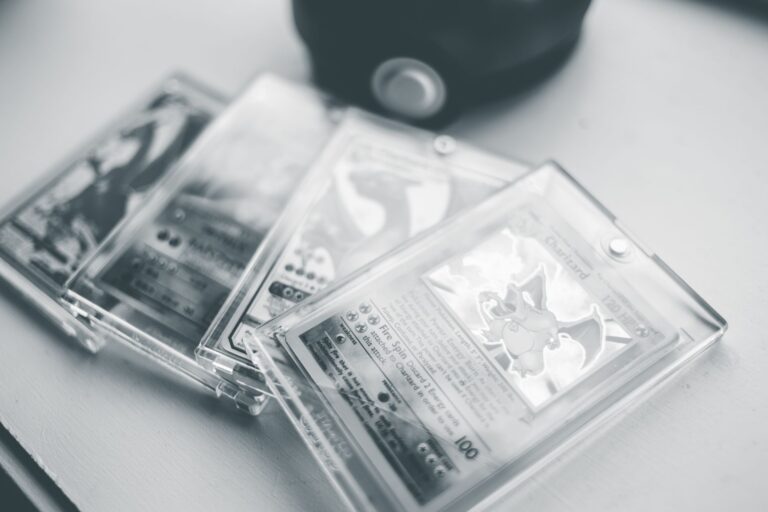
Major auction platforms are reporting a noticeable surge in Pokémon card listings and sales activity, with data showing increased bidding volumes and higher lot turnover rates throughout 2025 and into 2026. This uptick reflects renewed collector interest, particularly in vintage and first-edition cards, as well as graded examples commanding premium prices on platforms like eBay, PWCC Marketplace, and Heritage Auctions. A first-edition Charizard that sold for $183,500 at Heritage Auctions in early 2025 exemplifies the market’s appetite for high-value pieces, though this represents the premium end of a much broader increase in mid-tier and lower-priced card activity.
The increased auction platform activity is driven by several converging factors: the maturation of the collector base, improved grading standards and price transparency, and a seasonal uptick that often follows major trading card game releases and promotional events. Sellers are responding to this demand by listing cards at faster rates, while serious collectors are willing to bid more aggressively to complete their sets or acquire cards they’ve been seeking. This shift has important implications for how collectors approach pricing strategy, platform selection, and timing their purchases and sales. Understanding what’s driving this activity helps both buyers and sellers navigate the market more effectively.
Table of Contents
- Why Are Auction Platforms Experiencing More Pokémon Card Trading?
- Market Saturation and the Flood of Supply
- Grading and Auction Platform Specialization
- Seasonal Peaks and Strategic Auction Timing
- Competition Between Auction Platforms and Price Manipulation Risks
- Emerging Secondary Markets and Platform Alternatives
- Future Outlook for Auction Platform Activity
- Conclusion
- Frequently Asked Questions
Why Are Auction Platforms Experiencing More Pokémon Card Trading?
Auction platforms have become the primary discovery mechanism for serious collectors seeking specific cards, graded examples, and rare inventory that traditional retail channels don’t provide. The transparency of auction bidding—where the final price reflects actual collector demand—makes these platforms more reliable for pricing data than asking prices or fixed-price listings. When a platform like PWCC or eBay auctions sees hundreds of Pokémon lots selling weekly, it signals genuine collector spending rather than speculative pricing. The increase also reflects a shift in how collectors acquire cards.
Rather than hunting through local card shops or private collections, many buyers now turn to auctions first because they offer access to cards from sellers nationwide and internationally. A base set Blastoise in PSA 8 condition might take months to find locally, but on eBay auctions it appears regularly, often with multiple copies being auctioned simultaneously. This availability drives more transactions and makes it easier for collectors to complete sets on their timeline. Additionally, the grading services themselves have made auction platforms more attractive by establishing standardized quality assessments that reduce buyer risk. Collectors are more confident bidding on a PSA 8 card than a “light play” card described in text, which in turn encourages more auction participation and higher lot volumes.

Market Saturation and the Flood of Supply
With higher auction activity comes a warning that’s important for sellers: increased supply can actually suppress prices for common and lightly played cards. When dozens of the same card are being auctioned simultaneously across platforms, bidders can cherry-pick the best example at the lowest price, forcing other sellers to reduce their expectations. A Holo Alakazam from Base Set in Near Mint condition might have commanded $60-80 in isolated sales a year ago, but when three or four appear on auction in the same week, bidding can settle at $35-45 as competition drives prices down. This saturation particularly affects cards in the $10-100 range, which represents the bulk of most collector purchases.
Higher-value cards and extremely rare pieces remain relatively insulated from oversupply because fewer copies exist and demand concentrates them. The warning for sellers is to carefully time listings and avoid auctions that overlap with known market events—launching an auction during a major Pokémon Company announcement or a competing TCG promotion can result in lower final prices. However, saturation also offers buyers an advantage: they have more selection and can wait for better examples at better prices. Patience is rewarded in a higher-activity market.
Grading and Auction Platform Specialization
The rise of graded card auctions represents a significant portion of the increased activity on platforms like Heritage Auctions, where PSA, BGS, and CGC slabs command dedicated attention and attract institutional buyers alongside individual collectors. Graded cards have their own pricing trajectory separate from raw cards, and auctions provide the best price discovery for these specialized products. A first-edition Base Set Blastoise in PSA 7 might sell at auction for $800, while the same card graded PSA 6 settles at $450, creating clear tier differentiation that helps collectors understand market value. PWCC Marketplace and Heritage Auctions have also invested in better cataloging and authentication for Pokémon cards, making their platforms destinations for serious collectors. Heritage’s specialists can identify printing variations, confirm authenticity, and provide detailed lot descriptions that command premium prices.
This specialization attracts higher-spending bidders and creates price benchmarks that influence the entire market. When Heritage auctions a 1999 Shadowless Charizard and documents its specific print line characteristics, that price data cascades to inform secondary market values everywhere else. The limitation to understand is that not all Pokémon cards benefit equally from grading and auction platforms. Commons and bulk lots move better through alternative channels like Facebook Marketplace, local card shops, or bulk lot sales. Auction platforms work best for cards valued above $15-20 and cards with notable grading potential or rarity.
Seasonal Peaks and Strategic Auction Timing
Auction activity typically peaks during specific seasons: the months following major Pokémon TCG set releases, the holiday shopping season (November-December), and the weeks leading into major trading card gaming conventions and shows. Sellers who time their auctions for these windows often see higher final prices and faster lot completion. A seller who auctions a moderate-value card during peak season might reach $120, while the same card auctioned in a slower month might only reach $85—a 41% difference driven entirely by market attention and competing demand.
The tradeoff for timing auctions strategically is that you must wait for the right window, which can extend your holding period by weeks or months. A seller sitting on inventory they want to liquidate immediately faces a choice: list now and accept lower prices, or wait for seasonal peaks and potentially achieve 15-30% higher values. For serious collectors and card shops, the math usually favors waiting. For casual sellers who simply want to clear cards, the opportunity cost of waiting may outweigh the price premium.
Competition Between Auction Platforms and Price Manipulation Risks
Not all auction platforms are created equal, and there’s a real risk of artificial price inflation when the same seller operates multiple accounts across platforms or colludes with other sellers to bid up prices on specific lots. This is rare but documented, particularly in the $50-300 range where bid volumes are lower and collusion is harder to detect. A collector who’s extensively researching prices should be cautious about treating unusual price spikes as market truth—sometimes a card sold for $220 not because the market values it that highly, but because two accounts engaged in extended bidding. The warning here extends to understanding which platform prices to trust for benchmarking. eBay auction data is public and voluminous, making it generally reliable for common cards. Heritage Auctions provides high-end benchmarks but only reflects the premium segment of the market.
PWCC has carved out a middle ground with enthusiast-level inventory. Using data from all three sources, rather than relying on one platform, gives collectors a more balanced view of actual market prices. Additionally, auction fees and platform-specific costs should factor into seller expectations. A card that nets $100 after eBay’s 12-13% fees differs significantly from the same card netting $100 at a platform with 8% fees. Smart sellers account for this when comparing auction vs. fixed-price selling strategies.

Emerging Secondary Markets and Platform Alternatives
Beyond traditional auction sites, newer platforms like TCGPlayer’s Direct and various Discord-based trading communities are capturing portions of auction activity that might have otherwise gone to eBay or Heritage. These alternative channels offer faster transactions, lower fees, and sometimes better prices for mid-tier inventory.
A collector looking to move a $40-100 card might find better luck negotiating directly with another collector on Discord than waiting for auction bidding to develop on eBay. The emergence of these alternatives reflects the broader market shift toward collector-to-collector transactions and away from pure auction-house models. However, these channels lack the price transparency and protection of established auction platforms, introducing risk and uncertainty that sellers must weigh against potential fee savings.
Future Outlook for Auction Platform Activity
As Pokémon card collecting continues maturing as a serious hobby and investment category, auction platforms are likely to become even more central to price discovery and transaction volume. The professionalization of grading, authentication, and provenance documentation will continue attracting new participants and higher spending levels.
We can expect to see more institutional players entering the market through auction channels, particularly for cards valued above $500, which will likely elevate prices at the premium end while maintaining current levels in the mid-tier market. The continued rise of international auction participation—collectors from Europe, Asia, and elsewhere bidding on U.S.-based auctions—adds new demand layers that should sustain higher activity levels even if domestic collector growth plateaus. Sellers who understand these dynamics and adapt their strategies accordingly will be best positioned to capitalize on the current market.
Conclusion
Auction platforms are definitively experiencing higher Pokémon card activity, driven by a combination of collector base maturation, improved grading standards, and the efficiency of auctions as price-discovery mechanisms. This increased activity creates both opportunities and risks: sellers can reach broader audiences and achieve higher prices during peak seasons, but also face heightened competition, potential oversupply in certain categories, and the need to time listings strategically.
For collectors and sellers navigating this market, success depends on understanding which platforms serve which segments, timing auction listings for maximum visibility, accounting for fees and market saturation, and using auction data to inform pricing decisions across all channels. The market is unlikely to contract significantly given the underlying collector demand, but activity will continue to fluctuate seasonally, making informed strategy essential for anyone buying or selling seriously.
Frequently Asked Questions
Is now a good time to sell my Pokémon cards at auction?
It depends on the specific cards and current season. High-value and graded cards benefit from auction timing, while commons move better through bulk sales. Check seasonal activity on your target platform and compare your card’s recent comparable sales before listing.
Why do the same cards sell for different prices on different auction platforms?
Platform audiences differ—Heritage attracts premium buyers, eBay reaches casual collectors, and PWCC appeals to enthusiasts. Fees, timing, and lot competition also create price variance between platforms.
How much should I budget for auction fees when selling cards?
Expect 12-15% total fees on eBay, 8-12% on specialized platforms, and sometimes higher on sites with buyer premiums. Always subtract these costs when calculating your net proceeds.
Are increased auction listings driving prices up or down?
It varies by price tier. Rare cards are insulated and may see price increases due to higher demand and exposure. Mid-range cards ($10-100) often see price pressure from oversupply, while very common cards remain relatively stable.
Should I wait for a better season to sell my cards?
If you’re not in immediate need of the proceeds, waiting for peak season (post-set releases, holidays) can increase prices by 15-30%. For immediate liquidity, the current market still offers fair prices compared to historical averages.
What’s the difference between auction and fixed-price selling for Pokémon cards?
Auctions maximize price discovery but add uncertainty and take longer to complete. Fixed pricing offers predictability and faster sales but may undervalue cards that would attract competitive bidding at auction. Choose based on your timeline and the card’s rarity.