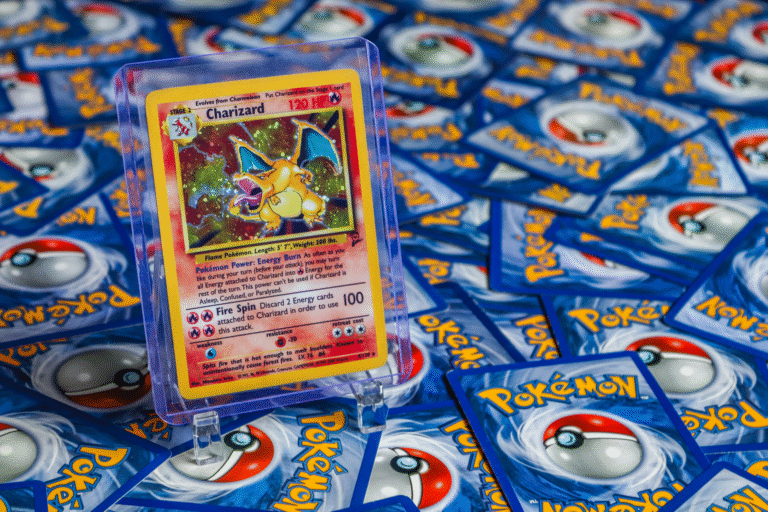
Base Set Scoop Up is a trainer card that has become one of the most sought-after and expensive cards from the original Pokemon Trading Card Game release, making it a prime target for first-time sellers looking to cash in on their collections. The card’s value stems from its playability in competitive Pokemon TCG formats, its scarcity in near-mint condition, and the nostalgia surrounding the Base Set era. For a first-time seller, understanding the current market for this card—which regularly sells for anywhere from $50 to several thousand dollars depending on condition and grading—is essential before listing it for sale.
The dramatic price range exists because condition is everything with Base Set Scoop Up. A card graded PSA 9 might fetch $400-800, while the same card in PSA 8 condition could sell for $150-300. Many new sellers make the critical mistake of overestimating their card’s condition, leading to either unsold listings or significantly lower final sale prices when buyers realize the card doesn’t match the description.
Table of Contents
- What Makes Base Set Scoop Up Valuable to Buyers?
- Grading and Condition Assessment for First-Time Sellers
- Current Market Conditions and Pricing Strategy
- Deciding Between Raw and Graded Sales
- Authentication Concerns and Counterfeit Awareness
- Platform Selection and Listing Strategy
- Market Outlook and Long-Term Considerations
- Conclusion
What Makes Base Set Scoop Up Valuable to Buyers?
base Set Scoop Up’s value comes primarily from its utility in Pokemon TCG tournaments and its limited print run during the original Base Set release. The card has consistent competitive applications across multiple eras of the game, unlike many cards that eventually become obsolete due to power creep. When comparing card prices across vintage Pokemon sets, Base Set Scoop Up consistently ranks in the top ten most expensive trainer cards—a distinction shared with only a handful of cards like Blastoise, Charizard, and Venusaur.
The secondary market for this card has remained stable because serious Pokemon TCG players actively seek it out for deck construction, not just collectors hunting for nostalgia pieces. This dual demand—from both collectors and players—is what separates Scoop Up from cards that spike temporarily and then crash. For first-time sellers, this stability is actually good news: you’re not trying to sell a fad item, but rather a legitimately useful card that has maintained relevance for nearly three decades.
Grading and Condition Assessment for First-Time Sellers
Understanding how grading services like PSA and BGS evaluate Base set Scoop Up is non-negotiable before you attempt a sale. These services use a numeric scale where PSA 7 is considered “near mint,” PSA 8 is “mint,” and PSA 9 is “gem mint,” with most casual collectors unable to distinguish between a 7 and 8 with the naked eye. The limitation you’ll immediately encounter is that professional grading costs $20-100 depending on turnaround time, which means you need to estimate whether your card’s grade justifies the grading fee before investing in authentication.
Many first-time sellers attempt to grade their own cards by comparison photos online, which almost always results in overestimation. A card with light corner wear, mild centering issues, or slight surface wear that looks “near perfect” to an untrained eye might receive a PSA 6 or 7 from professional graders, cutting the card’s value by 50-70%. The warning here is critical: an ungraded Base Set Scoop Up in good condition typically sells for 30-40% less than a professionally graded equivalent, so selling without grading is usually only advisable if your card is clearly damaged enough that grading would be cost-prohibitive.
Current Market Conditions and Pricing Strategy
The Pokemon TCG market has experienced significant volatility since 2020, with Base Set prices spiking during the pandemic collector boom and then moderating as supply increased. Base Set Scoop Up currently trades at roughly 60% of its 2021 peak prices, which means if you’re comparing your card’s value to listings from 4-5 years ago, you’re likely overestimating what buyers will pay today. Current market prices show PSA 8 copies selling in the $200-350 range on platforms like eBay, TCGPlayer, and Heritage Auctions, down from the $500-800 range seen in 2021-2022.
Your pricing strategy should depend heavily on which platform you choose. eBay tends to attract casual collectors willing to pay 5-10% premiums for convenience, while specialized Pokemon TCG marketplaces like TCGPlayer attract serious players who compare prices across dozens of listings. An example: the same PSA 8 card might sell for $325 on eBay within a week but require $275 on TCGPlayer to move quickly. First-time sellers often list on eBay first because the interface is familiar, but experienced Pokemon card sellers increasingly favor specialized platforms where the buyer base expects fair pricing.

Deciding Between Raw and Graded Sales
A crucial decision for first-time sellers is whether to sell your Base Set Scoop Up raw (ungraded) or invest in professional grading before listing. Grading a card with obvious heavy damage or wear is wasteful—professional graders will likely assign it a PSA 5 or lower, making the grading fee uneconomical. However, if your card appears to be in genuinely nice condition with minimal visible flaws, grading can dramatically improve the final sale price and speed up the sale process.
The comparison is straightforward: a raw Base Set Scoop Up in excellent condition sells in the $150-250 range, while the same card graded PSA 8 sells for $250-350. The $100-150 premium can easily justify the $20-50 grading fee (depending on turnaround time), but this only works if your assessment of the card’s condition is accurate. A first-time seller’s biggest mistake is grading a card they think is PSA 8 quality, receiving a PSA 6 or 7, and realizing too late that they’ve lost money on the grading fee and buyer fees combined.
Authentication Concerns and Counterfeit Awareness
While Base Set Scoop Up counterfeits do exist, they’re generally easy to spot because the card is valuable but not as heavily counterfeited as Charizard or Blastoise. The main warning for first-time sellers is reverse: don’t assume your vintage card is automatically authentic just because it looks correct. Counterfeiters have improved significantly, and some fakes can pass casual inspection under normal lighting.
If you’re planning to sell an ungraded card, expect skeptical buyers who will request detailed photos from multiple angles, including under light to check for printing defects. The limitation of selling raw cards extends beyond condition concerns to authentication anxiety. A buyer purchasing a $150-300 ungraded Base Set Scoop Up is taking on authentication risk, which means they’ll either demand extensive documentation of the card’s provenance (where you got it, how long you’ve owned it) or offer below-market prices as authentication insurance. Professional grading solves this problem entirely—a PSA slab eliminates the buyer’s authentication concerns and allows the card to command premium pricing that more than offsets the grading cost.

Platform Selection and Listing Strategy
Different selling platforms attract different buyer types and charge different fees, which directly impacts your net proceeds. eBay charges approximately 12.9% in fees (listing + final value + payment processing), while TCGPlayer charges 5-10% depending on seller tier. Specialized Pokemon auction houses charge 10-15% but often achieve higher final sale prices due to their audience of serious collectors.
For a $300 Base Set Scoop Up sale, eBay takes roughly $39 in fees while TCGPlayer takes $15-30—a significant difference that compounds across multiple cards. An example of platform impact: a Base Set Scoop Up graded PSA 8 listed on Heritage Auctions (a major auction house) sold for $475 in their December 2024 auction, while nearly identical copies on eBay were priced at $350. The higher final price reflects Heritage’s reach into institutional and serious collector circles, but Heritage is generally more complex for first-time sellers unfamiliar with auction processes. Most first-time sellers should start with TCGPlayer for its combination of lower fees, professional audience, and user-friendly interface specifically designed for card sales.
Market Outlook and Long-Term Considerations
Base Set Scoop Up will likely remain a stable, moderately appreciating collectible rather than a speculative flip item. Professional graders are processing fewer vintage Pokemon cards annually compared to 2021-2022 levels, which means newly graded vintage cards command less premium pricing. The market has essentially matured—buyers now include both nostalgic adult collectors with disposable income and serious competitive players who actually use these cards, creating durable demand that resists major crashes.
If you’re sitting on an ungraded Base Set Scoop Up, selling within the next 12-24 months makes more sense than waiting for significant appreciation. While the card won’t lose value, it won’t gain dramatically either unless major competitive format shifts suddenly elevate Scoop Up’s playability. The card’s condition will only decline with time, making a timely sale preferable to holding and hoping for price increases.
Conclusion
Selling Base Set Scoop Up as a first-time seller requires realistic condition assessment, research into current market pricing (which has declined significantly from pandemic-era peaks), and a strategic decision about whether professional grading justifies the cost. The card’s value depends almost entirely on condition, so candid evaluation of any wear, centering issues, or surface defects is essential before listing. Many new sellers overestimate their card’s grade and subsequently receive lowball offers or face rejection from buyers expecting better quality.
Your best path forward is to research completed sales on your chosen platform to calibrate realistic pricing, take high-quality photos from multiple angles, and seriously consider professional grading if your card genuinely appears to be in near-mint or better condition. Whether you choose eBay, TCGPlayer, or a specialized auction house depends on your comfort level and the time you’re willing to invest, but all three can yield fair market value if you price competitively and accurately represent your card’s condition. Base Set Scoop Up will sell—the question is whether you’ll maximize your return by putting in the upfront work to assess, grade, and price correctly.