The single most reliable way to spot a fake PSA label in 2025 is to use PSA’s free Cert Verification tool at PSAcard.com and cross-reference the certification number, grade, card description, and population data against what’s physically in front of you. If any detail doesn’t match — wrong year, wrong variant, wrong population — walk away. Counterfeiters have moved well beyond the blurry inkjet labels of five years ago; modern fakes use laser-cut tamper-evident holograms, accurate font weights, and even cloned cert numbers pulled from legitimate slabs that sold at auction.
A recent wave of fake PSA 10 Base Set Charizards surfaced on eBay in late 2024 using real certification numbers copied from cards that had already been cracked out and resubmitted, making the labels appear completely valid on a surface-level lookup. This article breaks down exactly how today’s counterfeit PSA labels differ from authentic ones, what physical and digital verification steps you should take before buying any graded card worth real money, how to spot common red flags in the slab itself, and what PSA and the secondary market are doing to combat the problem going forward. Whether you’re buying a $50 card or a $50,000 card, the authentication process should be the same.
Table of Contents
- How Have Fake PSA Labels Improved in Recent Years?
- What Physical Features Separate a Real PSA Slab from a Fake?
- How PSA’s Cert Verification Tool Works and Where It Falls Short
- Practical Steps for Authenticating Before You Buy
- Common Red Flags That Collectors Still Miss
- How the Secondary Market Is Responding
- Where Authentication Technology Is Heading
- Conclusion
- Frequently Asked Questions
How Have Fake PSA Labels Improved in Recent Years?
Five years ago, spotting a fake PSA slab was relatively straightforward. The fonts were slightly off, the hologram looked like a cheap sticker from a birthday card, and the case plastic had visible seam inconsistencies. That era is over. Today’s counterfeit operations — many based overseas — use industrial-grade printing equipment, custom-molded cases that closely replicate PSA’s dimensions and lip design, and holographic foils sourced from the same general suppliers that produce security labels for other industries. The result is a fake that passes a casual visual inspection at a card show or in a dimly lit Facebook Live stream without raising immediate suspicion. The most concerning development is cert number cloning.
Counterfeiters take real certification numbers from cards that have been publicly sold and documented — often from auction house listings on Heritage, PWCC, or even completed eBay sales — and print those numbers on fake labels. When the buyer scans the cert number through PSA’s lookup tool, they see a legitimate entry: correct card name, correct grade, correct year. The deception only breaks down if the buyer carefully reads the full description and notices a discrepancy, or if the real slab and the fake are both in active circulation at the same time. A PSA 9 1999 Base Set Shadowless Venusaur cert number being used on a label affixed to an Unlimited Venusaur is a real scenario that has burned collectors. Some counterfeiters have also started targeting PSA’s older label styles — the “flip” cases from the early 2000s and the pre-hologram era labels — because those generations of slabs had fewer built-in security features. Collectors hunting vintage graded cards from the PSA 1-era should be especially cautious, because those older cases are physically easier to replicate and harder to verify since PSA’s database for very early submissions can be incomplete.
What Physical Features Separate a Real PSA Slab from a Fake?
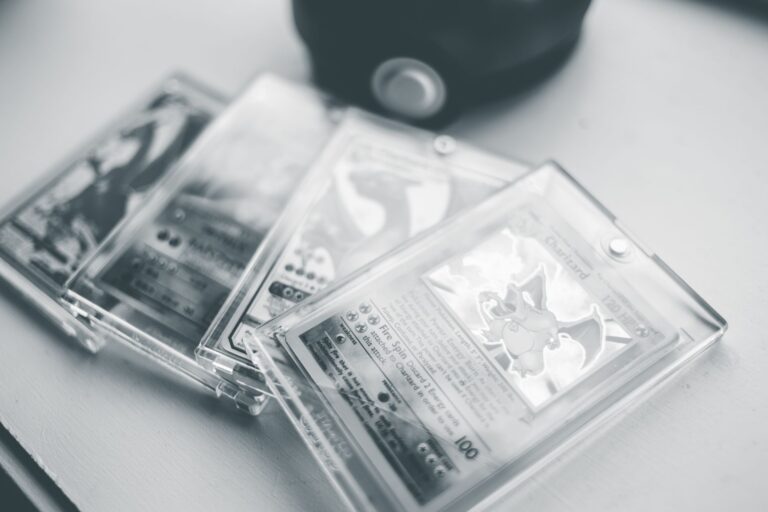
Authentic PSA slabs have several physical characteristics that are difficult to replicate perfectly, though the gap is narrowing. The hologram on a genuine PSA label should shift cleanly between the PSA logo and a pattern of repeating micro-text when tilted under direct light. On fakes, the hologram transition is often slightly muddy, or the micro-text is illegible under magnification. The label stock itself on a real PSA slab has a specific matte texture — not glossy, not rough — and the ink sits flat against the surface without any raised edges or bleeding. Under a jeweler’s loupe at 10x magnification, authentic PSA printing shows clean letter edges, while counterfeit labels frequently reveal slight feathering or dot-matrix artifacts. The case is just as important as the label. PSA’s current-generation cases have a specific ultrasonic weld seam that runs along the perimeter. This seam should be uniform in width, with no visible gaps, bubbles, or tool marks.
If you can slide a razor blade or thin card into the seam, the case has been opened or is not a genuine PSA enclosure. The plastic itself should be optically clear without a yellow or blue tint, and the card should sit centered in the well without excessive lateral movement. However, if you’re examining an older PSA case from the mid-2000s or earlier, be aware that PSA changed case manufacturers several times, and legitimate older slabs can have slightly different plastic clarity and seam characteristics than current production. Don’t automatically flag an older slab as fake just because it doesn’t match a 2024 case. Weight is another subtle indicator. Authentic PSA slabs fall within a narrow weight range for each case size. A standard PSA slab with a single card typically weighs between 56 and 60 grams. Counterfeits using inferior plastic or different case molds can fall outside this range. Carrying a small digital scale to card shows is an oddly effective authentication tool.
How PSA’s Cert Verification Tool Works and Where It Falls Short
PSA’s online certification verification at PSAcard.com/cert is the first line of defense and should be used for every purchase of a graded card above trivial value. You enter the certification number from the label, and the database returns the card description, grade, and — for many cards — a scan image of the card as PSA received it. When the scan image is available, compare it pixel by pixel against the card in the slab. Look at centering, print lines, surface marks, and any distinguishing characteristics. If the card in the slab has noticeably different centering than the scan image, you’re either looking at a different card or a re-cased fake. The limitation is that PSA’s scan images are not available for all submissions, particularly bulk submissions and older entries. For cards without a scan image, the verification tool only confirms that a certification number exists and what it was assigned to.
It does not confirm that the specific slab in your hand is the one PSA graded. This is the gap that cert number cloning exploits. PSA has acknowledged this weakness and began rolling out higher-resolution imaging for new submissions in 2024, but the legacy database remains incomplete. For high-value purchases without a scan image, requesting a re-authentication from PSA (a “review” service) before finalizing the transaction is a worthwhile precaution. Population reports add another verification layer. If someone is selling you a PSA 10 of a card that PSA’s population report says has a pop of 2, and you can account for where the other known copy is, the math should work. If the pop is 2 but you’re seeing five different listings with the same grade, something is wrong. Cross-referencing pop data takes an extra minute but has saved collectors from five-figure mistakes.
Practical Steps for Authenticating Before You Buy
The authentication process should be layered — no single check is definitive, but combining multiple checks makes deception extremely difficult to pull off. Start with the cert number lookup and image comparison. Then examine the label under magnification for print quality, font consistency, and hologram behavior. Next, inspect the case for seam integrity, plastic clarity, and weight. Finally, assess the card itself: does the grade make sense for what you’re seeing? A PSA 10 with a visible print line or soft corner is a red flag regardless of what the label says. When buying online, the tradeoff is between convenience and verification depth. At a card show, you can hold the slab, tilt it under light, weigh it, and loupe the label.
Online, you’re relying on photos and the seller’s reputation. For purchases over $500, request additional high-resolution photos of the label hologram from multiple angles, the case seam, and the back of the card. Compare these against known-authentic examples. Some experienced collectors maintain reference folders of photos showing authentic PSA labels by generation so they can quickly spot anomalies. For purchases over $5,000, many buyers now insist on third-party escrow services or in-person verification before releasing funds, and that’s not paranoia — it’s due diligence appropriate to the dollar amount. A middle-ground option that has gained traction is using PSA’s “PSA Set Registry” verification. If a card is registered in a set on PSA’s registry, the owner has already verified it through their account. While this doesn’t make it impossible to fake, it adds another layer that a counterfeiter would need to circumvent.
Common Red Flags That Collectors Still Miss
One of the most overlooked signs of a fake is a cert number that returns a valid result but with a subtly different card description than what’s in the slab. Counterfeiters often pick cert numbers from the same card but a different variant — a 1st Edition cert number placed on an Unlimited print, a Shadowless cert on a 4th Print Base Set card, or a Japanese cert number on an English card. Many buyers see the correct card name and grade pop up in PSA’s database and stop reading. Always verify the full description including set, year, print run, and language. Another red flag is pricing that seems too good. This sounds obvious, but fake slabs specifically target the price sweet spot where a deal seems plausible but not absurd.
A fake PSA 10 Base Set Charizard listed at $1,000 would fool nobody; the same fake listed at $4,500 when comps are running $5,500 looks like a motivated seller. Counterfeiters study the market and price their fakes to sell, not to raise alarms. Be cautious with “lot” sales that mix authentic and fake slabs together. A seller might offer a lot of ten graded cards at a discount, with eight being genuine and two being high-value fakes. The authentic cards build trust, and the buyer assumes the entire lot is legitimate. Verify every slab independently, especially the highest-value cards in any bundle.

How the Secondary Market Is Responding
Major auction houses including Heritage Auctions and Goldin have added in-house authentication teams that independently verify PSA, BGS, and CGC slabs before listing. PWCC introduced multi-point slab verification in 2023 after several high-profile fakes were discovered in consignments. These measures help, but they only protect buyers using those platforms.
Peer-to-peer sales on Discord, Facebook groups, and Instagram remain the most common vector for counterfeit graded cards because there’s no institutional verification step between seller and buyer. PSA itself has introduced NFC chip technology in its newer label generations, allowing buyers to tap the slab with a smartphone to confirm authenticity against PSA’s database. This is a meaningful step forward, but it only applies to cards graded under the newest label generation — the millions of older slabs in circulation remain vulnerable.
Where Authentication Technology Is Heading
The future of slab authentication likely involves a combination of NFC/RFID verification, blockchain-based provenance tracking, and AI-powered image matching. PSA has filed patents related to unique card fingerprinting — using high-resolution scans of each card’s surface characteristics (print patterns, fiber structure, unique micro-defects) to create an unreplicable identity profile tied to each certification number. If implemented at scale, this would make cert number cloning functionally useless because the card in the slab would need to physically match the scan profile in the database.
Until those technologies are fully deployed, authentication remains a manual, multi-step process that requires knowledge, tools, and healthy skepticism. The collectors who get burned are almost always the ones who skip steps because the deal felt right or the seller seemed trustworthy. Trust the process, not the person.
Conclusion
Fake PSA labels have evolved from obvious knockoffs to sophisticated counterfeits that can fool experienced collectors who cut corners on verification. The fundamentals of authentication haven’t changed — cert number lookup, physical inspection of the label and case, image comparison, and population cross-referencing — but the diligence required at each step has increased.
No single check is sufficient on its own, and the financial stakes in the Pokemon card market make it worth the two minutes of verification every single time. If you’re buying graded cards regularly, build a verification habit: bookmark PSA’s cert tool, keep a loupe and scale in your card show bag, save reference photos of authentic labels by generation, and never let the excitement of a good deal override the verification process. The counterfeiters are getting better, which means collectors need to get better too.
Frequently Asked Questions
Can I spot a fake PSA slab just by looking at the hologram?
Not reliably anymore. Modern fakes use high-quality holographic foils that are convincing to the naked eye. The hologram is one data point in a multi-step verification — use it alongside cert verification, case inspection, and card examination.
Does PSA’s NFC chip technology work on all PSA slabs?
No. NFC verification only works on slabs produced under PSA’s newest label generation, which began rolling out in 2024. Older slabs, which make up the vast majority of cards in circulation, do not have NFC chips and must be verified through traditional methods.
What should I do if I discover I bought a fake PSA slab?
Document everything with photos and video, contact the seller and platform to initiate a dispute, file a report with PSA through their fraud reporting page, and if the dollar amount warrants it, file a police report. Most payment platforms and marketplaces have buyer protection policies for counterfeit goods.
Are BGS and CGC slabs also being counterfeited?
Yes, though PSA fakes are far more common because PSA-graded cards command the highest premiums in the Pokemon market. BGS and CGC fakes exist but are less prevalent. The same verification principles apply to all grading companies.
Is it worth paying for third-party authentication services before buying?
For cards valued over $2,000 to $3,000, yes. Services that offer independent slab verification before you finalize a purchase can save you from costly mistakes. For lower-value cards, self-verification using the steps outlined above is usually sufficient.