Pokémon card collecting is a real investment, but only if you treat it like one — and most people don’t. The numbers are hard to argue with on the surface: Pokémon cards have increased in value by 3,821% since 2004, dwarfing the S&P 500’s 483% growth over the same period. A 1st Edition Shadowless Charizard in PSA 10 condition sold for just $5,000 in 2013 and fetched $954,800 at Goldin Auctions in February 2026, an ROI exceeding 7,500%. But those headline figures obscure a messier reality. The average collector is not sitting on a Charizard or a Pikachu Illustrator.
They are sitting on binders of bulk cards that will never be worth more than the sleeves protecting them. The honest answer is that Pokémon cards occupy a strange middle ground between legitimate alternative asset and speculative hobby. For a small number of high-grade vintage and chase cards, the investment case is strong and getting stronger — institutional money is now entering the space, hedge funds are buying elite vintage cards, and Pokémon’s 30th anniversary in 2026 is pushing demand to new highs. For everything else, you are paying for nostalgia with a lottery ticket attached. This article breaks down the actual market data, explains which cards hold real value and why, covers the grading industry that underpins the entire market, and lays out the risks that most YouTube influencers skip over.
Table of Contents
- How Have Pokémon Cards Performed as a Real Investment Compared to Traditional Assets?
- Which Pokémon Cards Actually Hold and Grow in Value?
- The Grading Machine That Props Up the Market
- How to Approach Pokémon Cards as an Investment Without Getting Burned
- The Risks Nobody on YouTube Wants to Talk About
- Why Institutional Money Is Changing the Game
- What Pokémon’s 30th Anniversary and 2026 Demand Drivers Mean for the Market
- Conclusion
- Frequently Asked Questions
How Have Pokémon Cards Performed as a Real Investment Compared to Traditional Assets?
The raw performance numbers make Pokémon cards look like the best asset class of the 21st century. According to reporting from Marketplace.org in November 2025, the average Pokémon card is appreciating at nearly 46% annually, far exceeding the S&P 500’s roughly 12% average annual return. The global trading card game market is projected to reach $14.70 billion in 2026 and $37.42 billion by 2034, growing at a compound annual rate of 10.98%. This is not a niche anymore. GameStop reported in Q1 2025 that collectibles, including Pokémon cards, made up 29% of the company’s sales, actually outselling video game software. But averages are misleading. That 46% annual appreciation figure is skewed heavily by a small number of elite cards at the top of the market. The Pikachu Illustrator PSA 10 — Logan Paul’s famous copy — sold for $16,492,000 at Goldin Auctions on February 16, 2026, making it the most expensive Pokémon card ever sold.
Cards like this one and the Shadowless Charizard PSA 10 are effectively blue-chip collectibles, comparable to rare art or vintage sports memorabilia. They have established provenance, extreme scarcity, and a deep pool of wealthy buyers. The problem is that most collectors are not holding blue chips. They are holding mid-cap cards at best, and many of those are finding new, lower equilibrium prices after the pandemic-era bubble. The comparison to the stock market also breaks down in one critical way: liquidity. You can sell an S&P 500 index fund in seconds at a known price. Selling a $5,000 Pokémon card means listing it on eBay or consigning it to an auction house, paying fees of 10-20%, and waiting days or weeks for the right buyer. That friction is real cost that eats into returns.

Which Pokémon Cards Actually Hold and Grow in Value?
The cards that function as genuine investments share a few characteristics: age, scarcity, condition, and cultural significance. Vintage cards from the 1999 Base Set, particularly 1st Edition Shadowless prints, have the strongest track record. The 1st Edition Shadowless Charizard psa 10 went from $5,000 in 2013 to $550,000 at Heritage Auctions in December 2025, then to $954,800 at Goldin in February 2026. That kind of trajectory reflects genuine, sustained demand rather than speculative hype. These cards benefit from a fixed, dwindling supply — no more will ever be printed, and every year a few more get damaged, lost, or downgraded. Modern chase cards can also hold significant value, though the picture is more complicated. The Umbreon ex Special Illustration Rare from Prismatic Evolutions has stabilized above $1,000 throughout Q1 2026, holding between $1,020 and $1,050 since December 2025.
That is real staying power for a modern card. However, if you bought into the Evolving Skies Umbreon VMAX Alt Art at pandemic-era highs, you are looking at a different story. That card in PSA 10 is averaging around $3,520 as of late February 2026, but it dropped below $2,000 briefly, and it was worth considerably more at its peak. Not every card that spikes stays spiked. The warning here is straightforward: cards from recent sets face a supply problem that vintage cards do not. More than 75 billion pokémon cards have been produced as of March 2025, with 10.2 billion printed in the 12 months prior. When The Pokémon Company can reprint sets to meet demand, the scarcity that drives value is artificial and temporary. A modern card’s value depends entirely on whether demand continues to outpace what is, in many cases, an enormous print run.
The Grading Machine That Props Up the Market
Professional grading has become the backbone of the pokémon card investment market. PSA processed over 19 million items in 2025, and overall card grading volume jumped 32% year-over-year, with TCG and non-sports card grading up a staggering 97%. According to data from PokemonPriceTracker, 94% of confirmed collectors now own graded cards, making professional authentication and grading standard practice rather than a niche preference. The price premium for graded cards is substantial. Modern cards in PSA 10 condition sell for 2 to 5 times their ungraded price, while vintage PSA 10s can command 5 to 10 times the ungraded value. PSA-graded cards also sell for 15-25% more than equivalent BGS (Beckett) graded cards and 20-35% more than CGC cards, according to Phantom Display.
This means your choice of grading company directly impacts your card’s resale value — and right now, PSA commands the largest premium by a wide margin. A major development shaking the grading industry: PSA’s parent company, Collectors, acquired Beckett in December 2025, consolidating PSA, BGS, and SGC under one corporate umbrella. A New York congressman called for a monopoly investigation in January 2026, and the concern is legitimate. When one company controls the three largest grading services, questions about competition, pricing, and grading standards become unavoidable. For collectors and investors, this consolidation could mean higher grading fees and less recourse if you disagree with a grade. It is worth watching closely.

How to Approach Pokémon Cards as an Investment Without Getting Burned
If you are going to treat Pokémon cards as an investment, the first decision is whether you are buying for long-term holds or short-term flips. The long-term play focuses on high-grade vintage cards and culturally iconic modern cards with demonstrated staying power. The short-term flip game targets new set releases, buying sealed product or pulling chase cards early and selling into the initial hype. Fortune reported that this speculative flip culture among Gen Z investors has been described as “boy math” — the assumption that every pack rip is a step toward profit, when the reality is that most packs contain cards worth less than the pack itself. The tradeoff between vintage and modern is essentially risk versus accessibility.
A PSA 10 Shadowless Charizard costs nearly a million dollars, but it has decades of price history supporting its value and institutional buyers creating a price floor. A $50 modern chase card is affordable, but its long-term trajectory is genuinely unknown, and it exists in a market where 10.2 billion new cards were printed last year alone. The middle ground — vintage cards in the $500 to $5,000 range with strong grades — arguably offers the best risk-adjusted profile for most collectors-turned-investors, but even those require patience and a willingness to hold through dips. One practical point that gets overlooked: factor in all costs. Grading fees, shipping insurance, auction house commissions, eBay seller fees, and storage all eat into returns. A card that doubled in raw sale price over five years may have only returned 40-50% after all costs, which suddenly looks a lot less impressive compared to a simple index fund that you can buy and sell for almost nothing.
The Risks Nobody on YouTube Wants to Talk About
Counterfeiting remains one of the most serious threats to the Pokémon card market. Counterfeit production continues to erode buyer confidence, particularly in Southeast Asia, where manufacturing of fake cards has become increasingly sophisticated. Even experienced collectors get burned. If you are buying raw, ungraded cards from marketplace sellers, you are accepting meaningful fraud risk — and that risk scales with the card’s value. Professional grading offers some protection, but counterfeit slabs exist too. Price manipulation is another underappreciated risk. According to TCGPlayer reporting from January 2026, low-rarity 1st Edition card prices can be manipulated by just a handful of buyers purchasing copies to artificially spike prices.
This is possible because many card markets are thin — there might only be a few copies of a specific card and grade listed at any given time. A coordinated group buying three or four copies can create the appearance of surging demand and a much higher “last sold” price, trapping later buyers at inflated levels. This is essentially the same dynamic as a penny stock pump-and-dump, but with even less regulatory oversight. The so-called “Moonbreon” — the Evolving Skies Umbreon VMAX Alt Art that became a market darling — offers a cautionary tale. Sales have largely disappeared since the card passed $2,000 in September 2025, and the price has continued to decline. Cards that experience rapid pandemic-era appreciation are finding new, lower equilibrium prices. If you bought at the peak expecting perpetual appreciation, you learned an expensive lesson about the difference between a bull market and a permanent trend.
Why Institutional Money Is Changing the Game
The entry of institutional capital into the Pokémon card market is the most significant structural change in recent years. Hedge funds and investment firms are now purchasing high-grade vintage cards as alternative assets, treating them alongside wine, art, and classic cars in diversified portfolios. This institutional buying creates something that never existed before in the Pokémon market: genuine price floors for elite cards.
When a fund buys a PSA 10 Shadowless Charizard, it is not panic-selling during a dip the way a 22-year-old day trader might. This is good news for anyone holding top-tier vintage cards, but it also means the most reliable investment-grade Pokémon cards are increasingly priced out of reach for regular collectors. The market is bifurcating: institutional-grade cards at the top are becoming more stable but less accessible, while the broader market of modern and mid-tier cards remains volatile and speculative. If you cannot afford the cards that hedge funds are buying, you are playing a fundamentally different game with different rules and worse odds.
What Pokémon’s 30th Anniversary and 2026 Demand Drivers Mean for the Market
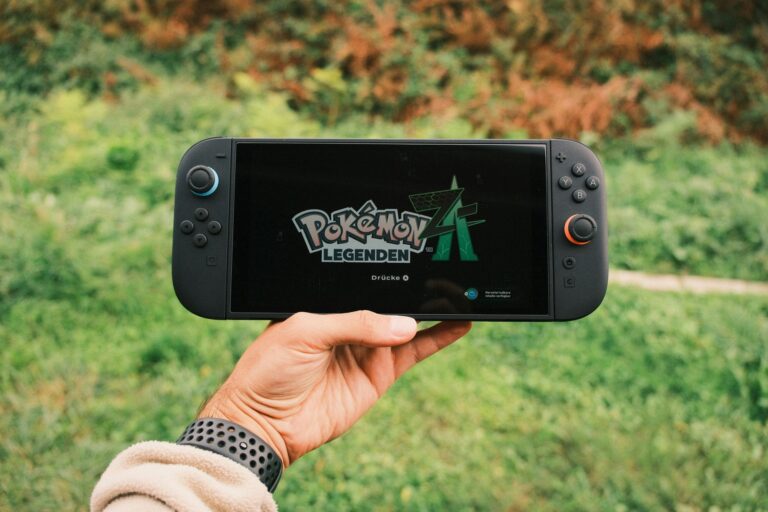
Pokémon’s 30th anniversary celebrations are driving unprecedented momentum into the 2026 market. eBay users were already searching for “Pokemon” nearly 14,000 times per hour in 2024, and anniversary-year enthusiasm has only intensified demand. The anticipation for Pokémon Legends Z-A has driven price spikes in previously ignored XY Series cards, a pattern that repeats whenever a new game or media release draws attention to an older generation. Collectors who picked up cheap XY-era cards a year ago are sitting on tidy gains.
The question is whether this anniversary bump represents sustainable growth or a sentiment peak. Historical precedent from other collectible markets suggests that milestone anniversaries create temporary demand surges that partially revert afterward. If you are buying into the 30th anniversary hype at elevated prices, understand that you may be buying near a local top. The long-term trajectory of the Pokémon brand remains strong — it is the highest-grossing media franchise in history — but that does not mean every card bought in 2026 will be worth more in 2027.
Conclusion
Pokémon card collecting can be a real investment, but the qualifier matters. The cards that function as genuine stores of value — high-grade vintage cards, culturally iconic chase cards, and professionally graded rarities — represent a small fraction of what is actually in circulation. For those specific cards, the returns have been extraordinary and the market is maturing with institutional backing. For everything else, you are collecting first and investing second, and that is fine as long as you are honest with yourself about which game you are playing. The practical takeaway: if you want investment exposure to Pokémon cards, focus on scarcity, condition, and cultural staying power.
Get cards graded by PSA. Factor in all costs including fees, grading, and storage. Do not chase modern set hype expecting guaranteed returns. And never invest money you cannot afford to lose in a market with no regulatory oversight, real counterfeiting risk, and price manipulation that would be illegal in the stock market. Pokémon cards have outperformed the S&P 500 over two decades, but your cards probably have not — and understanding that distinction is the difference between investing and gambling with cardboard.
Frequently Asked Questions
Are Pokémon cards a better investment than stocks?
On aggregate, Pokémon cards have outpaced the S&P 500, rising 3,821% since 2004 versus 483% for the index. However, that average is driven by elite cards. Most individual cards underperform stocks, and cards lack the liquidity, regulatory protection, and dividend income that stocks provide. A diversified stock portfolio is a safer bet for most people.
What is the most expensive Pokémon card ever sold?
The Pikachu Illustrator PSA 10, previously owned by Logan Paul, sold for $16,492,000 at Goldin Auctions on February 16, 2026. Only a handful of copies exist, and the PSA 10 is believed to be unique, which is why it commands such an extreme price.
Does grading a Pokémon card increase its value?
Yes, significantly. Modern cards in PSA 10 sell for 2 to 5 times their ungraded price, and vintage PSA 10s can fetch 5 to 10 times the ungraded value. PSA grades carry the highest market premium, selling for 15-25% more than BGS and 20-35% more than CGC for equivalent cards.
Are modern Pokémon cards worth investing in?
Some are, but the risk is higher than with vintage cards. More than 10.2 billion cards were printed in the 12 months before March 2025, meaning supply is enormous. Cards like the Umbreon ex SIR from Prismatic Evolutions have held above $1,000, but others like the Evolving Skies Umbreon VMAX have declined from pandemic highs. Selectivity is critical.
How do I avoid counterfeit Pokémon cards?
Buy from reputable sellers and auction houses, and prioritize professionally graded cards from PSA, BGS, or CGC. Be especially cautious with high-value raw cards from marketplace sellers. Counterfeit production remains a major issue, and fake grading slabs also exist, so verify slab authenticity through the grading company’s online database when possible.
Will Pokémon cards keep going up in value?
The overall market trend has been upward, driven by Pokémon’s cultural dominance, institutional investment, and the 30th anniversary. But individual cards can and do lose value. Pandemic-era spikes have corrected, modern cards face oversupply risk, and price manipulation affects thinner markets. Long-term holds on high-grade, scarce cards have the strongest historical case, but nothing is guaranteed.