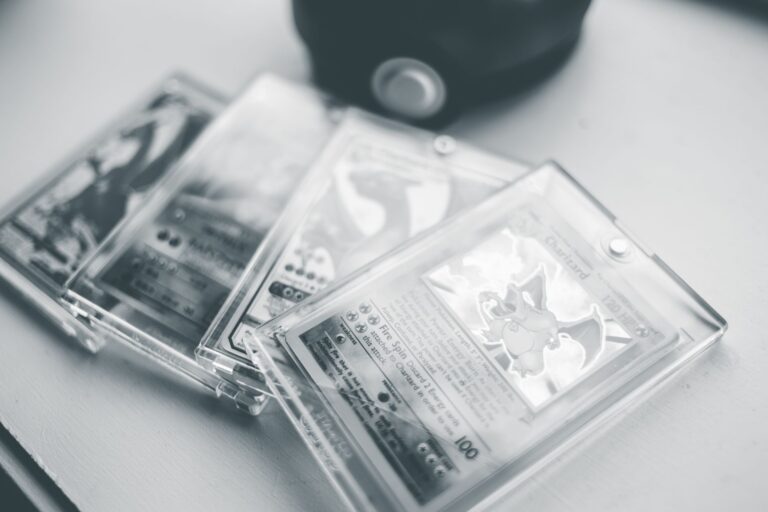
The Pikachu Illustrator card has gone from a $55,000 collectible in 2016 to a $16.49 million record-breaker in February 2026, making it the most expensive trading card ever sold in any category. That trajectory represents a roughly 300x increase in value over a decade for the top-graded copy, a pace that has no real parallel in the trading card world. The card’s most recent sale, a PSA 10 Gem Mint copy auctioned through Goldin Auctions on February 16, 2026, shattered the previous all-time trading card record and drew confirmation from a Guinness World Records adjudicator on-site.
But the Pikachu Illustrator story is not just about one headline number. The card’s value history reveals a market shaped by extreme scarcity, celebrity ownership, and the broader explosion of Pokemon card collecting that began in the late 2010s. Lower-graded copies have followed their own pricing arcs, sometimes surging and sometimes stalling entirely. This article traces the card’s full price history from its origins in 1998 through every major sale, examines what drives the valuation, and looks at what the 2026 auction means for the Pokemon collecting market going forward.
Table of Contents
- How Has the Pikachu Illustrator Card Value Changed Over Time?
- Why Is the Pikachu Illustrator Card So Rare?
- The Record-Breaking 2026 Goldin Auction
- How Does the Pikachu Illustrator Compare to Other High-Value Pokemon Cards?
- Can the Pikachu Illustrator Card Lose Value?
- The Role of Celebrity Ownership in Card Valuation
- What the 2026 Sale Means for the Future of Pokemon Collecting
- Conclusion
- Frequently Asked Questions
How Has the Pikachu Illustrator Card Value Changed Over Time?
The Pikachu Illustrator card was created in 1998 and awarded to winners of illustration contests organized by CoroCoro Comic magazine in Japan across three contests held between 1997 and 1998. Only 39 copies were officially distributed to contest winners. The card was illustrated by Atsuko Nishida, who designed the original Pikachu character for the Game Boy games. It is the only Pokemon card to feature the word “Illustrator” at the top instead of “Trainer,” and it carries a unique pen symbol in the bottom-right corner. For years, it was a deep-cut collector’s piece that most Western fans barely knew existed. The price timeline tells a dramatic story. In 2016, a PSA 9 copy sold at Heritage auctions for $54,970, which was a Pokemon card auction record at the time.
By 2019, a copy sold at a New York auction for $195,000. In 2020, another PSA 9 changed hands on a Japanese marketplace for $233,000. Then came July 2021, when Logan Paul acquired the only PSA 10 Gem Mint copy via private sale for approximately $5.275 million, a deal structured as $4 million in cash plus a PSA 9 Pikachu Illustrator valued at roughly $1.3 million. That transaction set a Guinness World Record. The 2026 sale of that same PSA 10 copy for $16.49 million represents a tripling even from that already staggering 2021 price. For comparison, a PSA 7 Near Mint copy sold in 2022 for $900,000 after receiving 34 bids from a starting price of $75,000. That same grade, PSA 7, was listed in 2023 starting at $480,000 and received zero bids, going unsold. The difference between those two outcomes illustrates something important: even within the world of the Pikachu Illustrator, condition and market timing make an enormous difference.

Why Is the Pikachu Illustrator Card So Rare?
The scarcity of this card is not manufactured or artificial in the way some modern “limited editions” are. Only 39 copies were distributed to children and young artists who won CoroCoro Comic illustration contests in late-1990s Japan. These were not sold in stores, not included in booster packs, and not available through any commercial channel. The recipients were contest winners, most of whom were kids who likely had no idea what they were holding. At least two additional copies surfaced on Japanese auction sites around 2019 to 2020, believed to have come from a former Pokemon Company employee, bringing the known total to approximately 41 cards.
However, the number of copies that still exist in collectible condition is much smaller. Cards held by children in the late 1990s were not typically stored in penny sleeves and top-loaders. Many were probably damaged, lost, or discarded over the years. The PSA population report confirms just one copy has ever graded at PSA 10 Gem Mint, which is the copy that has driven the headline sales figures. If you are evaluating the Pikachu Illustrator as an investment, it is critical to understand that the PSA 10 price and the PSA 7 price are essentially different markets. A PSA 7 copy going unsold at $480,000 in 2023 while the PSA 10 later sells for $16.49 million shows how sharply condition separates value tiers.
The Record-Breaking 2026 Goldin Auction
The February 2026 sale at Goldin Auctions is now the definitive moment in trading card history. Logan Paul’s PSA 10 Pikachu Illustrator was listed with a starting bid of $500,000 on January 6, 2026. Over the next six weeks, 97 bids pushed the price upward. In the auction’s final hours, a flurry of last-minute bidding extended the closing by several hours, with the price jumping from roughly $6 million to the final hammer price of $16,492,000.
The buyer was AJ Scaramucci, founder of Solari Capital and son of Anthony Scaramucci. The sale broke the all-time trading card record across all sports and collectible categories, surpassing previous benchmarks set by cards like the 1952 Topps Mickey Mantle and the T206 Honus Wagner. A Guinness World Records adjudicator was present on-site to confirm the record. For the Pokemon collecting community, the sale was a validation that the hobby’s top-tier items can compete with and now exceed the most iconic pieces in traditional sports card collecting.

How Does the Pikachu Illustrator Compare to Other High-Value Pokemon Cards?
The Pikachu Illustrator sits in a category by itself within the Pokemon market, but it is worth putting its prices in context. Before the Illustrator became a mainstream headline, other cards like the first edition Base Set Charizard were considered the pinnacle of Pokemon collecting. A PSA 10 first edition Base Set Charizard has sold for figures in the $300,000 to $420,000 range. That is a meaningful number, but it is roughly 2.5 percent of the Pikachu Illustrator’s 2026 sale price. The gap is enormous.
The tradeoff for collectors is straightforward. The Pikachu Illustrator is essentially a one-of-one at the PSA 10 level, which makes it a trophy asset but not something most collectors will ever interact with. A first edition Charizard, while expensive, exists in larger quantities across multiple grades and is actually attainable for serious collectors. The Illustrator’s value is driven by absolute scarcity and cultural significance rather than playability or nostalgia alone. If you are collecting Pokemon cards with any eye toward value, the Illustrator’s price history is instructive but not directly applicable to most other cards in the hobby. The forces that push a one-of-one trophy piece to $16 million do not operate the same way on cards with populations of 100 or more.
Can the Pikachu Illustrator Card Lose Value?
It already has, at certain grades. The 2023 auction where a PSA 7 copy was listed at $480,000 and received zero bids is a clear data point. That same grade had sold for $900,000 just a year earlier. The broader Pokemon market cooled significantly from its pandemic-era highs, and even the Pikachu Illustrator was not immune at the lower end of the grading spectrum.
The PSA 10 copy has so far only moved upward, from $5.275 million in 2021 to $16.49 million in 2026. But there is no guarantee that trajectory continues. The card’s value at this level depends on a very small pool of ultra-high-net-worth buyers who are willing to pay a premium for the cultural cachet of owning the most famous Pokemon card in existence. If the Pokemon brand’s cultural relevance fades, or if the trading card market enters a sustained downturn, even the Illustrator could see its price plateau or decline. Collectors should also be aware that the private sale nature of many top-tier transactions means reported prices do not always reflect what would happen in an open market.

The Role of Celebrity Ownership in Card Valuation
Logan Paul’s involvement with the Pikachu Illustrator card is inseparable from its modern price history. His 2021 acquisition brought mainstream media attention to the card and to Pokemon collecting more broadly. He wore the card in a custom pendant around his neck during a boxing match, generating millions of social media impressions.
When the card went to auction in 2026, part of what bidders were buying was not just a rare card but an artifact with a documented provenance tied to a public figure. This dynamic is not unique to Pokemon. In sports cards, items previously owned by celebrities or with notable provenance histories routinely sell for premiums above comparable unowned copies. For the Pikachu Illustrator, the celebrity factor likely added a meaningful percentage to the final sale price, though it is impossible to isolate exactly how much.
What the 2026 Sale Means for the Future of Pokemon Collecting
The $16.49 million sale establishes a new ceiling for what the market is willing to pay for a Pokemon card, and it repositions the entire hobby. Pokemon collecting is no longer a niche subset of the trading card world. It now holds the outright record across all categories. That kind of milestone tends to attract new capital and new collectors to the space, which can push prices upward across the board for high-grade vintage cards.
However, it is worth being cautious about extrapolating too much from a single sale of a one-of-one card. The Pikachu Illustrator is an extreme outlier. Most Pokemon cards, even rare and desirable ones, will never approach these figures. What the sale does confirm is that the very top of the Pokemon market has deep-pocketed demand, and that the combination of extreme scarcity, cultural significance, and documented provenance can produce valuations that rival fine art and other established alternative asset classes.
Conclusion
The Pikachu Illustrator card’s value history, from $54,970 in 2016 to $16.49 million in 2026, is one of the most dramatic appreciation stories in the entire collectibles world. The card’s journey reflects the convergence of genuine rarity (approximately 41 cards produced, only one grading PSA 10), the explosive growth of Pokemon as a cultural force, and the increasing willingness of wealthy collectors to treat trading cards as serious alternative assets.
For collectors tracking the market, the key takeaway is that condition and scarcity remain the dominant value drivers. A PSA 10 Pikachu Illustrator and a PSA 7 copy are not the same investment, as the 2022 and 2023 sales of lower-graded copies demonstrated clearly. The record-breaking 2026 auction cements the Pikachu Illustrator as the most valuable trading card ever sold, but whether it retains that distinction will depend on where the broader market goes from here and whether another buyer eventually values it even higher.
Frequently Asked Questions
How many Pikachu Illustrator cards exist?
Only 39 copies were officially distributed to winners of CoroCoro Comic illustration contests in 1997 and 1998. At least two additional copies surfaced on Japanese auction sites around 2019 to 2020, bringing the known total to approximately 41 cards. The number surviving in collectible condition is likely much smaller.
Who designed the Pikachu Illustrator card?
The card was illustrated by Atsuko Nishida, who is also the original character designer for Pikachu in the Game Boy games. The card features a unique design with the word “Illustrator” at the top instead of “Trainer” and a pen symbol in the bottom-right corner.
How much did the Pikachu Illustrator card sell for in 2026?
The PSA 10 Gem Mint copy sold at Goldin Auctions on February 16, 2026, for $16,492,000 after 97 bids. The auction started on January 6 at $500,000. The buyer was AJ Scaramucci, founder of Solari Capital.
Is the Pikachu Illustrator the most expensive trading card ever sold?
Yes. As of February 2026, the $16.49 million sale holds the all-time record for the most expensive trading card ever sold across all categories, including sports cards. A Guinness World Records adjudicator confirmed the record on-site at the auction.
How much is a lower-graded Pikachu Illustrator worth?
Values vary significantly by grade and market conditions. A PSA 7 copy sold for $900,000 in 2022, but a PSA 7 listed at $480,000 in 2023 received zero bids and went unsold. A PSA 9 sold for $233,000 in 2020. The gap between grades is enormous, and lower-graded copies do not track the PSA 10 price.
Who previously owned the PSA 10 Pikachu Illustrator card?
Logan Paul acquired the only PSA 10 copy in July 2021 via private sale for approximately $5.275 million. He sold it at Goldin Auctions in February 2026 for $16.49 million to AJ Scaramucci.