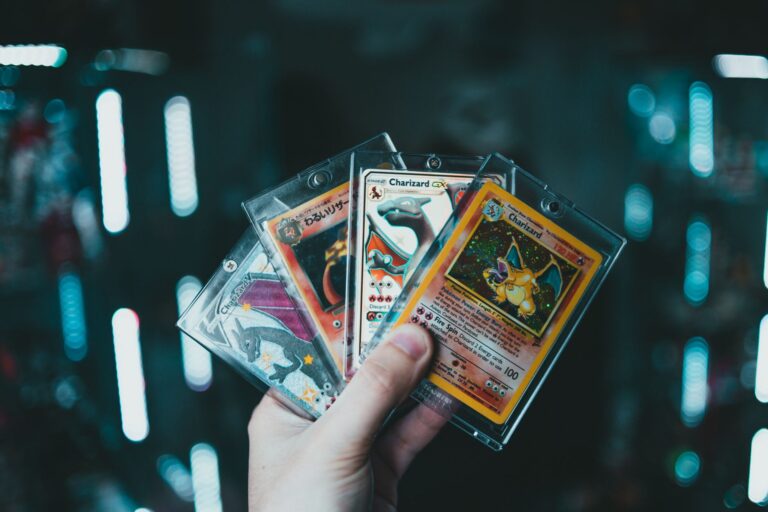
The Pokémon 151 Charizard ex RR Japanese full art holo represents one of the most sought-after cards in modern Pokémon collecting, combining historical significance with technical excellence. This specific variant—a Japanese full-art holographic card in near-mint condition—occupies a unique position in the market where Japanese language cards command premiums over English versions, holographic treatments add visual value, and grading certification confirms the condition that collectors and investors demand. A near-mint graded example of this card carries substantial weight both in personal collections and as a store of collecting value, though that worth is heavily influenced by the specific grading company and exact grade assigned within the near-mint range.
The appeal of this card rests on three converging factors: Charizard’s persistent popularity across Pokémon generations, the Pokémon 151 set’s status as a reimagining of the original 151 creatures that launched the franchise, and the Japanese market’s historical production of higher-quality cardstock and print quality compared to English versions from comparable eras. Collectors often find Japanese versions of popular cards command 20-50% premiums over near-mint English counterparts, particularly when the Japanese card exhibits flawless centering and sharp corners. A near-mint graded Charizard ex RR from this set typically trades hands with recognition of these factors, though the market remains volatile and condition-sensitive.
Table of Contents
- What Does “Near Mint” Grade Mean for This Charizard Ex Card?
- The Japanese Full Art Holo Treatment and Its Market Premium
- Why Japanese Versions Command Different Market Pricing
- Evaluating Grading and Authentication When Purchasing
- Print Line Variation and Counterfeit Concerns with Modern Japanese Cards
- Storage, Preservation, and Long-Term Condition Considerations
- Market Liquidity and Realistic Resale Expectations
- Frequently Asked Questions
What Does “Near Mint” Grade Mean for This Charizard Ex Card?
Near mint grades—typically ranging from 7 to 8.5 depending on the grading company—indicate cards with minimal wear and flaws visible to the naked eye. For a Pokémon card, near mint means the card may have light wear on corners, possibly a slight imperfection in centering, minimal edge wear, and holo without obvious scratches or wear patterns. The distinction matters because a card graded 8 commands substantially higher prices than one graded 7, even though the visible difference to the casual observer may be slight; this difference often represents a 15-30% price swing for popular cards like Charizard.
Grading consistency across companies varies significantly. PSA, BGS (Beckett), and CGC each employ different standards and have different market perceptions among collectors. A PSA 8 and a BGS 8 of the same card may differ in actual condition due to different grading philosophies—BGS historically grades more conservatively on centering, for instance. For Japanese cards, the distinction becomes even more pronounced because Japanese manufacturers historically produced cards with tighter centering, so a naturally well-centered Japanese card might receive a higher grade from one company than another based on how strictly centering is evaluated.
The Japanese Full Art Holo Treatment and Its Market Premium
Japanese full-art holographic cards feature artwork that extends to the card’s edges, eliminated the traditional Pokémon trading Card Game layout with separate borders and text boxes. This design choice emerged more prevalently in Japanese sets and creates a visual distinction that appeals to both collectors who prefer the aesthetic and players who view the full art treatment as more modern and visually striking. The holographic pattern applied to these full-art treatments varies by set and print run; Pokémon 151’s holo treatment reflects contemporary Japanese manufacturing standards, which emphasize consistent reflectivity and minimal imperfections in the holo layer.
One significant limitation of full-art cards for storage and long-term preservation involves their increased surface area exposed to air and light. Traditional bordered cards protect the artwork edges under the card stock, while full-art cards leave these edges exposed and more vulnerable to fading, particularly under direct sunlight or in poorly controlled storage conditions. A near-mint Japanese full-art Charizard ex RR stored in acidic sleeves or exposed to temperature fluctuations may develop holo wear or fading not immediately visible in grading photos but noticeable over years of collection. This reality means that condition maintenance for full-art cards requires more vigilance than standard-layout cards from earlier eras.
Why Japanese Versions Command Different Market Pricing
Japanese Pokémon cards have established a stable premium in the secondary market, driven partly by supply considerations and partly by perceived quality differences. Japanese print runs often targeted the domestic market, creating smaller overall supplies for international collectors compared to English versions produced in larger quantities. Additionally, Japanese cardstock has historically been manufactured to tighter tolerances and with glossier finishes that some collectors prefer; Japanese cards frequently exhibit sharper corners and more consistent holo quality than English equivalents from similar production periods.
For the Pokémon 151 Charizard ex RR specifically, the Japanese version also benefits from timing—this card arrived in a collecting market where Japanese cards had already established cultural cachet and desirability. Collectors who learned about Pokémon through the original 1999-2002 era often favor Japanese cards as more “authentic” or closer to the game’s origins, despite the English Trading Card Game operating independently with its own legacy. This psychological premium translates into tangible price differences; near-mint Japanese full-art Charizards can easily fetch 40-60% more than equivalent near-mint English versions, though this gap narrows if either version has condition issues that require significant price concessions.
Evaluating Grading and Authentication When Purchasing
When purchasing a graded near-mint Charizard ex RR, the specific grading company matters as much as the numerical grade itself. PSA-graded cards have dominated the vintage Pokémon market and retain strong resale recognition, though BGS has gained collecting credibility in recent years and CGC has entered the Pokémon grading space with increasing acceptance. A PSA 8 Charizard ex RR likely commands different market pricing than a CGC 8 of the identical card, reflecting different buyer perceptions of grading standards and investment confidence; some collectors view CGS grades as more conservative and therefore representing “truer” condition, while others treat PSA as the market standard and adjust accordingly.
Comparing raw (ungraded) near-mint Japanese Charizards to graded near-mint examples reveals the tangible premium that grading certification adds. A raw card in near-mint condition might trade for 30-50% less than an identically conditioned graded card, because the grading certificate provides verification and a standardized quality benchmark that reduces uncertainty for buyers. This premium exists even though the actual card condition is identical, illustrating that grading’s value lies in authentication and confidence—factors that matter more for high-value cards where misrepresentation or misidentification creates significant financial risk.
Print Line Variation and Counterfeit Concerns with Modern Japanese Cards
Modern Japanese Pokémon cards, including those from Pokémon 151, exist in multiple print runs with subtle but important variations. Card thickness, holo pattern intensity, and text sharpness can vary between early and late print runs of the same set, a distinction that affects both collectibility and potentially market value. Near-mint graded cards from early print runs sometimes command small premiums, though the variation is less pronounced than with older, genuinely scarce sets. The risk for buyers lies in authenticating Charizard ex cards, as this particular card’s popularity makes it a counterfeit target, particularly among Japanese manufacturers producing illegitimate copies.
Counterfeit Japanese Pokémon cards present a legitimate concern for buyers purchasing ungraded or raw cards. Detailed counterfeits of modern cards are increasingly difficult to distinguish from authentic copies without advanced inspection under magnification and comparison to known authentic examples. Text sharpness, card thickness, holo pattern consistency, and font rendering all provide authentication clues, but these require expertise or equipment beyond casual collection. Grading provides protection against this risk, as professional graders authenticate cards as part of their process; a graded near-mint Charizard ex RR comes with institutional verification that the card is authentic, removing this source of concern even if the financial premium for grading seems steep.
Storage, Preservation, and Long-Term Condition Considerations
A near-mint graded Japanese full-art Charizard ex RR represents a card worth preserving in its current condition, which demands attention to environmental factors. Ultraviolet light exposure degrades holo foil over time; cards stored in direct sunlight or near windows gradually experience holo fade and decreased reflectivity, a change that becomes visible and severely impacts both aesthetic appeal and resale value. Humidity fluctuations cause cardstock expansion and contraction, potentially loosening grading slabs or causing internal movement within a slab that damages the card’s condition.
Professional storage solutions—archival sleeves, acid-free holders, controlled-humidity storage environments maintained between 40-50% relative humidity—cost money and require commitment, but preserve condition far more effectively than casual storage in a bedroom closet or bookshelf. Many collectors who purchase graded high-value cards display them in card stands or frames positioned away from direct light, balancing the desire to enjoy the card visually against the imperative to maintain condition. For a near-mint Charizard ex RR, particularly one with a higher grade (8.5 or higher), the investment in proper storage is economically justified given the card’s value.
Market Liquidity and Realistic Resale Expectations
Near-mint graded Japanese Pokémon cards, particularly Charizard variants, maintain steady resale demand, but liquidity depends significantly on the specific grade and market conditions. A near-mint 8 Charizard ex RR may take weeks or months to find an interested buyer at a fair price, depending on when the card is listed and how actively the collector uses selling channels. Graded cards priced above realistic market rates can sit unsold for extended periods, requiring price reductions to attract buyers. This liquidity consideration matters for collectors who view high-value cards partly as investments; cards that are difficult to sell or require discounting to move expose sellers to realized losses.
The secondary market for modern Pokémon cards, including Pokémon 151 variants, is less stable than vintage markets dominated by PSA-graded 1990s cards. Hype cycles, new set releases, and shifts in collecting interest can cause values to fluctuate substantially. A Charizard ex RR that trades at one price in June may command 15-25% less in September if market interest shifts toward newer releases. Collectors purchasing near-mint graded versions should do so with the understanding that condition premiums tend to hold more reliably than market price stability—a near-mint card usually maintains its relative advantage over lower-grade versions even if overall market values decline.
Frequently Asked Questions
What grade range qualifies as “near mint” for Pokémon cards?
Near mint typically corresponds to grades 7 to 8.5 on a 10-point grading scale. A grade 7 shows minimal wear visible to the naked eye; a grade 8 is nearly perfect with only imperceptible flaws under close inspection. Different grading companies may interpret these ranges slightly differently.
Why are Japanese Pokémon cards more expensive than English versions?
Japanese cards often command premiums due to smaller supply, perceived higher print quality, sharper corners, and consistent holo treatments. Cultural appeal and “authenticity” to the game’s origins also drive higher collector demand in the secondary market.
How does a grading slab protect a card’s condition?
A grading slab uses tamper-evident holders that protect the card from handling, environmental damage, and physical contact. The slab also provides third-party authentication and condition verification, which adds substantial resale value and confidence for buyers.
Is a graded near-mint card worth the grading cost?
For valuable cards like Charizard ex variants, grading typically justifies itself through increased resale value and buyer confidence. Grading premiums often equal or exceed the grading fee, particularly for cards in higher grades that attract serious collectors and investors.
How should I store a near-mint graded Charizard to maintain its condition?
Store in a climate-controlled environment with stable humidity (40-50%), avoid direct sunlight and UV exposure, use archival-quality materials, and keep the graded slab upright in a secure location. Periodic inspection for any signs of slab damage helps catch preservation issues early.
Can counterfeit Japanese Pokémon 151 cards be distinguished from authentic ones?
Detailed counterfeits are difficult to distinguish without magnification and expert knowledge of print patterns, text sharpness, and card thickness. Professional grading eliminates this risk by authenticating cards as part of the certification process.