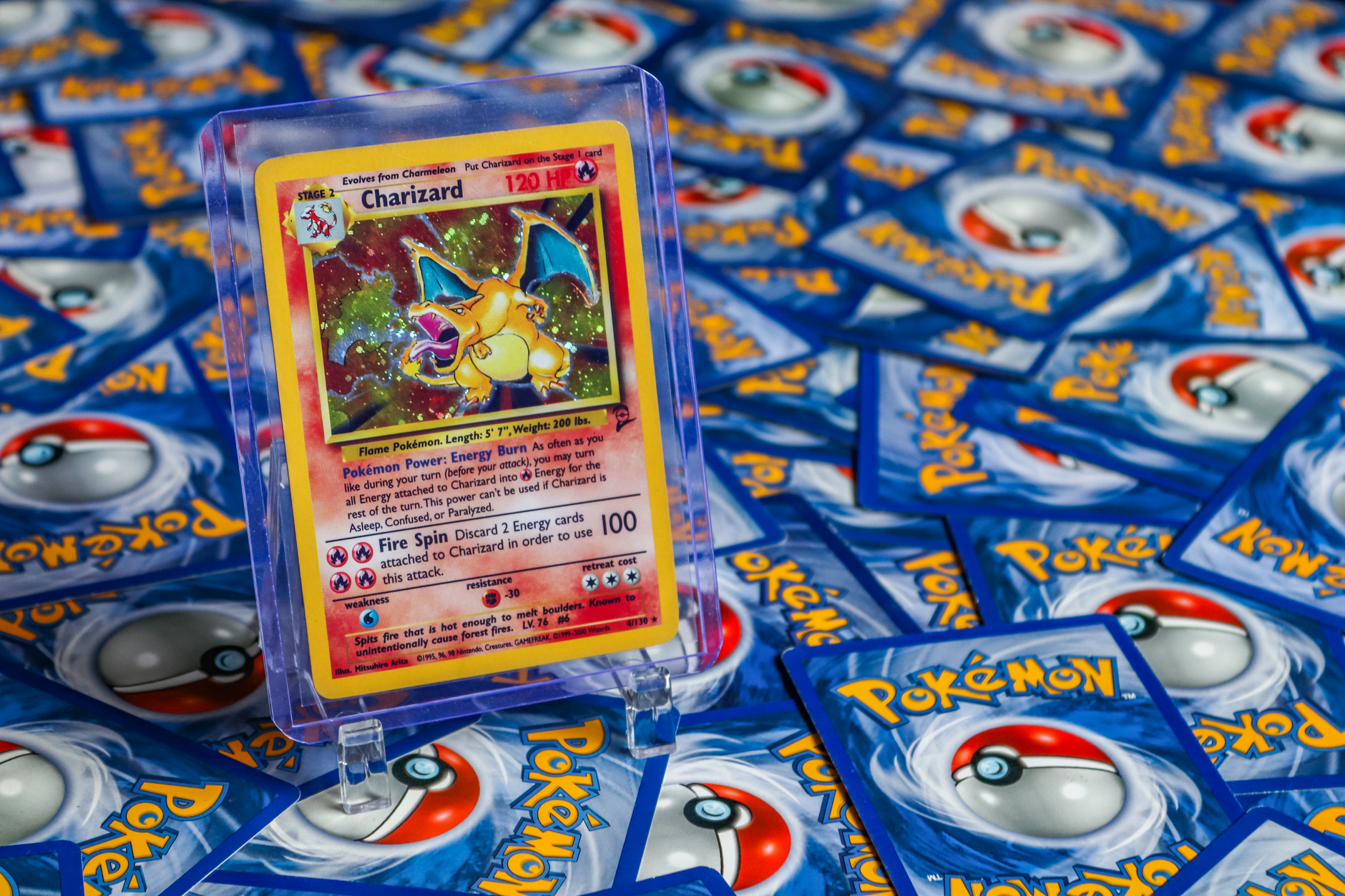
The EX Emerald Latios Holo sits in a complex pricing landscape that reflects both the card’s moderate collectibility and the broader volatility in Pokémon card markets. As of 2026, Latios cards across all variants and editions trade on TCGplayer with prices ranging from $0.05 to $2,636.32, with an average market price of $115.80 across 58 actively priced listings.
The Emerald set versions specifically occupy the mid-tier of this spectrum, with eBay listings for Latios ex cards from Emerald consistently appearing between $45 and over $140 depending on condition, edition status, and seller positioning. The Emerald set Latios ex cards, particularly the 1st Edition holo versions, command attention because they represent a specific moment in the Pokémon TCG’s EX era—a period when these powerful cards were first introduced but before the market developed the sophisticated grading and authentication systems that now dominate high-value sales. Unlike the most valuable Latios variant currently on the market (the Latias & Latios GX Alternate Full Art from Team Up, which has reached $2,636.32), the original Emerald Latios ex operates in a space where condition becomes the primary price driver rather than rarity alone.
Table of Contents
- What Determines the Price of Emerald Latios EX Cards?
- Market Variation Across Grading and Edition Status
- Grading and Authentication Impact on Value
- Comparing Latios EX Emerald to Other Latios Variants in Your Collection
- Supply Pressures and Long-Term Pricing Stability
- Condition Nuances That Sellers Won’t Describe Accurately
- Current eBay Market Activity and Real-Time Price Signals
What Determines the Price of Emerald Latios EX Cards?
The price you’ll encounter for an EX Emerald Latios holo depends on four measurable factors: edition status, card condition, market demand at the moment of purchase, and which specific variant you’re targeting. A 1st Edition Emerald Latios ex holo in near-mint condition will command substantially higher prices than an Unlimited print of the same card in played condition—sometimes the difference spans two or three price tiers. According to market data tracked by Sports Card Investor, the japanese XY: Emerald Break #048/078 1st Edition Holo has been among the biggest 30-day price movers, suggesting that demand for this specific variant fluctuates more dramatically than for other Latios cards.
The practical reality is that you cannot simply quote “the price” of an EX Emerald Latios without specifying these variables. A PSA 7 or BGS 7 graded copy might sell for $60–80, while the same card in PSA 9 condition could command $120–180. Raw (ungraded) copies vary even more wildly because buyers have no standardized condition reference and must trust seller descriptions, which creates information asymmetry that typically favors experienced collectors over newcomers.
Market Variation Across Grading and Edition Status
The Emerald Latios ex experienced its peak desirability during the initial EX-era boom when collectors were first building complete set collections. However, the card was reprinted in the Unlimited print run, which flooded the market with additional copies and created a persistent split in pricing between 1st Edition and Unlimited versions. A 1st Edition copy might sell for $80–120, while an Unlimited version of the same card in similar condition might only fetch $25–45.
This edition split is especially important because casual sellers and collectors often don’t distinguish between the two when listing on eBay or other platforms, leading to mislabeled listings that create buying opportunities but also traps. A listing advertised as “Latios ex Emerald” without specifying 1st Edition or Unlimited might be underselling a valuable 1st Edition card, or it might be asking 1st Edition prices for a far more common Unlimited copy. Always verify the edition symbol on the card itself—a small circle under the copyright notice indicates 1st Edition, while its absence means Unlimited.
Grading and Authentication Impact on Value
Raw Latios ex cards from Emerald remain relatively affordable because the vintage pokémon TCG market hasn’t uniformly adopted the grading standards that dominate modern card collecting. A collector purchasing a raw card for $35–50 might secure something that grades to a PSA 7 or 8 if they’re fortunate, which would then potentially sell for $70–120 after grading costs are deducted. However, grading services themselves charge $15–50 per card depending on turnaround time, so submitting lower-value copies for professional grading often erodes profit margins entirely.
The authentication question becomes more acute with older EX-era cards because counterfeit products did circulate during that period, though counterfeits of Latios ex are far less common than fakes of higher-value cards like Charizard ex. If you’re purchasing a raw copy priced below $40, it’s statistically likely to be authentic simply because the counterfeiting effort wouldn’t be economically justified. However, if you encounter a raw Latios ex listed for $150 or higher, verifying authenticity through a grading service or expert inspection becomes prudent before committing funds.
Comparing Latios EX Emerald to Other Latios Variants in Your Collection
The Emerald Latios ex sits at a specific valuation tier that makes it useful for understanding the broader Latios market. On the lower end, common Latios cards from recent expansions might cost $0.10–1.00 each, making them accessible for set builders or casual players. On the upper end, the Latias & Latios GX Alternate Full Art reaches $2,636.32 on TCGplayer, representing a 2,000x price differential from the Emerald version.
This steep gradient reflects how modern full-art and alternate-art cards command vastly different collector psychology than the straightforward holo cards from the EX era. If your goal is collection completion rather than investment speculation, the Emerald Latios ex offers a middle path—it’s recognizable as an important vintage card without requiring the capital commitment of modern chase cards. However, if you’re building a portfolio of Latios cards specifically, you’ll notice that the modern variants appreciate more dramatically during periods of renewed Pokémon enthusiasm, while vintage EX-era cards tend to hold value more steadily but grow more slowly.
Supply Pressures and Long-Term Pricing Stability
The Emerald set was produced in moderate volumes compared to modern expansions but substantial volumes compared to pre-2000 base set printing. This means Latios ex copies remain relatively easy to acquire, which suppresses prices compared to genuinely scarce vintage cards. The influx of cards from collections liquidated during the pandemic (2020–2022) created temporary price depressions that have since partially recovered, but market memory of those lower prices persists.
A critical limitation to understand: if you purchase an Emerald Latios ex for $80 today with expectations that it will reach $120 within two years, you’re taking on significant risk. Supply remains elastic—as more collectors liquidate holdings or sealed product is cracked for singles, additional copies of this card will continue reaching the market, potentially capping upside appreciation. The card’s price has stabilized in the $45–$140 range on eBay because that price point reflects genuine long-term equilibrium between buyers and sellers, not an artificial floor that’s destined to break upward.
Condition Nuances That Sellers Won’t Describe Accurately
Raw card listings on eBay routinely claim “near mint” or “mint” condition while displaying obvious wear in the provided photographs. The centering can be severely off, the edges might show whitening, and corner wear might be visible, yet the seller will still describe the card as collectible or investment-grade. When you’re evaluating a $60–100 Latios ex listing online, spend time examining each provided image at full resolution and assume that unlisted flaws exist in areas the photographer didn’t capture.
The practical implication is that your actual purchase price should discount for the probability that the card is one or two condition tiers below what the seller claims. If you’re comfortable with a PSA 6 (excellent-mint) copy for $50 but the listing claims near-mint, expect to receive a PSA 5 or 6 after grading. This built-in uncertainty is why experienced collectors often prefer purchasing already-graded copies through TCGplayer or eBay’s authenticated sellers, even when the per-copy cost is 20–30% higher than raw cards from unknown sellers.
Current eBay Market Activity and Real-Time Price Signals
Active eBay listings for Latios ex cards from the Emerald set indicate that sold copies from the past 30 days settled predominantly in the $55–$95 range for casual copies and $100–$140 for claimed near-mint or 1st Edition versions. However, sold listings tell only part of the story—many asking prices never find buyers, and these unsold listings represent the sellers’ optimism rather than market reality. An Emerald Latios ex listed for $145 that doesn’t sell within 30 days suggests the market has rejected that valuation and the true equilibrium is lower.
Watching the historical sold price trend for this specific card over 6–12 month windows provides more reliable data than any single snapshot price. If the card consistently sold for $70–85 in early 2026 but is now selling at $85–100, that suggests gentle appreciation driven by renewed collector interest or supply tightening. Conversely, if sold prices have been gradually declining from $100 to $75, that indicates weakening demand and suggests you should be cautious about acquiring additional copies for holding. The Japanese Emerald Break version (#048/078 1st Edition Holo) has been a notable price mover according to Sports Card Investor’s tracking, which indicates market focus is temporarily concentrated on that specific variant rather than on all Emerald Latios cards equally.
- —
You Might Also Like
- Price Charting for EX Emerald Latias Holo
- Price Charting for EX Emerald Huntail Holo
- Price Charting for EX Emerald Gorebyss Holo