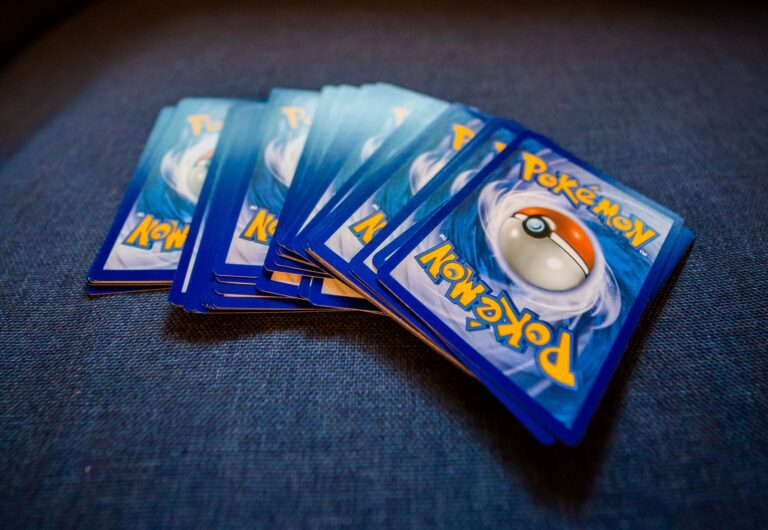
Near complete Base Set binders are functioning as a strategic entry point for vintage Pokemon card collectors in 2026 because they offer the aesthetic and collecting appeal of a recognizable set at a fraction of the cost of pursuing a complete master set. As the market experiences 30-50% price increases on Wizards of the Coast Base Set cards heading into 2026—driven by the franchise’s 30th anniversary milestone—many collectors who would otherwise be priced out of vintage acquisition are turning to incomplete binders as a more accessible alternative. A collector looking at acquiring Base Set cards in 2026 might find the cost of assembling all 102 holos and non-holos prohibitive, but purchasing a near-complete binder with 80-95 cards requires substantially less capital while still providing the satisfaction of owning a recognizable, high-profile set.
The market for vintage Pokemon has matured considerably since the speculative boom of 2020-2021. Today’s appreciation is grounded in scarcity and condition rather than hype, meaning near-complete binders can serve as both a collecting achievement and a legitimate long-term holding. For newer collectors or those with limited budgets, this represents a meaningful shift: five years ago, incomplete sets were viewed as consolation prizes. Today, they’re recognized as legitimate collecting targets that align with realistic financial parameters while still participating in the appreciation drivers affecting Base Set material.
Table of Contents
- Why Are Base Set Prices Surging and Creating New Market Segments?
- The Collector Psychology Behind Incomplete Sets in a Rising Market
- Price Point Accessibility—Unlimited Base Set as the Gateway
- Storage, Preservation, and Hidden Costs of Near-Complete Binders
- Market Maturation and the Shift Away From Speculation
- Prioritizing Cards Within Near-Complete Binders
- 2026 Market Outlook and the 30th Anniversary Window
- Conclusion
Why Are Base Set Prices Surging and Creating New Market Segments?
The 30th anniversary of Pokemon in 2026 has become a significant catalyst for base Set price appreciation, with WOTC cards showing the 30-50% increases across categories from late 2025 through the present. This isn’t driven by the same speculative fervor that characterized 2020-2021; instead, it reflects fundamental scarcity dynamics compounded by anniversary awareness. As casual collectors and institutional buyers recognize that 1999-2000 Base Set cards represent irreplaceable inventory from the franchise’s launch, valuations have responded accordingly. The market understands that no additional vintage WOTC cards will be manufactured, making supply genuinely fixed.
This price appreciation has created a bifurcation in the market: the ultra-premium segment (PSA 10 shadowless 1st Edition Charizard, which sold for $550,000 in December 2025) remains accessible only to a small subset of collectors and investors. Meanwhile, the entry-level and mid-range segments have responded with compressed margins and limited available inventory. Near-complete binders occupy a distinct position in this structure. They’re attainable enough for collectors with $5,000-$15,000 budgets while offering enough historical significance to benefit from anniversary tailwinds and scarcity appreciation. A collector pursuing a single PSA 9 1st Edition Charizard alone might spend $8,000-$12,000; for similar capital, they can acquire a near-complete binder with dozens of cards representing the entire era.
The Collector Psychology Behind Incomplete Sets in a Rising Market
Incomplete binders satisfy a psychological need that pure investment pieces do not: they tell a collecting story and feel achievable within a reasonable timeframe. Complete Base Set collections take years to assemble, require expertise in condition grading and version identification, and introduce decision paralysis around which cards to pursue first. Near-complete binders—typically containing 90-102 of 102 total cards—eliminate this friction. A collector can acquire a binder, review what’s missing, and then strategically hunt for the remaining 2-5 cards, which becomes a manageable project rather than a multi-year commitment.
However, there’s an important limitation here: “near-complete” is subjective and varies dramatically based on whether you’re counting holos only, non-holos, or all variants including different editions. A binder missing only non-holo commons is vastly different from one missing mid-grade holos like Blastoise or Venusaur. When evaluating near-complete binders in the secondary market, condition consistency matters significantly. A binder where 85 cards are PSA 6-7 but two holos are PSA 4 represents a more coherent collecting achievement than one with high variance across conditions. buyers often overlook this—they count cards rather than assessing the cohesiveness of the collection, which affects both the enjoyment and the potential resale value if the collector’s priorities change.
Price Point Accessibility—Unlimited Base Set as the Gateway
The price differential between 1st Edition and unlimited Base Set cards creates the most practical entry point for collectors using incomplete binders. A 1st Edition Base Set holo can range from $3,000-$6,000 for high-grade examples of premium cards like Charizard, while an Unlimited version of the same card might cost $300-$500. This 10-15x price difference means a collector pursuing a near-complete 1st Edition binder is committing $30,000+ in capital, whereas an Unlimited version becomes achievable in the $3,000-$8,000 range, particularly if some cards are in the PSA 6-7 range rather than PSA 9-10.
The market has internalized this distinction: Unlimited Base Set holos are expected to show steady appreciation throughout 2026 despite the lower prestige compared to 1st Edition variants. They still benefit from the 30th anniversary tailwinds, still represent genuine scarcity (Unlimited print runs were far smaller than recent reprints), and still command multiples over modern releases. For a collector with a $5,000 budget, an Unlimited near-complete binder represents genuine market participation rather than a consolation prize. The tradeoff is recognizable: less prestige, lower potential upside, but still legitimate vintage material with grounded fundamentals.

Storage, Preservation, and Hidden Costs of Near-Complete Binders
Acquiring a near-complete binder is only half the equation; preservation determines whether the collection maintains its condition and value trajectory. Complete Base Set collections require PVC-free, archival polypropylene sleeves and pages to prevent card damage from plasticizer migration—a critical technical requirement that many new collectors overlook. Cards stored in standard vinyl binders for 20-plus years may have already experienced some degree of deterioration, becoming visible once the cards are re-sleeved and examined carefully under light.
This introduces a hidden cost that binder buyers should anticipate: the acquisition price does not include proper storage materials, which might add $100-$300 for a full set of archival-grade sleeves and pages. Additionally, if a binder has been stored in suboptimal conditions, pulling cards for inspection and re-sleeving might reveal condition issues not apparent from cursory visual review. A collector acquiring a “near-complete” binder with predominantly PSA 6-7 cards might discover, upon closer examination, that humidity exposure or improper storage has affected corners on several holos, reducing their grading potential. Budget for this during acquisition; don’t assume the condition you see in photos is what you’ll get upon arrival.
Market Maturation and the Shift Away From Speculation
The vintage Pokemon market of 2026 operates under fundamentally different assumptions than 2020-2021, when any WOTC card purchase was presented as a guaranteed investment. Today’s market is mature: prices reflect genuine scarcity metrics, condition premiums are standardized, and appreciation is steady rather than exponential. Near-complete binders benefit from this maturation because they’re evaluated on fundamentals rather than hype. A binder’s appreciation potential hinges on the specific cards it contains, their condition, and their population in higher grades—not on whether Pokemon is in the news cycle.
This stability is both an advantage and a limitation. Near-complete binders are unlikely to see the 50% annual appreciation that characterized 2021, but they’re also unlikely to experience the 30-40% corrections that affected overheated segments when speculation cooled. Collectors entering the market via near-complete binders should calibrate expectations accordingly: this is a long-hold strategy, likely on a 3-5 year or longer timeline, with appreciation in the 5-15% annual range if market fundamentals remain stable. The upside is predictability and reduced timing risk. The downside is that this is no longer a path to outsized returns, and it requires patience.

Prioritizing Cards Within Near-Complete Binders
Within any near-complete binder, certain cards matter disproportionately to overall value and long-term appreciation. The “big three” holos—Charizard, Blastoise, and Venusaur—represent 15-25% of a complete set’s total value despite being just three cards. A near-complete binder missing Charizard is fundamentally different from one missing, say, Dragonite or Nidoking, both valuable cards but with substantially lower public recognition and price floors. When evaluating binders, assess what’s missing and what’s present carefully: a binder containing a PSA 7 Unlimited Charizard alongside lower-grade versions of other holos is more valuable than one missing Charizard but containing PSA 8 versions of secondary holos. This prioritization also applies to the binder’s non-holo composition.
Collectors often focus exclusively on holos, but a genuinely complete Base Set collection includes all non-holo commons, uncommons, and rares. Near-complete binders sometimes contain 95% of holos but only 40-50% of non-holos, creating an imbalanced set that’s incomplete in a structural sense. If your collecting goal is a full visual representation of the set, account for this. If your priority is value concentration in premium cards, missing non-holos is less problematic. Define your collecting objective before acquiring a binder, because this determines whether you’re buying a 95% complete set or a 60% complete set depending on how you count.
2026 Market Outlook and the 30th Anniversary Window
The 30th anniversary tailwinds that are driving 2026 appreciation will eventually normalize, likely beginning in mid-2026 as the anniversary period moves further into the rearview. Collectors acquiring near-complete binders now are participating in what may be the peak anniversary price window. This doesn’t necessarily mean prices will decline—fundamentals still support long-term appreciation—but the 30-50% annual increases are not sustainable indefinitely. The Japanese market’s 11.1% increase in booster box pricing in May 2026 suggests that international demand remains robust, but even Japanese pricing has moderated from the 2021 peaks, indicating market rationalization across geographies.
For 2026 forward, expect near-complete Base Set binders to be evaluated less on “anniversary premium” and more on intrinsic scarcity and condition metrics. This is actually healthy for collectors; it means you’re no longer racing against a deadline to acquire Base Set material. The window to buy near-complete binders at anniversary-inflated prices is closing, but the window to buy them as long-term holdings is opening. A collector acquiring a near-complete binder in late 2026 may find better pricing and less speculative demand than what’s available in the next three months.
Conclusion
Near-complete Base Set binders serve as legitimate entry points for vintage Pokemon collectors in 2026 precisely because they balance accessibility with the credibility of owning recognized, appreciating material. The 30-50% price increases for WOTC cards, driven by the 30th anniversary milestone, make complete sets financially out of reach for most collectors, but near-complete binders offer a genuine alternative that still participates in appreciation drivers and provides a satisfying collecting achievement.
The shift from speculative market (2020-2021) to fundamentals-driven market (2026) has made this segment more viable, since incomplete binders are now judged on the specific cards they contain rather than dismissed as consolation prizes. Before acquiring a near-complete binder, evaluate it against clear criteria: which cards are missing, what’s the condition consistency across the binder, is it primarily holos or a more balanced mix, and does the composition align with your collecting goals? Budget for proper storage materials, anticipate that re-sleeving may reveal condition surprises, and approach acquisition with a 3-5 year holding timeline rather than expecting rapid appreciation. The market for near-complete Base Set binders in 2026 is stable and grounded, offering a meaningful path into vintage collecting without the capital requirements or condition expertise demanded by complete sets or premium individual cards.