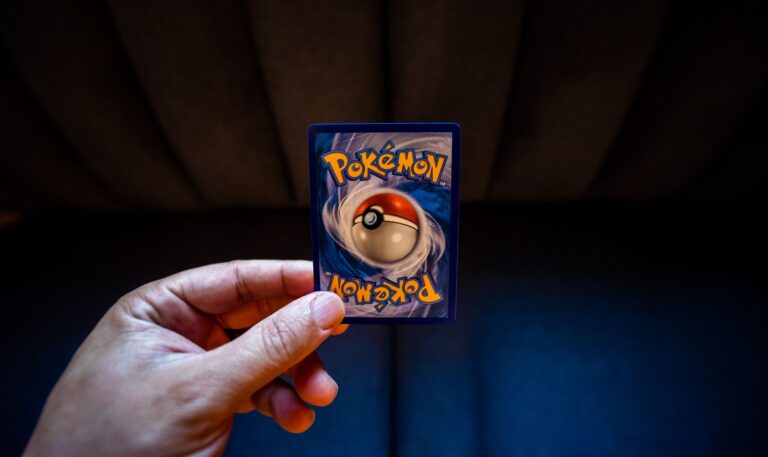
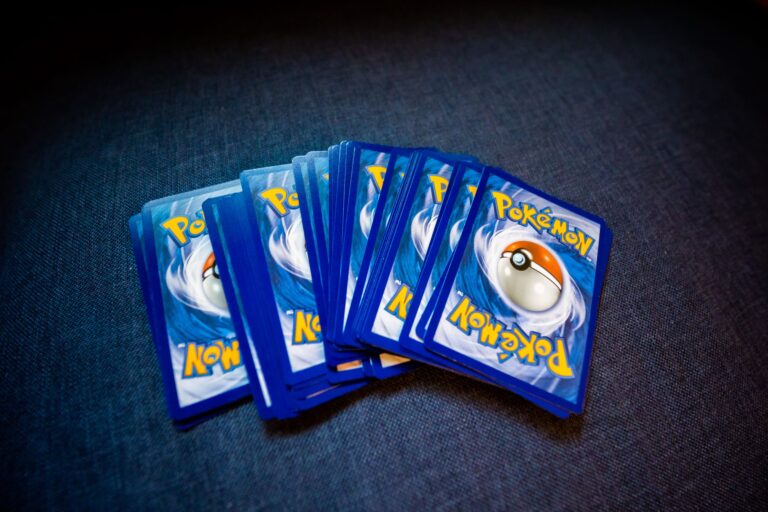
Base Set Heavy booster packs are no longer undervalued in the traditional sense. What were once $100-$300 purchases have appreciated to $700 or more, and sealed booster boxes now consistently trade for approximately $28,000 on major platforms like TCGPlayer. This represents more than a sevenfold increase, suggesting the market has already recognized their scarcity and collectibility. However, the question of whether they remain undervalued relative to their actual rarity and future demand is more complex than a simple yes or no.
The 2019 baseline matters here because the Pokemon TCG market has undergone seismic shifts in the past five years. A $100-$300 booster box in 2019 was already considered valuable by mainstream collectors, but it was still accessible to dedicated enthusiasts. Today, a $28,000 price tag puts Base Set heavy packs firmly in the category of serious investment pieces, accessible primarily to high-net-worth collectors. The real question isn’t whether they’ve appreciated—they clearly have—but whether that appreciation has outpaced or lagged behind the underlying growth in scarcity and demand.
Table of Contents
- How Much Have Base Set Heavy Booster Prices Actually Appreciated Since 2019?
- Understanding Sealed vs. Raw Base Set Inventory and Scarcity
- Comparing Base Set Performance to Other Vintage Pokemon Sets
- Investment Strategies for Base Set Heavy Packs Today
- Authentication Risks and Market Volatility Concerns
- The Role of First Editions vs. Unlimited Prints
- Future Outlook for Base Set Collectibles
- Conclusion
How Much Have Base Set Heavy Booster Prices Actually Appreciated Since 2019?
The raw numbers tell a dramatic story. If base set booster boxes were trading at even the high end of that $100-$300 range in 2019 (let’s estimate $300), we’re looking at approximately a 93-fold increase to reach today’s $28,000 listings. Even accounting for inflation and cherry-picked examples, this represents extraordinary appreciation. A recent high-profile sale saw a sealed Unlimited printing booster box fetch $31,000 on eBay, described as a “jackpot” find by collectors—a descriptor that suggests even insiders recognize these prices as exceptional rather than routine. This appreciation has not been linear. Market data suggests booster boxes tripled in value at some point (from the $100-$300 range to around $700), indicating rapid early appreciation followed by more stable, recent price growth.
The jump from $700 to $28,000 represents the period where Base Set collectibles transitioned from hobby investments to alternative assets. This acceleration correlates directly with the 2020-2021 Pokemon TCG boom, when sealed vintage product became scarce and demand from new investors entered the market. The comparison to other vintage sets provides important context. While we lack direct pricing data for contemporaneous sets from 2019, the fact that Base Set has become the most expensive to acquire suggests it has outpaced many competitors. The exclusivity of certain printings—particularly earlier unlimited printings and first editions—has created a tiered market where condition and rarity drive exponential price differences. A PSA 10 Base Set Charizard sold for $18,000, which shows how individual cards can command prices approaching entire booster boxes.

Understanding Sealed vs. Raw Base Set Inventory and Scarcity
The scarcity premise underlying Base Set valuation is straightforward: sealed booster boxes from a trading card game released in 1999 are genuinely rare. Nearly a quarter-century has passed, and most product from that era was opened, traded, and discarded by players. Collectors who held sealed boxes have faced persistent pressure to open them or sell, reducing the pool of available inventory. This scarcity is real and verifiable. However, there’s a critical limitation: we cannot definitively know how many sealed boxes still exist globally. The Pokemon Company has not released official inventory data, and prices are set by whatever the market will bear for available stock.
This creates a risk where prices could destabilize if significant quantities of sealed Base Set product suddenly entered the market—a scenario that seems unlikely but remains theoretically possible. Grading companies like PSA have also introduced their own scarcity dynamics by retiring vintage product holders, which has obscured some historical sales data and made historical pricing comparisons difficult. The distinction between Unlimited, 1st Edition, and shadowless printings adds another layer. A sealed 1st Edition Base Set box commands dramatically higher prices than Unlimited because fewer were ever produced and even fewer survived unopened. If you’re evaluating Base Set heavy packs specifically, the printing variant matters enormously. An Unlimited booster at $28,000 is a different asset than a 1st Edition box, which could easily exceed $100,000 in today’s market. Condition grading also introduces variability—a sealed box with any visible wear or damage will command a fraction of a gem-condition equivalent.
Comparing Base Set Performance to Other Vintage Pokemon Sets
Base Set has become the default safe harbor for Pokemon TCG investment, particularly among newer collectors who entered the market in 2020-2021. The reputation of Base Set as “one of the best boxes to own overall” is well-established among experts, with consensus suggesting prices “have risen quite a lot over the past few years and will likely rise in the future.” This expert opinion supports continued demand, but it also raises a question: how much upside remains if professional investors and mainstream collectors have already allocated capital to Base Set? Comparing Base Set to contemporary vintage sets like Jungle and Fossil is instructive. While these sets are also valuable, Base Set commands a significant premium due to its cultural cachet as the original set. This brand premium is real and defensible—collectors specifically seek Base Set because it represents the beginning of the franchise. However, brand premium is also the easiest value component to overestimate.
If Jungle or Fossil sets experience a popularity resurgence (perhaps driven by specific rare cards or nostalgia marketing), the price differential could compress. The real comparison that matters is Base Set versus non-Pokemon alternative investments. Has Base Set outpaced gold, stocks, or real estate over the past five years? For the period 2019-2024, the answer is almost certainly yes—Base Set has appreciated faster than conventional assets. But going forward, that comparison becomes less favorable. Asset price appreciation typically decelerates as valuations rise and the pool of potential buyers becomes more specialized. A $28,000 booster box is not accessible to casual collectors, which structurally limits the buyer pool.

Investment Strategies for Base Set Heavy Packs Today
If you’re considering acquiring Base Set heavy booster packs as an investment today, the entry price is prohibitive for most retail investors. At $28,000 per box, you’re competing with institutional collectors, wealthy hobbyists, and professional dealers. This means liquidity is lower than it was in 2021-2022, when more participants were bidding. A key tradeoff: higher prices suggest greater perceived value, but they also mean slower resale timelines and potentially steeper losses if the market contracts. A practical alternative strategy is focusing on lower-tier Base Set product—individual booster packs (not boxes) or raw cards graded below PSA 10. A Base Set booster pack can still be acquired for hundreds or low thousands of dollars depending on condition, providing exposure to the same set at a more accessible price point.
These secondary-tier items have also appreciated significantly since 2019, though often at a slower rate than top-tier sealed boxes. The tradeoff is accepting lower potential upside in exchange for better entry prices and lower risk of catastrophic loss. Diversification within Base Set is also worth considering. Rather than allocating all capital to a single sealed box, purchasing multiple cards, packs, or small collections spreads risk. If one item fails to appreciate as expected, others may compensate. This approach also provides more flexibility—you can liquidate portions of your collection without forced sales of entire boxes, which may involve significant transaction costs and dealer markups.
Authentication Risks and Market Volatility Concerns
The most significant risk facing Base Set investors today is authentication fraud. Counterfeit booster boxes have become increasingly sophisticated, and most casual buyers cannot reliably distinguish authentic vintage product from well-made fakes. PSA and BGS offer box grading services that provide third-party authentication, but these certifications add cost and time. A $28,000 purchase of an ungraded box is extraordinarily risky—the potential for catastrophic loss through fraud is genuine and documented in collector forums. Market volatility represents a secondary but serious concern. The Pokemon TCG market crashed sharply in 2022-2023 after the 2021 boom, with sealed modern product losing 50-80% of peak values.
While Base Set held value better than modern sets, vintage prices still experienced meaningful corrections during that period. Booster boxes that traded at $30,000+ in late 2021 saw brief periods of reduced demand and lower bids in 2023. This volatility suggests that even “safe” vintage investments are subject to market psychology and can experience sharp repricing if collector enthusiasm shifts. Liquidity risk is also worth acknowledging. Unlike stocks or real estate, selling a $28,000 booster box requires finding an active buyer willing to meet your asking price. During market downturns, buyer activity decreases dramatically, and you may face pressure to accept lower bids or extended holding periods. If you need to liquidate quickly—due to emergency expenses or changing investment priorities—you could be forced to accept significant discounts from market value.

The Role of First Editions vs. Unlimited Prints
The distinction between 1st Edition and Unlimited Base Set booster boxes has enormous pricing implications. A 1st Edition sealed box is dramatically rarer and commands a significant premium—potentially 2-3x the price of an equivalent Unlimited box. This creates a strategic decision point: are you investing in the set itself or in the ultimate rarity within the set? The answer depends on your risk tolerance and exit timeline.
1st Edition boxes are the safer choice for long-term holders, as they have inherent scarcity that will never increase. Unlimited boxes, by contrast, exist in larger quantities and theoretically face more supply-side risk if hidden collections emerge. However, 1st Edition boxes are also less liquid—the buyer pool shrinks considerably as prices exceed $50,000-$100,000. An Unlimited box at $28,000 is more likely to find a buyer than a 1st Edition at $80,000, which has implications for your ability to exit the investment quickly if circumstances change.
Future Outlook for Base Set Collectibles
The trajectory of Base Set pricing depends on several forward-looking factors that remain uncertain. If the Pokemon Company continues releasing products and expanding the franchise’s cultural footprint, demand for nostalgic 1999 Base Set product will likely persist. Generational turnover also matters—as millennial players who grew up with Base Set reach peak earning years (late 20s to 40s), disposable income available for premium collectibles increases, which could support continued appreciation. However, the market has already priced in much of the scarcity narrative.
At $28,000 per box, sellers are asking prices that reflect near-universal recognition of Base Set value. Future appreciation will depend on demand growth outpacing the stable supply of available sealed boxes. If demand growth plateaus—or if new competitors emerge in the collectible card game space—Base Set appreciation could slow significantly. The most likely scenario is continued modest appreciation for top-tier sealed product, with higher volatility in secondary-tier items.
Conclusion
Base Set Heavy booster packs are not undervalued in 2024-2025, at least not in the traditional definition of undervaluation. Prices have appreciated from hundreds of dollars in 2019 to tens of thousands today, reflecting real scarcity and genuine collector demand. The market has absorbed and acknowledged Base Set’s historical importance and rarity. However, whether they remain undervalued relative to future price trajectories is a different question, and one where honest analysts must admit uncertainty.
The best approach for prospective buyers is realistic assessment of entry prices, authentication risks, and liquidity constraints. Base Set booster boxes are now alternative investments for serious collectors with substantial capital, not accessible entry points for casual hobbyists. If you’re considering acquisition, focus on lower-tier Base Set product (individual packs, raw cards) or diversified collections rather than betting everything on a single sealed box. The appreciation opportunity remains, but it’s narrower than it was in 2019, and the risks are more acute.