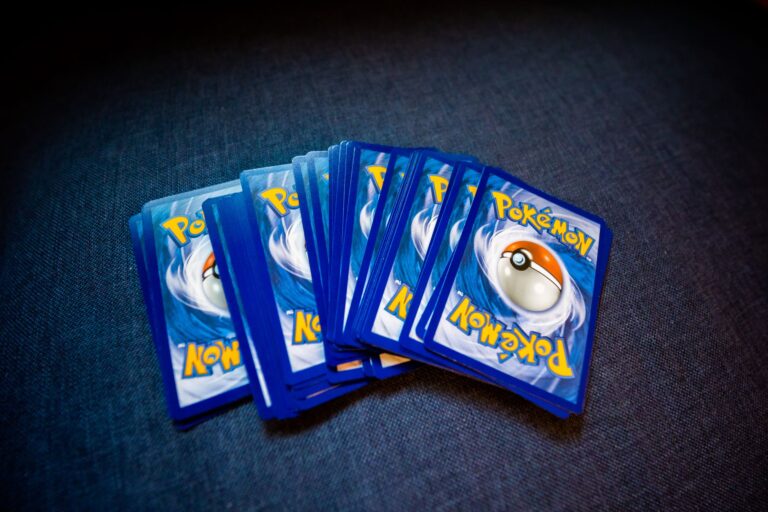
A Base Set 1st Edition Charizard PSA 4 will typically sell for somewhere between $1,500 and $3,000 on eBay, though the exact price depends heavily on current market conditions, bidder activity, and the specific listing presentation. The reason for this relatively modest range is simple: PSA 4 represents “Very Good-Excellent” condition, which means the card shows noticeable wear from handling, light creasing, and surface imperfections that collectors can clearly see. For comparison, the same card in PSA 10 condition (Gem Mint) regularly commands $15,000 or more, and some pristine examples have sold for $55,000 or higher at auction.
The critical challenge with PSA 4 pricing is that the market for lower-grade Base Set 1st Edition Charizards is relatively thin compared to the premium grades. Most of the publicly reported sales data focuses on PSA 7, 8, 9, and 10 specimens because those are where serious collectors and investors concentrate their activity. If you’re selling a PSA 4, you’re entering a smaller pool of buyers—primarily collectors who love the card but have a tighter budget, or players who want the card for gameplay rather than investment. This doesn’t mean you can’t find a buyer, but it does mean your pricing research will be more challenging than for higher grades.
Table of Contents
- What Does a PSA 4 Grade Actually Mean for Your Charizard?
- How Prices Drop Dramatically Across Different PSA Grades
- Finding Actual Completed Sales on eBay for Accurate Pricing
- Why the Collector Market Doesn’t Focus on PSA 4 and What That Means for You
- Watch Out for Counterfeits and Verify Authenticity
- Timing Your Sale—When Market Conditions Favor You
- Beyond eBay—Other Platforms and Their Trade-offs
- Conclusion
What Does a PSA 4 Grade Actually Mean for Your Charizard?
The Professional Sports Authenticator (PSA) grading scale runs from 1 to 10, with 10 being “Gem Mint” condition and 1 being “Poor.” A PSA 4 falls into the “Very Good-Excellent” range, which sounds better than it is in practice for a card of this caliber. At this grade level, the card will show clear evidence of play and age: the corners may be noticeably worn, edges will have visible wear marks, the centering might be off by 30-40 percent in one or more directions, and the surface will display light scratches or small imperfections when viewed under proper lighting. For a base set 1st Edition Charizard specifically, even minor imperfections matter more than they might for a common card.
Because the demand for any example of this card is high, buyers often hope to find the best possible grade they can afford. A PSA 4 sits in an uncomfortable middle ground: it’s expensive enough that most casual buyers won’t consider it, but it’s not impressive enough to attract serious investors looking for a showcase piece. Think of it this way—a collector willing to spend $2,000 on a Charizard might hold out a bit longer to reach $3,500 and get a PSA 6 instead, which photographs significantly better.
How Prices Drop Dramatically Across Different PSA Grades
The relationship between grade and price for Base Set 1st Edition Charizards is not linear—it’s exponential. Recent market data from March 2026 shows that cards graded PSA 5-6 might fetch $2,500-$4,500, PSA 7-8 examples go for $5,000-$8,000, and PSA 9 copies regularly exceed $10,000. Jump to PSA 10 and you’re looking at five-figure territory. The difference between a PSA 4 and a PSA 5 might only be a few hundred dollars on paper, but psychologically, the buyer base shifts dramatically once you cross that five threshold.
One important limitation: comprehensive, publicly available data on completed PSA 4 sales is difficult to find because fewer of these cards change hands compared to higher grades. When you search eBay’s “sold listings” filter for “Base Set 1st Edition charizard psa 4,” you might find sporadic results spread across months rather than multiple sales per week like you would for PSA 8s and 9s. This scarcity of data means that when you do find a comparable sale, it becomes your best pricing reference, even if it’s from several weeks ago. Market conditions can shift, so a sale from six months back may not reflect current collector demand.
Finding Actual Completed Sales on eBay for Accurate Pricing
The most reliable way to determine what your specific card might sell for is to use eBay’s “Sold” listings filter. Go to the pokemon card section, search for “Base Set 1st Edition Charizard PSA 4,” then sort by recently sold listings. Look specifically for auctions that ended with actual bids and sales—not listings that were relisted multiple times or withdrawn. Each completed sale shows you the final hammer price, how many bids it received, and when it sold, all of which matter for understanding market timing and buyer appetite.
When examining these sales, pay close attention to subtle variations that might affect price. A PSA 4 with centered text and a clean surface might sell for $2,800, while a different PSA 4 with off-center printing and light creasing might only fetch $1,600. The grade is the same, but the visual presentation differs. Also note whether the seller used auction format (letting bidders compete) or fixed-price “Buy It Now,” because auction format often drives prices higher than fixed-price listings. For example, you might see the same card listed at $2,200 as a fixed-price Buy It Now, but an identical card sell for $2,650 through auction because two collectors got into a bidding war.

Why the Collector Market Doesn’t Focus on PSA 4 and What That Means for You
The Pokemon card collecting community has shifted significantly over the past five years toward high-grade specimens. Serious collectors want cards that photograph well for social media, display impressively in slabs, and hold investment value. A PSA 4 doesn’t check those boxes—it looks worn, its value appreciation is uncertain, and it doesn’t serve as the centerpiece of a collection. This creates a buyer challenge: your audience is mostly people with a budget cap, not people with unlimited funds seeking their holy grail card.
This market dynamic means you’ll likely sell faster at $1,700 (auction format, aggressive pricing) than at $2,900 (fixed-price listing), because you’re targeting the buyer group that exists rather than waiting for the dream buyer who might never appear. The tradeoff is clear: move it quickly for a fair price, or hold it longer hoping for that one bidder who doesn’t know better. Many sellers choose the former because tying up capital in a low-grade Charizard while hoping for an unlikely high offer isn’t practical. If you’re patient and willing to relist, you might squeeze an extra $400-$600 out of your sale, but you’ll also spend 2-3 months doing it.
Watch Out for Counterfeits and Verify Authenticity
One warning that applies especially to lower-grade cards: counterfeit Base Set Charizards exist, and some PSA 4 examples are slabbed counterfeits that slipped past authentication. PSA has improved its processes significantly, but older slabs from the 1990s and early 2000s are more vulnerable. Before listing or buying, examine the PSA slab itself for authenticity markers: the label font, hologram placement, security features, and the overall plastic quality all tell a story. If the slab looks off—if the font is slightly wrong or the hologram feels loose—that’s a red flag.
For sellers, this concern actually works in your favor in one way: because the card’s value is lower, fewer counterfeits target this specific grade. The counterfeiting efforts focus on high-grade copies where the financial reward justifies the effort. A fake PSA 4 is far less common than a fake PSA 9. That said, if you bought your card years ago and had it graded by a lesser-known grading company, getting it re-graded by PSA before selling might actually increase buyer confidence and allow you to sell for $300-$500 more. The re-grading cost (around $20-$50 depending on turnaround) could pay for itself.

Timing Your Sale—When Market Conditions Favor You
Market timing matters more for lower-grade cards because they’re more price-sensitive. The Pokemon card market tends to see increased activity around the release of new sets and during holiday seasons (November-December). If you’re sitting on a PSA 4 Charizard in May 2026, you might consider holding it until October when collector spending typically increases, or even waiting until December. A sale that nets $2,400 in August might fetch $2,800 in December simply because more collectors are active and holiday gift-buying drives demand.
Conversely, if you need the money now, don’t wait. The difference between selling immediately at $2,000 and hoping to get $2,600 in six months is a 30 percent difference, but it requires you to store the card safely and risk that it gets damaged or that market conditions worsen instead. For most sellers, a solid sale at fair market value today beats a speculative higher price months away. Use current sold listings from the past 30 days as your baseline, and price accordingly.
Beyond eBay—Other Platforms and Their Trade-offs
While eBay is the largest marketplace for Pokemon cards, it’s not your only option. Specialized platforms like TCGPlayer, Cardmarket (in Europe), and even local Facebook collector groups sometimes offer better prices for graded cards because the buyer base is more serious and knowledgeable. A PSA 4 Charizard might sell for $2,400 on eBay after fees, but the same card could move for $2,300 on TCGPlayer with lower fees, or $2,200 locally if you handle the transaction in person and avoid shipping fees entirely.
Looking ahead into 2026, the Pokemon card market is expected to remain strong but more selective. Higher grades will continue to command premium prices as the investment appeal persists, while lower grades like PSA 4 will likely trade in a relatively stable $1,500-$3,000 band. The market isn’t oversaturated, but it’s not growing as explosively as it was in 2020-2021 either. This means predictability—your card won’t suddenly become worthless, but you also shouldn’t expect a surprise 50 percent jump in value.
Conclusion
A Base Set 1st Edition Charizard PSA 4 will sell for approximately $1,500 to $3,000 on eBay, depending on listing format, timing, current buyer interest, and the specific visual characteristics of your card. The best approach is to check eBay’s sold listings for recent comparable sales, price aggressively if you need to move it quickly, and consider timing your sale for peak collector seasons if you can wait. Remember that you’re selling into a smaller buyer pool than higher grades command, so marketing matters and realistic pricing helps.
Your next step should be to spend 15 minutes on eBay searching “sold” listings for your exact grade and taking notes on what prices appeared, how many bids those auctions received, and how recently they sold. From there, you can decide whether to use auction format (to drive bidding competition) or fixed-price (for certainty and simplicity). Either way, being realistic about what PSA 4 means in the current market will help you set fair expectations and close a sale without regret.