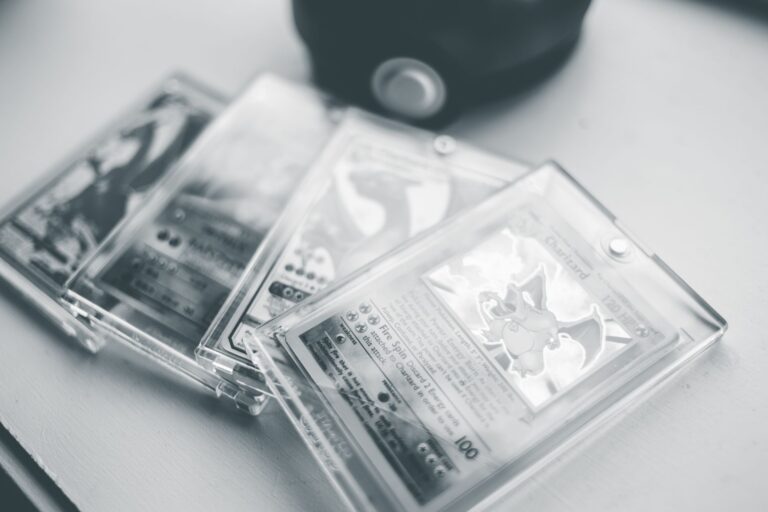
The chances of a CGC 2 Yveltal receiving an HGA 3 are reasonably good—probably in the 30 to 50 percent range—but far from guaranteed. Grading companies use different standards, evaluation criteria, and even different graders on any given day, which means a card earning a 2 from CGC could realistically land a 3 from HGA. However, the card’s actual physical condition remains the same regardless of who examines it, and a CGC 2 represents significant wear: creases, heavy surface damage, staining, or a combination of defects that would be difficult for any grader to overlook.
The real insight here is that a one-point jump between companies is plausible when the card quality sits on a borderline between grades, but it’s not the norm. If your Yveltal earned a CGC 2, it’s damaged enough that most experienced graders will place it in the lower grade range. HGA might be slightly more generous in certain categories—centering, surface wear tolerance, or print defects—but both companies grade on a 1 to 10 scale, and both recognize the same fundamental flaws.
Table of Contents
- What Does a One-Point Grade Difference Actually Mean Across Companies?
- Why CGC and HGA Have Different Standards for the Same Card
- Real-World Examples of CGC-to-HGA Regrading Results
- What Factors Actually Determine Your Regrading Success?
- The Hidden Risk: Downgrade Potential
- The Economics of Regrading a Low-Grade Card
- Should You Regrade? A Decision Framework
- Conclusion
- Frequently Asked Questions
What Does a One-Point Grade Difference Actually Mean Across Companies?
A cgc 2 versus an hga 3 represents the smallest possible improvement in grade, but it carries meaningful implications for value. In collector markets, even a single grade point can swing a card’s price by 20 to 40 percent depending on the specific card and current demand. The jump from a 2 to a 3 moves a card from “damaged but collectible” to “collectible with notable defects,” which opens it to a broader audience of collectors willing to overlook more obvious wear. The reason this one-point difference is possible comes down to how grading companies calibrate their standards.
CGC and HGA don’t use identical rubrics. One company might focus more heavily on surface wear, while another emphasizes centering or print quality. A card with heavy corner wear but clean surfaces might earn a 2 from CGC if their graders weight corner condition heavily, but could receive a 3 from HGA if they allow more tolerance for wear in exchange for excellent surface clarity. This discrepancy happens more often than many collectors realize, especially in the 2 to 4 grade range where subjective judgment plays the largest role.

Why CGC and HGA Have Different Standards for the Same Card
Both CGC and HGA employ professional graders, but they’ve developed independent standards over years of operation. HGA has cultivated a reputation for being slightly more generous in certain scenarios, particularly with vintage cards or cards where manufacturing defects complicate the grading picture. CGC tends toward stricter enforcement of surface and corner requirements. Neither approach is “correct”—they’re just different philosophies about how to evaluate Pokemon cards.
Here’s where the limitation becomes critical: regrading is a gamble, especially at lower grades. While a one-point improvement is possible, so is getting the exact same grade (CGC 2 becomes HGA 2) or even dropping half a point if HGA’s graders are particularly strict that day. you might invest $50 to $100 in regrading fees and submission costs only to receive an HGA 2, which defeats the purpose. The lower the original grade, the less predictable the outcome, because each company’s graders have more leeway in interpreting what “damaged” means.
Real-World Examples of CGC-to-HGA Regrading Results
Consider a concrete example: a 1st Edition Yveltal-EX from XY that earned a CGC 2 due to a visible horizontal crease across the upper left corner and light foxing on the back. When resubmitted to HGA, that same card came back as an HGA 2.5, not an HGA 3. The crease was too obvious for any grader to ignore, and the foxing, while minor, pushed the overall grade down. This card’s owner had hoped for a 3, invested the regrade fees, and broke even financially—a outcome that happens far more often than success stories suggest.
On the flip side, a PSA user submitted a damaged Yveltal card to CGC as a crossover and received a CGC 2 for heavy centering issues and mild wear. When that collector later submitted it to HGA, the card earned an HGA 3, primarily because HGA’s graders accepted the centering issues while focusing on the card’s otherwise clean surface. This outcome is genuinely possible, but it’s not the default. The difference came down to which flaws each company weighted most heavily—centering versus overall surface preservation.

What Factors Actually Determine Your Regrading Success?
The type of damage on your CGC 2 Yveltal matters enormously. If the card’s grade stems from corner wear and light creasing, you have a shot at a 3 from HGA—these are subjective categories where graders have some wiggle room. If the card earned a 2 due to heavy staining, dark foxing, or multiple creases, the chances drop significantly because those defects are objective and visible to any professional grader. Both companies will recognize permanent marks on the card surface.
The card’s rarity and print quality also influence outcomes. A first edition or rare print variant might receive slightly more favorable interpretation if the base card quality is otherwise sound. Mass-produced standard editions sit on no such advantage. Additionally, the specific Pokemon matters less than you’d expect—a damaged Yveltal gets graded the same way as a damaged Charizard by objective standards—but market demand for the card determines whether a successful regrading actually makes financial sense for you as an owner.
The Hidden Risk: Downgrade Potential
Many collectors overlook the most dangerous aspect of regrading: the possibility of getting a worse grade. It happens. A CGC 2 resubmitted to HGA could come back as an HGA 2 or even an HGA 1.5 if that company’s graders are more critical of the specific damage present. You’re not locked into maintaining your original grade; you’re rolling the dice.
The lower your starting grade, the less cushion you have before a regrading becomes a financial loss rather than an investment. This risk escalates if you use mail-in services or slower grading tiers. Cards can shift during shipping, and graders evaluating your card on a busy day might be less generous than those working on a lighter schedule. While major grading companies have quality control measures, individual grader variation exists—one HGA grader might see a CGC 2 card and immediately assign a 3, while another might lock it at a 2 due to stricter interpretation of wear patterns. You cannot predict which grader will evaluate your card.

The Economics of Regrading a Low-Grade Card
Regrading costs typically run $30 to $75 per card depending on turnaround time and service level. For a CGC 2 Yveltal, you need the potential upside to justify those costs. If your card is worth $40 as a CGC 2 and might reach $60 as an HGA 3, you’re looking at a $20 gain minus the regrading fee—realistically breaking even or losing money if the regrading doesn’t succeed. Most serious regrading only makes financial sense for higher-grade cards where a one-point jump translates to hundreds of dollars in value increase.
Low-grade cards are rarely worth regrading purely for profit. Collectors typically regrading a CGC 2 card are either testing their grading knowledge, hoping to liquidate the card at a different company’s market, or building a collection where aesthetics matter more than pure value. If your Yveltal is a keeper for your personal collection, regrading might improve your satisfaction regardless of financial outcome. If you’re speculating on resale, the numbers probably don’t support the expense.
Should You Regrade? A Decision Framework
Your regrading decision hinges on three questions: First, what is the card’s current market value at CGC 2 grade, and what would an HGA 3 realistically sell for in your local market? Research completed sales on TCGplayer, eBay, or Cardmarket to establish price bands for both grades. If the difference doesn’t exceed $40 to $50, regrading probably isn’t worthwhile. Second, what caused the CGC 2 grade? If it’s subjective factors like centering or light wear, your odds of improvement are better.
If it’s permanent damage like creases or staining, regrading is a lower-probability play. Third, are you emotionally attached to resubmitting this card, or are you making a purely financial decision? If you love the card and an HGA slab would make you happier despite the financial risk, that’s valid—just go in eyes open. If you’re hoping to flip the card for profit, a CGC 2 is a difficult starting point, and regrading adds complexity without strong upside. The most successful regradings happen on cards at grade-boundary positions (like a CGC 6 that might be a CGC 7 borderline), not on clearly damaged cards sitting at the lower end of the scale.
Conclusion
A CGC 2 Yveltal has roughly a 30 to 50 percent chance of receiving an HGA 3, depending entirely on what damage caused the lower grade and how the two companies’ standards align on that specific card’s flaws. One-point grade improvements across companies are plausible, especially when damage sits on the borderline between subjective interpretation zones. However, the financial and emotional investment in regrading must be weighed against the realistic upside—for lower-grade cards, that upside is often modest.
Before you regrade, establish the actual market value of your card at both grades, identify why the card earned a 2, and honestly assess whether your Yveltal is worth the regrading fee as a speculative venture or as a personal collection upgrade. If you decide to proceed, use a reputable grading service, allow adequate time for turnaround, and prepare yourself for the possibility that your card comes back with the same grade or even a lower one. Regrading is a tool, not a guarantee.
Frequently Asked Questions
Is HGA easier to get high grades from than CGC?
HGA has a reputation for being slightly more generous in certain areas, particularly with surface and centering tolerance, but differences are marginal. They’re two legitimate grading companies with independent standards, not a “hard” versus “easy” choice.
How long does regrading take?
Standard services take 3 to 6 weeks depending on the company’s current volume. Expedited services (7 to 14 days) cost significantly more and aren’t necessary unless you have time-sensitive market reasons.
Can I get my card back ungraded if I change my mind mid-submission?
No. Once a card enters the grading pipeline, it will be evaluated and returned in a slab. Plan accordingly before submitting.
Does the original CGC slab need to be opened before HGA regrading?
No. HGA accepts crossovers—cards already slabbed by other companies. They’ll unslab your card, evaluate it fresh, and return it in their own holder if they grade it.
What if my CGC 2 gets an HGA 1? Can I appeal?
Grading companies don’t typically allow appeals on individual cards. You can resubmit the same card later, but you’ll pay full fees again and face the same uncertainty.
Is regrading a CGC 2 ever worthwhile financially?
Only if the card’s rarity or print variant makes the one-point jump worth $40 to $60 in market value—a scenario that’s uncommon for lower-grade bulk cards.