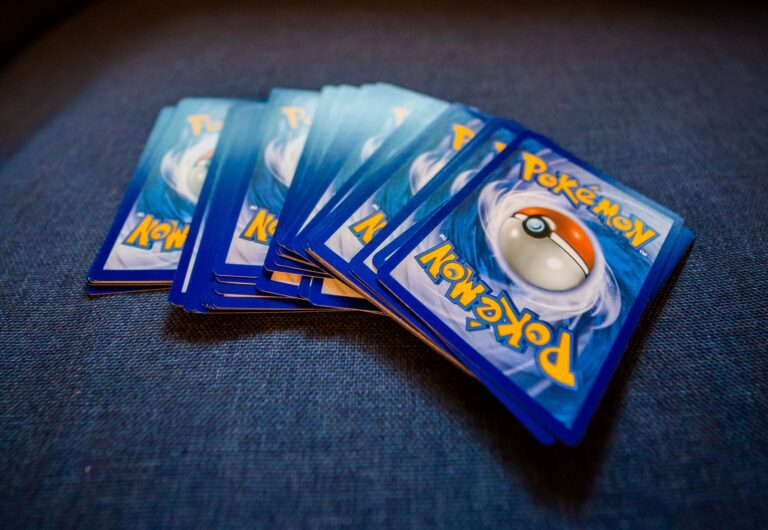
With $50 in today’s vintage Pokémon market, you can realistically buy an ungraded Unlimited Base Set holographic card or a solid mid-tier card from the Neo or E-Reader era. While the headline prices—like the $16.5 million Pikachu Illustrator from 2026 or the $550,000 Shadowless Charizard PSA 10 sold at Heritage Auctions in December 2025—might seem impossibly distant, your $50 budget puts you within reach of authentic vintage cards with real collector value. The key is understanding that you’re shopping for ungraded cards, since professional grading alone costs $25 to over $100 per card, which would consume your entire budget before you even own anything.
The vintage Pokémon market has experienced a genuine shift in 2026. Heading into the year, vintage WOTC cards saw price increases of 30 to 50 percent, driven by actual collector demand rather than speculation. Pokémon’s 30th anniversary in February 2026 brought dormant collectors back to the market, rekindling interest in out-of-print sealed products and older sets. This means your $50 is entering a market with real momentum—and real competition from people who are hunting for the same cards.
Table of Contents
- What $50 Actually Buys in the Current Vintage Market
- Why Professional Grading Doesn’t Make Sense at $50
- The Cards Worth Hunting for at This Price Point
- How the 2026 Market Shift Affects Your Purchase Decision
- Spotting Red Flags and Avoiding Counterfeits at Budget Prices
- Comparing Base Set to Neo and E-Reader Eras
- Market Outlook and Long-Term Collector Strategy
- Conclusion
What $50 Actually Buys in the Current Vintage Market
Your budget sits at the intersection of accessibility and meaningful collecting. At this price point, you’re looking at cards that are decades old but not historically rare enough to command five or six-figure grading costs. An ungraded Shadowless base set Charizard can reach up to $1,000 in near mint condition, but you won’t find one for $50—instead, you’ll find played condition copies or more common holographic cards from the same era. The Unlimited Base Set offers better options here. Unlimited Blastoises, Venusaurs, and Gyarados regularly appear on TCGPlayer and the price guide in the $30 to $60 range, depending on centering and surface quality.
What makes $50 work is that you’re operating in the ungraded market, where condition is everything but doesn’t require a third-party certificate to authenticate. You might find a lightly played Unlimited Charizard for $40, or a near mint Gyarados from the same set for $50. The tradeoff is that you’re relying on seller reputation and your own eye for condition. There’s no PSA or BGS number to fall back on if you’re unsure. This is where homework matters—spending 20 minutes comparing listing photos across three different sellers can be the difference between scoring a card that holds value and buying something that was overgraded by an optimistic description.

Why Professional Grading Doesn’t Make Sense at $50
Grading services like PSA and BGS charge $25 to $100 per card depending on turnaround time and the card’s estimated value. Even at the low end, a $25 grading fee on a $50 purchase doubles your cost basis before you’ve established any market value. A card that might be worth $50 ungraded could theoretically jump to $75 or $100 after grading—but it also might not. The math only works if you’re confident the card will appreciate significantly enough to cover the grading cost plus any labor time and shipping back and forth. At the $50 entry price point, you’re almost always better off keeping the card raw.
This is where ungraded collectors have an advantage in 2026. with price increases of 30 to 50 percent already happening on vintage WOTC cards, a solid ungraded copy of a classic Base Set holographic is appreciating on its own merit. You’re buying the card, not paying for a certificate. The limitation here is liquidity—if you ever want to sell, you’ll need to convince a buyer that your grading assessment is accurate. Strong photos, honest condition grading, and selling on a platform with buyer protection (like TCGPlayer or eBay) mitigates this risk. But it is a real consideration.
The Cards Worth Hunting for at This Price Point
The Base Set Unlimited era is still the most recognizable starting point. An ungraded Unlimited Pikachu in near mint or lightly played condition typically costs $20 to $35, leaving you room to add another card or upgrade to a higher-grade copy. Base Set Unlimited Blastoise and Venusaur are the natural companions—you’ll find them in the $25 to $45 range depending on condition. The psychological appeal of these three cards is real; they’re the trophy cards that got kids into the hobby in the first place. They hold their value not because of rarity but because of cultural weight.
The Neo Genesis and E-Reader era cards offer a different path. These sets came out in the late 1990s and early 2000s and are less expensive than Base Set equivalents because they’re less famous. An ungraded Neo Genesis Lugia ex or a Holo Typhlosion from the same set might cost $25 to $40. These cards have the advantage of being genuinely scarce—fewer were opened and kept compared to Base Set products, and fewer survived in good condition. They’re also less likely to be counterfeited, which is always a concern with big-name Base Set cards. The downside is that they’re harder to sell later, since most casual buyers want the Base Set chase cards.

How the 2026 Market Shift Affects Your Purchase Decision
The timing of your $50 purchase matters more than it might have in previous years. Pokémon’s 30th anniversary in February 2026 created a market reopening—collectors who hadn’t touched the hobby in years started looking at old cards again, and sealed out-of-print products climbed in value. This is why vintage WOTC prices jumped 30 to 50 percent heading into 2026. Your $50 budget is actually smaller in real terms than it would have been in 2024, because the same cards cost more now. That said, this increase happened for a reason: there’s genuine collector demand driving the market, not speculation.
Previous Pokémon bubbles inflated and popped because speculators bought sealed products expecting infinite appreciation. This cycle is different because the people coming back to the hobby are looking for actual cards to own, not products to resell for profit. This is good news for you. It means that a solid card you buy at $50 today is more likely to hold its value or appreciate modestly over the next few years. The bad news is that the easy bargains might be gone. Three years ago, you could find better deals on vintage cards than you can now.
Spotting Red Flags and Avoiding Counterfeits at Budget Prices
Counterfeits are more common in the $40 to $100 range than people realize. A fake Base Set Charizard that looks good in a listing photo might have slightly off printing, subpar holo quality, or text that doesn’t match authentic versions when you examine it in person. At $50, sellers are either clearing out legitimate cards quickly or running a counterfeit operation. You’re unlikely to see obvious, crude fakes at this price—the effort-to-reward ratio is too low. Instead, you’re looking at sophisticated reproductions that pass a quick inspection but fail under scrutiny.
Buy from established sellers with strong feedback histories. TCGPlayer’s Verified seller status, eBay’s top-rated seller badge, and professional card retailers with physical addresses are not perfect protection, but they’re far better than unknown accounts. Ask for close-up photos of the holo pattern, the print lines, and the back of the card before buying. If a seller refuses or seems evasive, move on. Condition is another check—if a card looks too good to be true for the price, it probably is. A near mint Base Set Charizard shouldn’t cost $50 unless it’s heavily played, damaged, or counterfeit.
Comparing Base Set to Neo and E-Reader Eras
The three main eras you can realistically shop in at $50 are Base Set (1999), Neo (1999–2001), and E-Reader (2001–2003). Base Set cards are the most recognizable and hold value the longest, but they’re also the most likely to be counterfeited and the most expensive on a per-card basis. A Base Set Pikachu costs more than a Neo Genesis Pikachu, even in the same condition, because Base Set has cultural weight that collectors pay a premium for. Neo and E-Reader cards are less flashy but more interesting if you actually want to build a collection.
These sets have complex artwork, more varied Pokémon, and lower survival rates in good condition. A Neo Genesis Suicune or an E-Reader Gyarados offers more story than a seventh copy of Base Set Pikachu. They’re also less likely to spike in value overnight (meaning less speculation risk), but they’re also more durable long-term because fewer exist in high-grade condition. For $50, you could buy a single Base Set card or two to three Neo/E-Reader cards of comparable condition. That’s a meaningful difference in what your budget accomplishes.
Market Outlook and Long-Term Collector Strategy
Looking ahead to late 2026 and beyond, the foundation for vintage card values is stronger than it’s been since the 2020 speculation boom. The 30th anniversary momentum is real, and the price increases you’re seeing aren’t temporary spikes. Serious collectors are building collections around complete sets or thematic groups, not just chasing the one expensive card. This means a $50 card you buy today is more likely to find a buyer in two years than an equivalent card would have found in 2024.
Your strategy at $50 should be to buy cards you actually want to own, not cards you think will flip for profit. If you love Base Set Charizard, spend $50 to get the best Unlimited or played Shadowless copy you can find. If you’re building a complete Neo Genesis set, allocate your $50 toward one high-value card or two mid-tier cards that fill your collection. The market will reward genuine collectors who are thoughtful about what they buy, and it will punish people trying to scalp $40 cards for $70. At $50, you’re in a position to do this right.
Conclusion
With $50 in today’s market, you can buy an authentic vintage Pokémon card that has real collector value and genuine appreciation potential. You’re shopping in the ungraded market, which means your focus should be on condition assessment, seller reputation, and honest descriptions rather than third-party certification. The Base Set is the obvious choice for recognition and stability, but the Neo and E-Reader eras offer better variety and potentially lower counterfeiting risk at the same price point.
The vintage Pokémon market in 2026 is fundamentally healthier than the speculation-driven bubble of 2020–2021. Your $50 purchase comes at a moment when prices are rising because collectors want these cards, not because investors are betting on infinite growth. Start by identifying one or two cards you genuinely want to own, research recent sales of those cards on TCGPlayer and the price guide, and commit to spending no more than 10 percent above the average asking price. That discipline, combined with patience in finding the right seller, is how $50 turns into a meaningful addition to a vintage collection.