That dollar Magikarp you picked up could potentially be worth significantly more, depending on which variant you have and its condition. A raw, ungraded 1st Edition Base Set Magikarp #35 currently sells for around $67.50 on the secondary market, making it a respectable card even in played condition.
However, if your card happens to be in near-mint condition and gets professionally graded, the valuation jumps dramatically—a PSA 10 1st Edition Magikarp #35 trades for approximately $2,652, representing nearly 40 times the value of an ungraded copy. Most casual collectors who picked up a dollar Magikarp probably don’t have a gem-mint specimen, but the significant gap between $67.50 and $2,652 explains why serious Pokemon card investors obsess over condition and authentication. Your card’s actual worth depends entirely on three factors: which printing variant you own, the edition (1st Edition versus Unlimited), and whether the card has been professionally graded.
Table of Contents
- WHAT EDITION AND VARIANT DO YOU REALLY HAVE?
- HOW CARD CONDITION COMPLETELY CHANGES THE EQUATION
- THE FIRST EDITION STAMP AND OTHER IDENTIFYING MARKS
- SHOULD YOU PURSUE PROFESSIONAL GRADING?
- WATCH OUT FOR COUNTERFEIT MAGIKARP AND MARKET VOLATILITY
- EXPLORING OTHER MAGIKARP VARIANTS FROM THE ERA
- BUILDING INFORMED COLLECTING HABITS MOVING FORWARD
- Conclusion
WHAT EDITION AND VARIANT DO YOU REALLY HAVE?
base Set Magikarp comes in multiple versions that command vastly different prices. The most valuable is the 1st Edition printing, indicated by a small “1st Edition” stamp on the left side of the card below the illustration. The next tier down is the Shadowless variant, which lacks the drop shadow around the card’s border that appears on later printings. Finally, there’s the Unlimited printing, which was produced in much larger quantities and typically sells for less than its rarer predecessors.
If you bought your card for a dollar and it’s a 1st Edition, you’ve already spotted a good deal—someone either didn’t know what they had or needed quick cash. Beyond the standard Base Set Magikarp #35, there’s also the Shining Magikarp #66 from the same era, which is a different card entirely and carries its own market value of around $441.82 in unlimited holo form. Confusing these variants is common because collectors sometimes lump all early Magikarp cards together, but price tracking databases like the price guide, Bank TCG, and PokeData maintain separate listings for each version. Before you get excited about your dollar purchase, verify exactly which card you have by checking the card number, edition stamp, and print line details.

HOW CARD CONDITION COMPLETELY CHANGES THE EQUATION
The condition of your Magikarp matters more than any other single factor. A played, creased, or stained 1st Edition card might only fetch $30 to $50 even with the correct edition stamp. However, that same card in excellent condition—free of creases, stains, or edge wear—can easily command the $67.50 baseline or higher. The jump becomes almost incomprehensible when professional grading enters the picture.
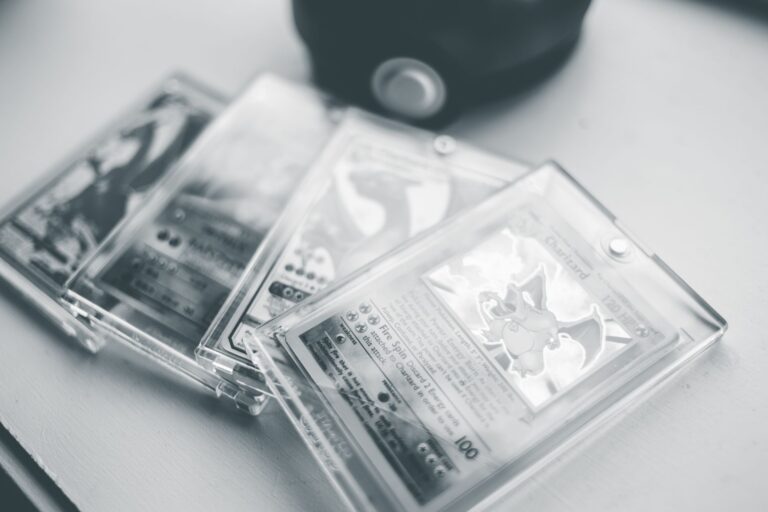
A psa (Professional Sports Authenticator) 10 grade, which represents a mint or near-mint specimen, transforms a $67.50 card into a $2,652 investment. This dramatic valuation swing is why serious collectors either invest in grading from the start or carefully preserve their cards in sleeves and protective cases. The grading process itself costs money—typically $30 to $100 per card depending on the service and turnaround time—so submitting a dollar purchase for professional grading only makes sense if you genuinely believe it’s in exceptional condition. A PSA 9 card, slightly lower than a perfect 10, still commands premium prices, but a PSA 7 or 8 might not justify the grading cost if your raw card is already realizing fair market value.
THE FIRST EDITION STAMP AND OTHER IDENTIFYING MARKS
Your card’s edition status lives in a specific location that takes only seconds to check. On the front left of the Base Set Magikarp card, just below the illustration and above the card’s text, you’ll find either a “1st Edition” stamp (the most valuable marker) or nothing at all, which typically indicates an Unlimited printing. Some cards also show a shadowless characteristic—meaning the drop shadow that frames the border on later printings is completely absent. These identifying features are straightforward once you know where to look, and they determine whether your dollar card is worth $15 or $67.50.
The print line on the bottom of the card also tells a story. Base Set Magikarp cards printed in 1999 during the initial production run carry tremendous collector premium compared to reprints from 2020 or later. If your card shows a modern copyright date or production markings, it’s likely a reprint with substantially lower value. Check both the top and bottom of your card for publication details—Pokemon cards didn’t come with exact print runs labeled, but the copyright year and production location provide crucial context. A 1999-dated card with 1st Edition marking is worth investigating further; a 2020-dated card, even in perfect condition, belongs in the casual player collection, not an investment portfolio.

SHOULD YOU PURSUE PROFESSIONAL GRADING?
Grading your Magikarp through PSA, BGS, or another authenticator only makes financial sense if two conditions are met: first, you genuinely believe your card is in near-mint or mint condition with minimal wear, and second, the grading fee won’t consume your potential profit. If you own a 1st Edition Magikarp that’s been kept in a sleeve since 1999 with no visible play marks, creases, or discoloration, a PSA 9 or 10 might justify a $50 to $100 grading investment when you consider the potential $500+ price jump. Conversely, if your dollar Magikarp shows obvious wear—soft corners, light creases, or edge damage—professional grading will only validate that it’s a PSA 6 or 7, which might reduce rather than increase its perceived value among buyers. The market also factors in grading timeline and service tier.
PSA’s standard tier currently takes several weeks to months, while their expedited service costs substantially more. For a $67.50 baseline card, paying $100 for rushed grading defeats the purpose. Most collectors with casual Magikarp finds either keep them raw or wait for favorable grading window opportunities when they can batch multiple cards. The psychological premium of seeing “PSA 8” on a label is real, but the math only works if your card genuinely merits a high grade and the profit margin covers your service fees.
WATCH OUT FOR COUNTERFEIT MAGIKARP AND MARKET VOLATILITY
The Pokemon card market experienced wild swings between 2020 and 2024, and not all prices have stabilized. The $67.50 price for a raw 1st Edition Magikarp #35 represents current market data from May 2026, but historical context matters—this same card sold for over $100 during peak pandemic collecting frenzy and dipped into the $40 range during market corrections. If you’re holding your Magikarp hoping it appreciates like a stock, understand that Pokemon card prices are driven by nostalgia waves, influencer hype, and overall cryptocurrency/speculative investing trends, not by inherent utility. Another critical warning: counterfeit Base Set cards, including Magikarp, exist in surprising quantities on online marketplaces.
If you purchased your card from an unknown seller on a third-party platform, examine it carefully before assuming it’s authentic. Counterfeits often display subtle printing quality issues, incorrect font spacing, or paper stock that feels slightly different from legitimate 1999 cards. Major marketplaces like TCGPlayer and StockX verify authenticity, but private sellers and lesser-known sites pose risks. If you’re sitting on what you believe is a valuable Magikarp, consider having it authenticated by a professional before investing in grading or trying to resell it.

EXPLORING OTHER MAGIKARP VARIANTS FROM THE ERA
While the Base Set Magikarp #35 is the most iconic, other early Magikarp cards offer different entry points for collectors. The Shining Magikarp #66 from later sets carries a market value around $441.82 for unlimited holo versions and represents an entirely different card with its own scarcity profile. Some collectors specifically target these alternative Magikarp versions for portfolio diversity, reasoning that different variants might respond to market trends differently.
However, the Shining variants come with their own condition requirements and market volatility. If you only own a Base Set copy, you now understand the foundation. But if you’ve stumbled into early Pokemon card collecting and want to expand beyond that dollar Magikarp, knowing that multiple Magikarp versions exist at different price points helps you build a coherent collection strategy. Whether you’re chasing the $67.50 baseline or dreaming of PSA 10 grails, understanding the variant landscape keeps you from accidentally overpaying for common unlimited copies or missing rare Shadowless finds.
BUILDING INFORMED COLLECTING HABITS MOVING FORWARD
That dollar Magikarp taught you a valuable lesson about Pokemon card valuations: context matters infinitely more than gut feelings. Whether your card ends up being worth $15 or $2,652 depends on information you can verify in under five minutes—edition stamp, condition grade, variant identification. The collectors who consistently profit from card purchases apply this same rigor to every acquisition, checking multiple price databases before buying, understanding why a card commands its price, and accepting when a deal seems too good to be true.
Moving forward, resources like the price guide, PokeData, StockX, and TCGPlayer maintain real-time market data for thousands of cards, eliminating guesswork from the valuation process. Before making any purchase or grading decision, cross-reference prices across at least two independent sources to account for market variation. The $67.50 Magikarp price is your baseline, but savvy collectors understand that supply, demand, and collector sentiment shift constantly. Your dollar find, whether it’s actually worth $67.50 or $15, has already given you the most valuable lesson in Pokemon card investing: knowledge compounds your purchasing power.
Conclusion
If you bought a Base Set Magikarp #35 for a dollar and it’s a 1st Edition in decent condition, you’ve likely acquired a card worth somewhere between $30 and $67.50 depending on actual wear patterns and the seller’s market expertise at the time. In exceptional condition and professionally graded, that same card could theoretically reach $2,652, but realistically, most casual finds land in the $20 to $50 range when authenticity and condition are properly assessed. The gap between these valuations explains why serious collectors obsess over condition preservation and why professional grading exists.
Your next step is simple: examine your card’s edition stamp, check the condition honestly, and cross-reference prices on at least two independent marketplaces. Whether your Magikarp is a modest $30 find or an unexpected jackpot, you now understand the factors that determine its value. From there, you can decide whether to keep it as part of a casual collection, pursue professional grading if condition warrants it, or list it for sale at a price informed by real market data rather than speculation.