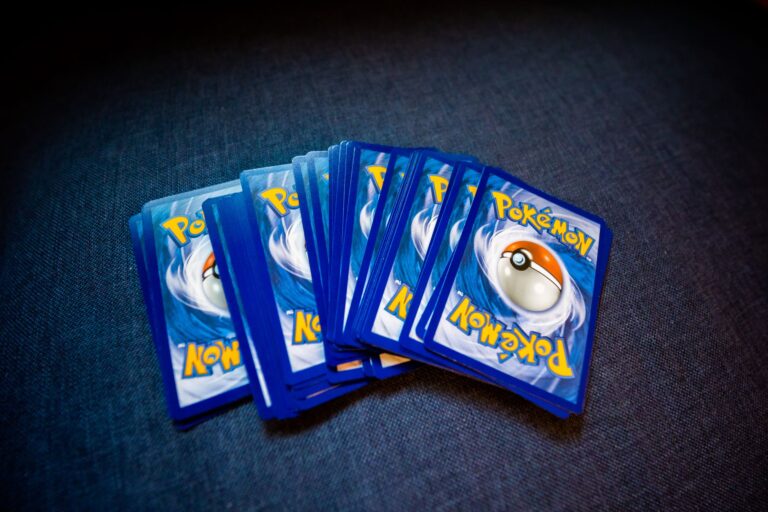
Holding Base Set Psychic Energy cards until 2030 can work as a long-term investment, but it requires accepting significant risks alongside potential returns. The wisdom of this strategy depends entirely on the specific grade, condition, and market conditions you’re holding. A PSA 10 Base Set Psychic Energy (the non-holo version) sold for approximately $8,000-12,000 in 2021-2022, then declined to $4,000-6,000 by late 2024 as the Pokemon card market corrected.
If you purchased near the peak and hold for six more years, you’re betting on recovery and continued growth—a strategy that can pay off but requires patience through volatility. The core question isn’t whether Base Set Psychic Energy will increase in value, but whether it will outpace inflation, opportunity costs, and the specific risks of the collectibles market. Base Set non-holo energies are fundamentally less scarce and less historically significant than their holographic counterparts or other Base Set cards, which shapes their appreciation potential.
Table of Contents
- What Makes Base Set Psychic Energy Worth Holding?
- Market Volatility and the Grading Problem
- Condition, Rarity Variables, and Realistic Expectations
- Storage, Insurance, and Opportunity Costs
- Market Saturation and Supply Issues
- Authentication and Counterfeit Risk
- Market Trends and the Evolution of Pokemon Collecting
- Conclusion
- Frequently Asked Questions
What Makes Base Set Psychic Energy Worth Holding?
base set Psychic Energy cards have legitimacy as long-term holds because they’re from the foundational Pokemon release that defined the entire collectibles market. Original Base Set (released in 1999) carries nostalgic weight and scarcity compared to later printings—there’s genuine demand from set completionists and players who want original versions of all energy types. The card exists in multiple printings and conditions, which means there’s always a floor where someone might buy it, unlike extremely limited cards that can become illiquid.
However, Psychic Energy is not a chase card. Unlike holographic versions or playable cards like Base Set Charizard or Blastoise, the non-holographic energy type lacks the prestige that drives premium pricing. A PSA 9 non-holo Psychic Energy sold for roughly $1,500-2,500 in peak markets, while the same grade in a Charizard commands $25,000+. This gap matters: holding a common Base Set energy means you’re relying on general market appreciation rather than card-specific demand.

Market Volatility and the Grading Problem
The Pokemon card market experienced a massive bubble from 2020-2022 driven by pandemic-era speculation and influencer hype, followed by a significant correction through 2023-2024. Raw Psychic Energy cards from Base set currently sell for $50-150 depending on condition, but graded copies in PSA 7-8 range from $300-800. If you’re holding a graded copy from a peak-era sale, you’re already underwater compared to your purchase price. Waiting until 2030 assumes the market will recover to those highs and continue climbing—a bet that requires faith the correction won’t deepen further.
Storage and grading degradation present underappreciated risks. Slabbed cards can develop label yellowing, corner hits, or internal flaws that become visible over time. PSA has faced scrutiny over grading consistency, and there’s no guarantee a card graded 8 or 9 today will maintain that assessment if resubmitted in 2030. Additionally, if grading standards shift (as they’ve done historically), your card might be re-evaluated differently. The cost of regrading alone—$25-100 per card—cuts into potential profits on lower-value cards.
Condition, Rarity Variables, and Realistic Expectations
The condition grade you hold determines everything. A PSA 8 Base Set Psychic Energy might appreciate 20-40% over six years if the market stabilizes—reaching $6,000-8,000 from $4,500-5,500 today. A PSA 6 or 7 has less upside because the market for lower-grade bulk energies is thinner and more price-sensitive. A raw card has almost no realistic path to significant appreciation; it’ll trade sideways or slowly appreciate with inflation. If you’re holding multiple copies to diversify risk, you’re actually increasing exposure to a card with moderate demand, which is a different strategy than picking a true rarity.
Psychic Energy exists in multiple printings within Base Set itself (shadowless, unlimited, first edition variants), and the printing version affects value significantly. A shadowless Psychic Energy in high grade commands a premium because it’s rarer, while unlimited and first edition versions have less scarcity. Knowing exactly what you’re holding is essential. Many collectors aren’t sure whether they own unlimited or first edition, or whether slight printing variations affect their card’s classification. This ambiguity creates risk if your card is worth less than you believe.

Storage, Insurance, and Opportunity Costs
Holding cards until 2030 requires proper storage: climate-controlled environment (65-70°F, 40-50% humidity), away from direct light, in acid-free sleeves and storage boxes. If your cards aren’t properly stored, they degrade regardless of the slabs. Insurance for collectibles is available through specialized providers like Collectibles Insurance Group or Spoke (averaging $50-150 per $10,000 value annually), which adds a real cost to your six-year hold. A $5,000 card held with insurance costs $50-90 annually in protection, totaling $300-540 over six years—expenses that must be recouped through appreciation.
Compare this opportunity cost to alternative investments. A diversified stock index fund averages 10% annual returns historically; $5,000 invested there grows to $8,950 by 2030. Your Psychic Energy card needs to appreciate 79% over six years just to match that return, and it must do so while you bear insurance, storage, and grading risk. You’re betting that Base Set Psychic Energy will outpace the market—a specific, concentrated bet rather than broad diversification.
Market Saturation and Supply Issues
One of the largest risks holding until 2030 faces is the steady supply of Base Set cards hitting the market. Every year, collectors clean out basements and find old boxes of Base Set packs and singles. PSA has graded over 50 million Pokemon cards since 2020, with tens of thousands being Base Set energies across all types and grades. This ongoing supply dampens upward price pressure.
Unless demand spikes dramatically (say, a major Pokemon anniversary event or a sudden spike in player nostalgia), the market for common Base Set cards like energies can remain soft despite genuine scarcity relative to modern production. Additionally, the speculative market has changed investor behavior. Serious collectors are now more cautious about bubble assets, meaning fewer people are buying Base Set energies purely as flip plays. This mature market sentiment could mean slower appreciation than the 2020-2022 era witnessed. A Psychic Energy that appreciated 150% in two years during the boom might appreciate 15% over six years in a normalized market—still positive, but not enough to justify the risk for many holders.

Authentication and Counterfeit Risk
While Base Set Psychic Energy is low-target for counterfeiting (because the card has low individual value, counterfeiters prefer targeting $100+ cards), holding graded cards does insulate you from some risk. Raw cards carry authentication risk if you ever need to sell; buyers of ungraded Base Set energies often expect proof of authenticity, and for older bulk energies, this can be expensive or impossible to provide. If you’re holding raw Base Set energies, plan to either get them graded before 2030 or accept that liquidity will be harder than with slabbed versions.
PSA certification provides a date-stamped authentication record, which matters for resale. However, if PSA itself faces reputation challenges or grading reversals (both of which have occurred in the broader grading industry), your card’s value can suffer. The grading company’s reputation is tied to your asset’s value—a dependency worth considering over a six-year hold.
Market Trends and the Evolution of Pokemon Collecting
Pokemon collecting has matured significantly since 2020. The market is shifting toward vintage (pre-2000), true first editions, and high-grade raw finds rather than bulk graded commons. This trend suggests that in 2030, a graded-but-common Psychic Energy might appreciate slowly relative to rarer variants or iconic cards.
If you’re holding because you own one, that’s one thing; if you’re buying Base Set Psychic Energy as a new investment in 2026, you’re swimming against market maturation. The long-term outlook for Base Set cards remains positive due to their historical importance and the fact that fewer cards are produced in pristine condition each year. However, energies are the lowest-prestige cards in any set, and that structural disadvantage likely persists through 2030. Your card might be worth $6,000-8,000 by then, but it won’t become a trophy card or player favorite that commands premium pricing relative to rarity.
Conclusion
Holding Base Set Psychic Energy until 2030 is neither clearly smart nor clearly risky—it’s a measured, below-average investment bet. You’ll likely see modest appreciation (15-40% over six years) if the market stabilizes, but you could also see your card remain flat or decline if Pokemon speculation cools further. The decision hinges on whether you already own the card, what you paid for it, and whether you have the financial stability to let capital sit for six years without needing the liquidity.
If you own a high-grade (PSA 8+) Base Set Psychic Energy purchased under $4,000, holding it to 2030 is defensible—you’re accepting reasonable risk for modest potential upside on a genuine collectible. If you paid premium prices in 2021-2022, you’re hoping for recovery of losses, which is a different risk profile. And if you’re considering buying Base Set Psychic Energy today as a new investment, there are better opportunities in vintage cards with stronger market fundamentals. Regardless of your choice, ensure proper storage, insurance, and realistic expectations about appreciation rates.
Frequently Asked Questions
What’s the current market price for a PSA 8 Base Set Psychic Energy?
As of early 2026, graded Base Set Psychic Energy (non-holo) in PSA 8 condition typically sells for $4,500-5,500, down from $8,000-12,000 at market peak in 2021-2022.
Should I insure a Base Set Psychic Energy card worth $5,000?
Yes, insurance is recommended. Annual cost is roughly $50-90 for a $5,000 card through specialized collectibles insurers, which adds $300-540 over six years but protects against theft, loss, or damage.
Will a PSA 8 Psychic Energy appreciate faster than a PSA 6?
Not necessarily proportionally. Lower-grade cards often appreciate slower because demand is thinner and the market is more price-sensitive. A PSA 8 might appreciate 20-30% while a PSA 6 might appreciate 10-15% over the same period.
Is it better to hold graded or raw Base Set Psychic Energy?
Graded cards provide authentication and professional storage inside slabs, making them easier to sell and more liquid. Raw cards have lower upfront costs but require you to handle authentication and storage yourself, increasing depreciation risk.
What if the Pokemon card market crashes further by 2030?
Base Set Psychic Energy has genuine collectible value and would retain at least 30-50% of current market value even in a severe downturn, since the card is part of the foundational set and has historical importance.
Should I buy Base Set Psychic Energy now if I don’t own any?
Only if you’re building a Base Set collection or have strong conviction in Pokemon nostalgia recovery. As a standalone investment, Base Set Psychic Energy lacks the prestige and scarcity of chase cards, making it a below-average collectibles investment compared to alternatives.