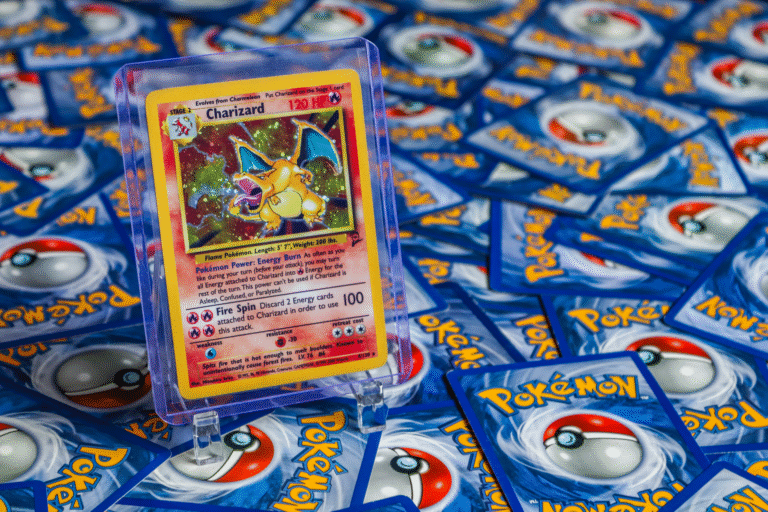
The biggest mistake new Pokémon buyers make is selecting the wrong products to invest in. While it’s tempting to buy whatever looks cool or is readily available, not all Pokémon products hold value equally. Booster boxes and Pokémon Center Elite Trainer Boxes significantly outperform collection boxes and blister packs in the current market.
A new buyer might spend $100 on collection boxes thinking they’re getting the same investment potential as someone who chose a booster box, only to find their product has depreciated while the booster box appreciates or holds value. The difference between choosing well and choosing poorly can be the margin between profit and loss. Product selection directly impacts your investment returns, especially in a volatile market. This isn’t about luck or market timing—it’s about understanding which products the market actually values and which ones sit on shelves losing value.
Table of Contents
- Which Products Actually Hold Their Value?
- The Panic Selling Trap During Market Corrections
- Chasing Hype Without Waiting for Price Stabilization
- The Grading Cost Problem in a Down Market
- The Authenticity and Source Risk
- Building Knowledge Before Deploying Capital
- The Long-Term Approach to Sustainable Collecting
- Conclusion
- Frequently Asked Questions
Which Products Actually Hold Their Value?
The Pokémon TCG product market is far from monolithic. Booster boxes remain the strongest performers because they’re sought by both casual players and serious collectors. When you buy a booster box from a recent set, you’re acquiring a product that maintains collector demand and has predictable pull rates. Elite Trainer Boxes from the Pokémon Center also perform well, though consistency matters—official Pokémon Center releases tend to hold better than retailer-exclusive versions. Collection boxes and blister packs, by contrast, often underperform.
These products are easier for retailers to stock and mark down aggressively. A collection box might sell for $30 at launch, but within weeks you’ll find it on clearance for $15 or less. The market simply doesn’t demand them the way it demands booster boxes. A new buyer might think they’re being smart by buying discounted collection boxes, not realizing they’re buying products that the market has already decided aren’t worth collecting. The lesson here is brutal: cheap doesn’t mean it’s a good deal when the underlying product has weak long-term demand.

The Panic Selling Trap During Market Corrections
Market volatility in 2026 has created a dangerous opportunity for emotional decision-making. New buyers who invested in vintage or graded cards have faced significant price corrections, and many have panic-sold at losses rather than waiting out the volatility. This mistake compounds itself—panic selling locks in losses that could have been temporary had the collector simply held through the correction period. The psychology of panic selling is particularly destructive in a collector’s market.
You buy a card for $50, its value drops to $35 within months, and suddenly you feel pressure to sell before it drops further. What often happens instead is that the market stabilizes, and you’ve sold at the worst possible time. Experienced collectors understand that market corrections are temporary, but new buyers lack this perspective and react emotionally. The warning here is clear: if you can’t afford to hold through a price correction without panic-selling, you can’t afford to buy at market peaks. Your entry point matters less than your ability to stay the course.
Chasing Hype Without Waiting for Price Stabilization
Hype moves fast in the Pokémon collecting world. A new set releases, the community buzzes about specific cards, prices spike, and new buyers rush in without doing their research. PokemonPriceTracker research warns that buying hyped cards without waiting for price stabilization signals is a consistent money-losing strategy. The hype cycle typically works like this: announcement phase, pre-order phase, release day spike, and then price correction once the initial frenzy fades and reality of supply becomes clear.
When you chase hype, you’re buying at the worst possible time—the peak of enthusiasm when prices are highest and information is most distorted. A smarter approach involves waiting for stabilization. If a card spikes to $20 on hype but stabilizes at $12 after a few weeks, you’ve just avoided paying $8 too much per card. New buyers often miss this pattern because they fear missing out, but patience is a more valuable asset than speed in collecting. The market will always create another opportunity—the real skill is knowing which opportunities are worth taking.

The Grading Cost Problem in a Down Market
Grading services seem like an obvious choice when you’ve pulled or acquired valuable cards. You send them in, get them back with a professional grade, and suddenly they’re worth more, right? The logic works, but 2026 has exposed a critical flaw: when prices fall, grading costs eat a much larger percentage of a card’s value. If a card drops from $100 to $60, the $15-$25 you spent grading it represents 25-40% of the card’s current value instead of 15-25%. This creates a compounding problem for new buyers. They grade cards before prices stabilize, locking in high costs at exactly the wrong time.
A better strategy involves waiting for market stabilization before deciding whether to grade. Some cards might stabilize at a price point where grading doesn’t make economic sense. Others might recover to a level where grading becomes worthwhile. The limitation here is that timing perfectly is impossible, but waiting for clearer market signals beats grading everything immediately after acquisition. Cost-benefit analysis should always precede the grading decision, not follow it.
The Authenticity and Source Risk
Buying from unreliable sources represents an existential risk to your collection and your money. Counterfeit Pokémon cards exist and are becoming more sophisticated. A new buyer might find deals on lesser-known marketplaces, thinking they’ve found a steal, only to discover the cards are counterfeits. The loss isn’t just financial—counterfeit cards are essentially worthless and unsellable. Your entire investment disappears.
Trusted sources include official Pokémon retailers, large established marketplaces with buyer protection, and well-known card vendors who have reputations to maintain. The premium you pay for these trusted sources is insurance. A warning worth emphasizing: if a price seems too good to be true, it probably is, and the reason might be counterfeit inventory. New buyers should accept paying a small premium for authenticity rather than chasing the lowest price and risking counterfeits. The difference between a $10 deal and a $12 legitimate purchase is meaningless compared to the risk of buying fake cards.

Building Knowledge Before Deploying Capital
Staying humble and continuously learning from mistakes is critical for long-term success in Pokémon collecting. New buyers often rush into purchases with incomplete knowledge—they don’t understand set release schedules, don’t know which sets hold value over time, and haven’t learned which grading grades actually impact price. This knowledge gap costs real money. A practical approach involves starting small and learning as you go.
Buy a single booster box, open it, understand the experience, and research what happened to similar boxes in the market. Read about past market cycles. Understand why certain sets are more collectible than others. This learning period might take a few months, but it’s far cheaper than the cost of major mistakes made from ignorance. The successful collectors you see online aren’t born knowing this—they made mistakes, learned from them, and adjusted their strategy accordingly.
The Long-Term Approach to Sustainable Collecting
The Pokémon TCG market in 2026 is fundamentally different than it was in 2021, and it will be different again in 2027. Market conditions change, new products launch, and collector preferences shift.
New buyers need to adopt a philosophy that’s flexible enough to adapt to changing conditions rather than rigid strategies based on past performance. This means staying informed about market trends, understanding that diversification matters more in a volatile market, and accepting that some purchases will underperform regardless of how well you’ve researched them. The buyers who succeed long-term are those who treat each purchase as a learning opportunity and adjust their approach based on what the market actually rewards, not what they hope it will reward.
Conclusion
The biggest mistake new Pokémon buyers make isn’t a single decision—it’s a pattern of decisions rooted in incomplete information, emotional reactions, and poor product selection. You can avoid these mistakes by understanding which products the market actually values, resisting the urge to panic-sell during corrections, waiting for hype to settle before buying, carefully evaluating grading costs, buying only from reliable sources, and continuously building your knowledge before deploying large amounts of capital.
Start small, learn systematically, and let the market teach you before you commit significant resources. The collectors who thrive in this space aren’t the ones who made perfect predictions—they’re the ones who made fewer expensive mistakes and learned to adapt their strategy as market conditions changed.
Frequently Asked Questions
Should I grade all my valuable cards immediately after buying them?
No. Wait for market prices to stabilize first. In a down market, grading costs represent too large a percentage of card value. Evaluate the cost-benefit analysis after stabilization rather than immediately.
What’s the difference between a booster box and a collection box in terms of value?
Booster boxes consistently hold value and appreciate in strong markets. Collection boxes tend to be marked down aggressively and depreciate. Booster boxes are the stronger investment choice for new buyers.
How do I know if I’m buying from a reliable source?
Use official Pokémon retailers, established marketplaces with buyer protection, and vendors with strong reputations. If the price seems too good to be true, it probably is. Pay the small premium for authenticity rather than risk counterfeits.
Is panic selling during a price drop ever the right move?
Only if your financial situation genuinely requires it. Otherwise, market corrections are temporary. Panic selling locks in losses at the worst possible time. Hold through volatility if you can afford to do so.
How long should I wait before buying a hyped new card?
Give the market 2-4 weeks to stabilize after initial release hype. This allows the initial frenzy to fade, supply to become clearer, and realistic pricing to emerge. Patience consistently beats FOMO in the collector market.
What’s the best first step for a new buyer?
Buy a single booster box from a recent set at a trusted retailer. Open it, research the market for those cards, and understand the collector experience. This teaches you more than reading about the market ever could.