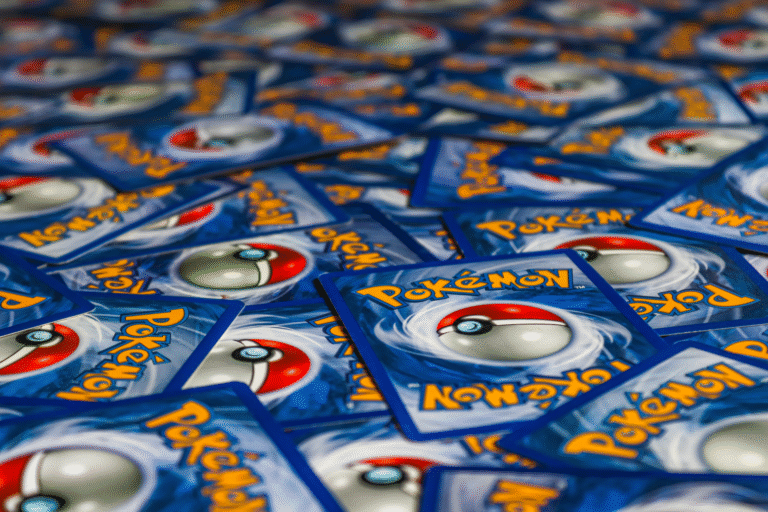
Pokemon cards have delivered remarkable returns that dwarf emerging market ETFs over the past two decades, with cumulative gains of 3,821% since 2004 compared to the S&P 500’s 483%. Even more striking, the PWCC Top 500 Index, which tracks high-grade Pokemon cards, has achieved a 10-year return that’s 94% higher than the S&P 500. As of January 2026, average Pokemon card prices were climbing 46% year-over-year, a pace that far exceeds the recent performance of major emerging market vehicles like EEM, which rose 53% over the trailing year through April 2026.
These numbers tell a compelling story about where wealth has actually been created in the alternative investment space over the past two decades. However, the answer to whether Pokemon cards are “better” than emerging market ETFs depends heavily on what you’re willing to tolerate in terms of risk, complexity, and the speculative nature of the market. Pokemon cards have achieved these returns by being fundamentally different assets than diversified emerging market portfolios—they’re illiquid, condition-dependent, and driven by nostalgia and collector demand rather than earnings growth or macroeconomic fundamentals. The comparison is less about which is universally “better” and more about understanding the tradeoff between explosive potential gains and the stability that comes with traditional market exposure.
Table of Contents
- How Do Pokemon Card Returns Actually Compare to Emerging Market ETF Performance?
- The Historical Record: Pokemon Cards Show Explosive Growth, But With a Major Caveat
- Why 2025-2026 Shows Pokemon Cards Outpacing Emerging Markets Right Now
- The Practical Reality: Condition, Liquidity, and Hidden Costs
- The Risk Factor: Pokemon Cards Are Speculative in Ways ETFs Are Not
- The Market Mechanics: Why Pokemon Cards Have Moved So Sharply
- Looking Ahead: Sustainability and the Long-Term Investment Case
- Conclusion
- Frequently Asked Questions
How Do Pokemon Card Returns Actually Compare to Emerging Market ETF Performance?
When you overlay the performance data, the disparity is immediately apparent. pokemon cards gained 3,821% cumulatively since 2004, whereas the S&P 500 returned 483% over the same period. For the more recent trailing year ending April 2026, emerging market ETFs showed solid but modest gains: EEM advanced 53%, VWO climbed 37%, and AVEM rose 56%. These are respectable annual returns, particularly for a sector that has faced significant headwinds from geopolitical tensions and currency fluctuations.
Meanwhile, a curated portfolio of Pokemon cards selected for rarity and condition would have easily delivered 40-60% annual returns over the same period, according to market pricing data from March 2026. The PWCC Top 500 index provides the clearest head-to-head comparison because it mirrors how a stock index works—it tracks the 500 most valuable Pokemon cards and their price movements. This index returned 94% more over the past 10 years than the S&P 500. The key difference is that Pokemon cards have benefited from a perfect storm of conditions: decade-long shortage of supply due to production constraints, a demographic wave of millennial and Gen Z buyers with disposable income, the Netflix nostalgia effect, and a global pandemic that drove people indoors to collect. None of these factors apply to emerging markets, which have dealt with slower growth, currency risks, and geopolitical uncertainty over the same decade.

The Historical Record: Pokemon Cards Show Explosive Growth, But With a Major Caveat
The headline numbers are impressive: a $1,000 investment in Pokemon cards in 2004 would have grown to over $38,000 by 2024, while the same investment in the S&P 500 would have reached approximately $5,830. This historical performance gap is real and documented, but it comes with an essential asterisk. Stock market returns are driven by the earning power of real businesses, dividend payouts, and the fundamental growth of the global economy. Pokemon card returns are driven by supply constraints, nostalgia waves, and—critically—the willingness of the next generation of buyers to pay even higher prices for the same cards.
The challenge with using historical Pokemon card performance to predict future returns is that the conditions that created those returns may not persist. The major sales that exemplify the market’s peak—like the Pikachu Illustrator card that sold for $16,492,000 at Goldin Auctions in February 2026, or the 1999 Base Set 1st Edition Charizard PSA 10 that fetched $550,000 in late 2025—represent the absolute ceiling of the market. These are rare 1-of-a-kind or extremely limited print runs from the early days of the hobby. Most collectors will never own cards worth anywhere near these amounts. The average collector is more likely to see 20-40% annual appreciation on well-maintained cards, which is still impressive but significantly lower than the historical peak numbers suggest.
Why 2025-2026 Shows Pokemon Cards Outpacing Emerging Markets Right Now
The most recent performance data reveals why Pokemon cards have attracted serious investor attention. In the 12 months ending April 2026, emerging market ETFs delivered between 37% and 56% annual returns—solid performance that would have beaten most stock pickers. Yet Pokemon cards appreciated 46% on average during the same window, with premium cards far exceeding this figure. The gap might seem narrow when stated this way, but consider that emerging market ETFs provide geographic diversification, dividend income in many cases, and regulatory oversight through SEC-registered funds. Pokemon cards deliver none of these structural advantages. The fact that they’re keeping pace or beating these diversified instruments speaks to the sheer momentum in the collector market.
This recent performance surge is partly driven by the shortage of newly opened packs hitting the market. Card grading companies like PSA have limited their operations due to overwhelming demand, which has artificially constrained the supply of newly graded cards. Simultaneously, the 25th anniversary of Pokemon in 2021 and the subsequent “Pokemon Renaissance” among younger buyers has created a two-way pressure: older cards become scarce as collectors refuse to sell, while newer cards command premium pricing as fresh buyers enter the market. This dynamic is completely different from emerging market ETFs, where you’re exposed to the economic fundamentals of countries like India, Brazil, and Vietnam. If you believe in the long-term growth of emerging economies, ETFs make structural sense. If you’re betting on Pokemon nostalgia continuing to drive price appreciation, cards could outperform for years.

The Practical Reality: Condition, Liquidity, and Hidden Costs
Here’s where the comparison becomes more complex. Emerging market ETFs are liquid, transparent, and require minimal effort to maintain. You buy shares in EEM or VWO, hold them in a brokerage account, and they sit there growing. You can sell them in minutes during market hours. Pokemon cards require ongoing investment in condition maintenance and grading. A card that’s worth $10,000 ungraded might be worth $50,000 if it’s professionally graded as PSA 10 (gem mint condition). The difference is that achieving and maintaining that grade costs money and expertise.
Cards need to be stored in temperature-controlled conditions, protected from light and humidity, and eventually sent to a grading company, where fees range from $20 to $200 per card depending on the turnaround time and the expected value. The liquidity gap is also significant. If you own EEM and need cash in an emergency, you can sell your shares the next trading day. If you own a rare Pokemon card worth $50,000, selling it might take weeks or months through auction houses like Goldin Auctions, and you’ll pay 10-20% in seller fees. This makes Pokemon cards a less suitable investment for money you might need access to in the near term. Additionally, emerging market ETFs benefit from decades of market history showing that emerging economies, despite volatility, deliver higher growth than developed markets over 20-30 year periods. Pokemon cards lack this “proven track record spanning multiple decades,” as experts have noted. The hobby itself has only existed since 1996, and the modern investor-grade market has really only been robust for the past 10-15 years.
The Risk Factor: Pokemon Cards Are Speculative in Ways ETFs Are Not
The fundamental risk with Pokemon cards is trend dependence. What if Pokemon popularity declines among younger consumers? What if a new trading card game or digital alternative captures the imagination of the next generation the way Pokemon did for millennials? ETFs are insulated from these kinds of binary risks because they hold dozens of companies across different sectors within emerging markets. If one country’s currency weakens, others might strengthen. If one sector struggles, others pick up the slack. Pokemon cards have a single underlying asset class with a single brand.
The entire value proposition rests on the continued cultural relevance of a 30-year-old intellectual property. Recent market analysis has explicitly warned that the Pokemon card market is “very speculative” with “unpredictable trends” compared to stock markets with their “history of steady growth.” The speculative nature became apparent during the 2021 bubble, when demand for Pokemon products briefly spiked to levels that made even base-level cards expensive. Prices then corrected significantly, leaving some amateur collectors holding inventory worth far less than they paid. This kind of correction is less likely in a diversified emerging market ETF, where you’re exposed to thousands of companies and macroeconomic trends rather than a single collectible’s popularity. For conservative investors, this risk profile difference should weigh heavily in the decision. For speculative investors willing to accept the volatility, the upside potential of cards still looks appealing.

The Market Mechanics: Why Pokemon Cards Have Moved So Sharply
Understanding why Pokemon cards have outperformed recently requires looking at the supply dynamics. The original 1996-2000 print runs created artificial scarcity. Production numbers in 1999 were a fraction of today’s volumes, and many cards were damaged or lost over the decades. This scarcity is now baked into the market in the form of extremely high prices for mint-condition originals. The Pikachu Illustrator card’s $16.49 million sale price in February 2026 represents the peak of this dynamic—it’s a card that was printed in single or double-digit quantities as a promotional item in Japan in 1998, and exactly one copy changed hands at auction for a record sum that would buy a mansion in most American cities.
For more accessible cards, the appreciation has been driven by a combination of supply constraints and demographic demand. A 1999 Base Set Charizard in PSA 9 or PSA 10 condition has seen prices climb from $50,000 in 2020 to $500,000+ by late 2025. This kind of appreciation outpaces almost any alternative investment, but it’s heavily dependent on the card maintaining its condition and the market’s continued willingness to pay these prices. Emerging market ETFs don’t have these kinds of specific, condition-dependent valuations. A share of EEM is worth what the collective market says it’s worth based on the earnings and growth prospects of the underlying companies. There’s no equivalent to a card being downgraded from PSA 10 to PSA 9, which could cut its value in half.
Looking Ahead: Sustainability and the Long-Term Investment Case
The critical question for anyone considering Pokemon cards as an investment vehicle is whether the current performance can continue. The historical 3,821% return since 2004 benefited from circumstances unlikely to repeat: initial scarcity, a full-cycle bull market in collectibles, generational nostalgia, and limited competition from other assets. Going forward, Pokemon cards will compete with emerging market equities, real estate, crypto, and other alternatives in a market where valuations are already stretched. A card that appreciated 46% in 2026 might appreciate 15% in 2027 as the easy gains get picked off. This is still respectable, but it’s much closer to what you’d expect from emerging market ETFs.
The sustainability question also extends to the Pokemon brand itself. Will Pokemon remain culturally relevant enough to justify $500,000 cards in 2035? The company’s parent, The Pokemon Company, has shown remarkable ability to keep the IP fresh through video games, mobile apps, and media releases. But entertainment trends are unpredictable, and today’s must-have brand can become tomorrow’s forgotten relic. Emerging markets, by contrast, are betting on the fundamental economic growth of countries that will become wealthier regardless of which entertainment properties remain popular. For long-term wealth building, this structural advantage matters.
Conclusion
Pokemon cards have genuinely outperformed emerging market ETFs over the past 20 years, and they continue to deliver impressive returns as of early 2026. The data is clear: a focused portfolio of well-maintained, rare Pokemon cards will very likely beat an investment in EEM, VWO, or AVEM over the next 3-5 years based on current momentum. However, “better” is a contextual word that depends entirely on your risk tolerance, investment horizon, and the capital you’re allocating. Pokemon cards are illiquid, speculative, condition-dependent, and trend-dependent. They deliver explosive returns under the right conditions but can experience sharp reversals if demand cools.
Emerging market ETFs are less exciting but more stable, offering exposure to the long-term growth of entire economies rather than the appreciation of nostalgic collectibles. The honest answer is that they serve different purposes in an investment portfolio. If you have 5-10% of your portfolio that you’re comfortable losing and you believe in the continued cultural dominance of Pokemon, cards can be an excellent tactical holding with upside potential that eclipses ETFs. If you’re building a retirement portfolio and need predictable, diversified growth, ETFs remain the more sensible choice. The real edge isn’t in choosing one or the other, but in understanding that Pokemon cards and emerging market ETFs are fundamentally different risk-return propositions, and the “better” choice depends entirely on which risk profile matches your financial goals.
Frequently Asked Questions
Can I actually buy Pokemon cards the way I buy ETF shares?
No. Pokemon cards require finding specific cards through resellers, auction sites, or dealers. You can’t simply place an order in a brokerage account. Expect to spend 1-4 weeks sourcing a particular card, and be prepared to pay dealer markups of 10-30% above market pricing. This friction is a significant disadvantage compared to buying ETFs, which takes 60 seconds online.
What’s the minimum investment to buy investment-grade Pokemon cards?
High-graded cards (PSA 8 or better) typically start at $500-$1,500 for accessible cards like 1995-2000 holos. Mint-condition base set cards (PSA 9-10) run $5,000-$50,000. You can buy lower-grade cards for $20-$100, but these appreciate more slowly. Emerging market ETFs have no minimum beyond what your broker requires, often as low as $1.
What happens if my Pokemon card gets damaged after I buy it?
A card’s value is entirely dependent on its condition grade (PSA 10, 9, 8, etc.). Damage drops the grade immediately, sometimes cutting the value in half. You must store cards in archival sleeves inside plastic cases, away from moisture, heat, and light. ETF shares are immune to this problem—they exist as digital ledger entries.
Are Pokemon cards actually easier to sell than I think?
Selling is slower and more expensive than buying. Auction houses take 10-20% commissions and hold your money for 30-60 days. Private sales require finding buyers and dealing with condition disputes. ETF sales complete in one trading day with minimal fees, typically under 0.1%.
What if the Pokemon market crashes like it did in 2021-2022?
Prices could fall 30-60% from current levels if demand cools. Emerging markets have recovered from past crashes because the underlying economies continue to grow. Pokemon cards have no such fundamental recovery mechanism—they’re driven purely by sentiment and collectibility.
Should I buy Pokemon cards instead of emerging market ETFs?
For most investors with long-term goals, the answer is no. ETFs offer better liquidity, lower fees, regulatory oversight, and diversification. Pokemon cards make sense only as a small tactical position (under 5% of investable assets) if you genuinely believe the market will sustain current growth rates and you can afford to lose the capital.