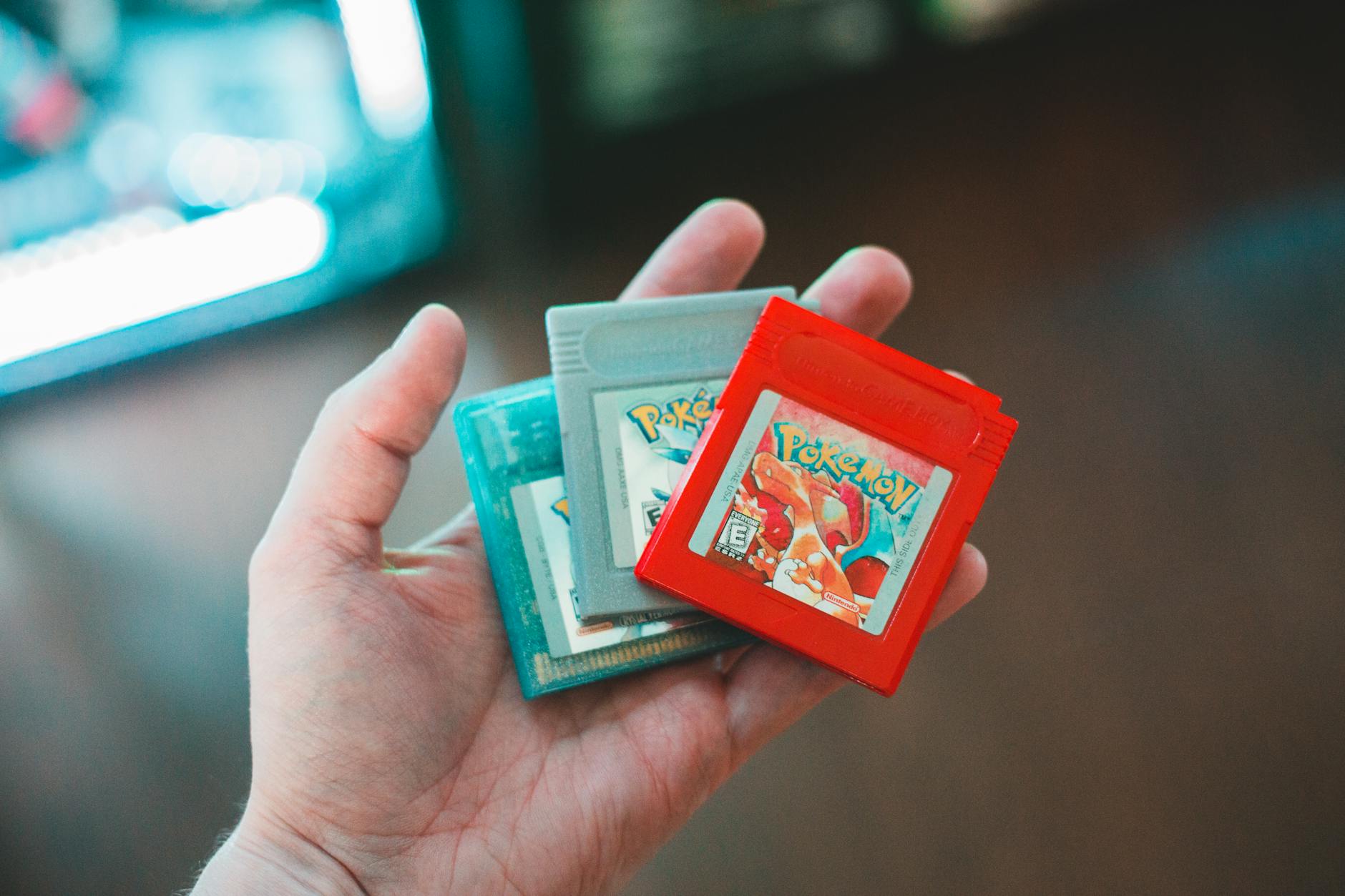
The 2026 Charizard market has reached unprecedented heights, with high-grade vintage 1st Edition Base Set copies commanding $200,000 to $400,000 for PSA 10 examples, while elite specimens have shattered records entirely. In March 2026 alone, a PSA 9 1st Edition Charizard sold for $1,406,250 through Heritage Auctions, establishing new benchmarks for the entire hobby. The rarity is striking: only 122 PSA 10 copies exist worldwide of the 1st Edition Base Set Charizard, making each certified example a museum-quality asset in an increasingly consolidated market.
Looking ahead, Pokemon experts predict 30-50% appreciation for high-grade specimens throughout the remainder of 2026, driven by both the franchise’s 30th anniversary milestone and fundamental supply constraints. The supply picture has tightened considerably following the conclusion of reprints for the 151 expansion set, which had maintained secondary market accessibility for modern Charizard variants. This convergence of limited inventory, institutional interest, and milestone-year momentum suggests prices will remain elevated through 2030, though with notable volatility tied to broader collector sentiment and market cycles.
Table of Contents
- What Are Current Market Prices for Charizard Legendary Cards in 2026?
- Record-Breaking Sales and What They Reveal About 2026 Market Dynamics
- Vintage 1st Edition Base Set Charizards vs. Modern Reprints and Variants
- Why Supply Constraints Are Driving Prices Higher in 2026
- Five-Year Price Forecast for Charizard Cards Through 2030
- The Role of Grading and Condition in Driving Price Tiers
- The 30th Anniversary Effect and Its Impact on Pricing Through 2030
- Conclusion
What Are Current Market Prices for Charizard Legendary Cards in 2026?
The vintage market divides sharply by grade. PSA 10 copies of 1st Edition Base Set Charizards occupy the $200,000-$400,000 band, representing the sweet spot for collectors with capital and the patience to hold for appreciation. A PSA 10 that sold for $550,000 in December 2025 through Heritage Auctions established the upper boundary of that range, though that particular copy represented an exceptional example within the PSA 10 classification. PSA 9 cards trade significantly lower, in the $30,000-$60,000 range, yet the March 2026 sale of a PSA 9 for $1,406,250 proved that exceptional provenance, auction momentum, and market timing can override traditional grade-based pricing.
Modern Charizard cards occupy entirely different price tiers. The 151 special illustration rare Charizard trades at $120-$170 raw and $350-$480 in PSA 10 condition. Charizard ex cards from Scarlet & Violet command around $234 for special illustration variants, while the vintage Flashfire full art hovers near $250. For collectors building a comprehensive Charizard portfolio, the cost differential between a modern PSA 10 and a vintage PSA 10 represents roughly a 1000x multiplier, underscoring how scarcity and age function as distinct value drivers in the Pokemon card market.

Record-Breaking Sales and What They Reveal About 2026 Market Dynamics
March 2026 produced two landmark transactions that redefined collector expectations for charizard cards. The $1,406,250 sale at Heritage Auctions and the parallel $727,120 transaction through Goldin both involved graded examples that attracted bidders willing to pay extraordinary premiums. These sales occurred during a period of heightened institutional interest in vintage Pokemon cards, coinciding with the franchise’s 30th anniversary celebrations and renewed media attention on collectibles as alternative assets.
However, these record prices must be contextualized within market realities. Heritage Auctions and Goldin auctions attract deep-pocketed bidders from beyond the traditional card-collecting base, inflating realized prices compared to what cards achieve in typical dealer or secondary market channels. A collector attempting to replicate these results by listing their own PSA 9 Charizard would likely encounter significantly different results, as auction fever and competitive bidding dynamics don’t translate to consistent retail pricing. The $1.4 million sale was extraordinary precisely because it violated typical market expectations—a warning that singular auction results should not drive purchasing decisions for the vast majority of collectors.
Vintage 1st Edition Base Set Charizards vs. Modern Reprints and Variants
The structural divide between 1st Edition base set and modern Charizards reflects fundamentally different scarcity profiles. Only 122 PSA 10 examples exist of the 1st Edition Base Set version, a number that will never increase. Modern Charizard printings, by contrast, benefit from millions of packs produced across multiple sets and multiple print runs, creating liquidity but also predictable supply increases whenever Pokemon decides to reprint a given set.
Investors viewing Charizard as a five-year holding asset face a strategic choice: the 1st Edition vintage path offers scarcity certainty but requires capital in the $200,000+ range and acceptance of illiquid auction-based sales. The modern card path offers accessibility—a PSA 10 special illustration Charizard at $350-480 requires a fraction of vintage capital—but appreciation potential depends on Pokemon’s production decisions, collector demand shifts, and broader hobby sentiment. Neither path guarantees returns; the choice depends on whether the collector prioritizes rarity and historical significance or capital efficiency and trading flexibility.
Why Supply Constraints Are Driving Prices Higher in 2026
The 151 expansion set concluded its print run in early 2026, immediately tightening secondary market supply for modern Charizard variants. Pokemon’s production decisions directly influence collector prices: when the company reprints a set containing a popular card, fresh inventory depresses prices; when reprints cease, existing copies appreciate. The March 2026 price environment reflected this supply tightening, with Charizard variants from vintage reprints like Flashfire and newer printings like 151 both commanding higher prices than they had six months prior. Vintage cards operate under harder supply constraints.
The 1st Edition Base Set Charizard was printed in 1999-2000 with production volumes that seemed massive at the time but proved finite relative to long-term demand. As decades pass, more copies are damaged, lost, or removed from circulation. The 122 PSA 10 examples represent the practical peak of this scarcity pyramid: while more 1st Edition Charizards exist, upgrading specimens to PSA 10 becomes progressively harder as perfect grading becomes vanishingly rare. This creates the pricing dynamic where PSA 10 copies appreciate faster than PSA 9 or PSA 8, as each step up in grade requires finding an increasingly rare object.
Five-Year Price Forecast for Charizard Cards Through 2030
Expert consensus points toward 30-50% appreciation for high-grade specimens through 2026, with sustained but potentially slower gains from 2027-2030. A PSA 10 1st Edition Charizard currently trading at $300,000 could reasonably approach $390,000-$450,000 by year-end 2026, assuming the 30th anniversary momentum persists and institutional collectors continue building positions. The 2027-2030 period introduces more uncertainty: Pokemon’s broader business health, collector generational turnover, and competing investment trends will influence whether the hobby sustains current valuations or experiences correction. The forecast comes with meaningful caveats.
Pokemon’s production decisions remain unpredictable—if the company unexpectedly reprints 1st Edition Base Set proxies or releases a Charizard card that radically shifts collector preference, vintage prices could plateau or decline. Macroeconomic factors matter: a recession that reduces discretionary spending on luxury collectibles would compress Pokemon card values, particularly high-end cards where buyers must justify six-figure expenditures. Grading service decisions also influence prices; if PSA expands its 10 label by loosening standards, the 122 PSA 10 count could increase materially, affecting scarcity premiums. The 30-50% forecast assumes continuity in these variables—a historically unreliable assumption in the Pokemon hobby.

The Role of Grading and Condition in Driving Price Tiers
PSA certification has become non-negotiable for vintage Charizards above the $1,000 price point, creating a binary market structure: graded cards with public authentication and price history versus raw cards that require personal evaluation and carry inherent authentication risk. A raw 1st Edition Charizard might trade at $50,000-$150,000 depending on perceived condition, but the same card graded PSA 9 would likely command $35,000-$60,000 in standard market conditions, and a PSA 10 would approach the $200,000+ range. This grading-based price stratification creates opportunity and peril.
A collector with expertise in vintage card evaluation can potentially source underpriced raw Charizards and submit them for grading, capturing the differential between raw and certified pricing. However, grading costs ($100-$300 per card depending on turnaround), turnaround times (weeks to months depending on volume), and the risk of cards grading lower than expected create friction. The $1,406,250 and $727,120 sales in March 2026 were only possible because both cards had established PSA authentication—without it, even perfect-looking cards lack the provenance necessary to attract institutional bidders.
The 30th Anniversary Effect and Its Impact on Pricing Through 2030
Pokemon’s 30th anniversary in 2026 has catalyzed institutional and casual collector engagement across price tiers. Media coverage of record sales, anniversary-specific set releases, and mainstream recognition of Pokemon cards as alternative assets have created positive momentum that typically lasts 18-24 months beyond an anniversary milestone. Previous anniversaries (like the 20th in 2016 and 25th in 2021) both triggered price spikes in vintage material, followed by stabilization and then gradual appreciation as anniversary-driven buyers cycled through the market.
The 30th anniversary effect compounds existing scarcity dynamics: as new cohorts of collectors enter the hobby seeking milestone-year purchases, they encounter a 1st Edition Base Set market with exactly 122 PSA 10 copies, no more, no fewer. This collision between growing demand and absolute supply limits creates structural support for prices through 2027-2028. However, past anniversaries suggest that the effect weakens in year three and beyond. By 2029-2030, the 30th anniversary enthusiasm will have faded, and Charizard pricing will depend entirely on underlying demand from collectors seeking the card for its historical significance and scarcity, not anniversary-related newsworthiness.
Conclusion
The 2026 Charizard market reflects a convergence of fundamental scarcity (only 122 PSA 10 examples exist), milestone-year momentum (30th anniversary), and tightened modern supply (151 reprints concluding). Current pricing for PSA 10 1st Edition Base Set Charizards in the $200,000-$400,000 range appears sustainable through 2026-2027, with 30-50% appreciation likely in the near term. For collectors considering entry, the decision hinges on risk tolerance and capital availability: vintage high-grade examples offer rarity certainty but illiquidity and six-figure minimums, while modern variants offer accessibility but depend on Pokemon’s future production choices.
Collectors and investors evaluating Charizard acquisitions should prioritize cards with established PSA authentication, understand that record auction prices don’t reflect typical market conditions, and prepare for potential volatility in the 2027-2030 window as anniversary momentum fades. The hobby has matured significantly since 2021, with institutional participation and price transparency reducing speculative swings, but Pokemon remains fundamentally a consumer-driven collectible where enthusiasm can shift with surprising speed. Whether Charizard appreciates 30% or declines 20% over the next five years will depend on factors partially beyond any collector’s control—franchise popularity, competing investment trends, and the hobby’s ability to maintain mainstream attention.
You Might Also Like
- April 2026 Pokemon Pricing Venusaur Shadowless and Anticipated Price in 5 Years
- April 2026 Pokemon Pricing for Venusaur CGC 9
- April 2026 Pokemon Pricing for Light Flareon First Edition Neo Destiny