The short answer is yes”the increasing financialization of Pokémon cards poses genuine risks to long-term collectibility, though the damage is neither inevitable nor irreversible. When collectors begin treating cards primarily as investment vehicles rather than nostalgic artifacts or gameplay components, the hobby fundamentally shifts from passion-driven to profit-driven. This transformation can hollow out the community enthusiasm that gives collectibles their enduring cultural value. Consider what happened to the comic book market in the early 1990s: speculative buying drove prices to unsustainable heights, publishers responded by flooding the market with “collector’s editions,” and the subsequent crash devastated both the industry and collector confidence for nearly a decade.
However, the situation is more nuanced than a simple condemnation of investment-minded collecting. Pokémon cards have proven remarkably resilient through multiple boom-and-bust cycles, and the franchise benefits from something most collectibles lack”an active player base, ongoing media releases, and generational nostalgia that refreshes every few years. The key concern is not that people want their collections to appreciate in value, but rather the degree to which pure speculation displaces genuine enthusiasm. This article examines how stock-market-style trading affects the hobby, what collectors should watch for, and how to navigate a landscape where your childhood cards are now treated like micro-cap equities. We will explore how the grading economy has transformed card valuation, the psychological effects of constant price tracking, historical lessons from other collectible markets, and practical strategies for collectors who want to preserve both their enjoyment and their investment potential without succumbing to the worst excesses of financialization.
Table of Contents
- How Has the Pokémon Card Market Started Resembling a Stock Market?
- What Happens When Collectors Become Investors First?
- Historical Lessons from Other Collectible Market Crashes
- How the Grading Economy Changed Pokémon Card Collectibility
- Protecting Your Collection’s Value Without Losing the Joy of Collecting
- Warning Signs That Speculation Is Damaging Your Collecting Experience
- The Sealed Product Speculation Problem
- What Does the Future Hold for Pokémon Card Collectibility?
- Conclusion
How Has the Pokémon Card Market Started Resembling a Stock Market?
The transformation began accelerating noticeably around 2020, when pandemic lockdowns, stimulus payments, and high-profile purchases by celebrities and influencers drove unprecedented attention to vintage pokémon cards. Suddenly, auction results for rare cards were making mainstream news, and platforms emerged that allowed fractional ownership of high-value cards”quite literally treating them as securities. Price-tracking websites proliferated, offering real-time valuations that encouraged collectors to obsessively monitor their “portfolios” the same way day traders watch stock tickers. The language shifted too: discussions moved from “I found this great card” to “I’m bullish on this set” and “what’s your exit strategy?” This stock-market mentality brought sophisticated financial behaviors into what was once a relatively casual hobby. Collectors began analyzing print runs, speculating on future demand based on competitive play announcements, and timing purchases around product release cycles.
Grading submissions surged as collectors sought the PSA 10s and BGS 9.5s that commanded premium prices, turning what was once an optional authentication service into a near-mandatory step for anyone hoping to sell above bulk prices. For comparison, PSA reportedly graded more cards in 2021 alone than in many previous years combined, though exact figures and current submission volumes would need verification from recent sources. The infrastructure now exists for Pokémon cards to function almost exactly like a speculative market. Third-party pricing guides update constantly, auction houses run continuous sales, and social media influencers analyze cards with the same charts and terminology used for penny stocks. This is a fundamental departure from traditional collecting, where prices moved slowly, information was harder to access, and most collectors bought cards they intended to keep indefinitely.

What Happens When Collectors Become Investors First?
The most significant casualty of financialization is often the community itself. When profit motive dominates, interactions between collectors shift from sharing enthusiasm to extracting value. Trade groups become adversarial. Sellers withhold information about card conditions to maximize prices. Buyers lowball aggressively or negotiate in bad faith. The social fabric that makes collecting enjoyable”the shared appreciation, the stories behind acquisitions, the mentorship of newcomers”frays when everyone is primarily concerned with their bottom line.
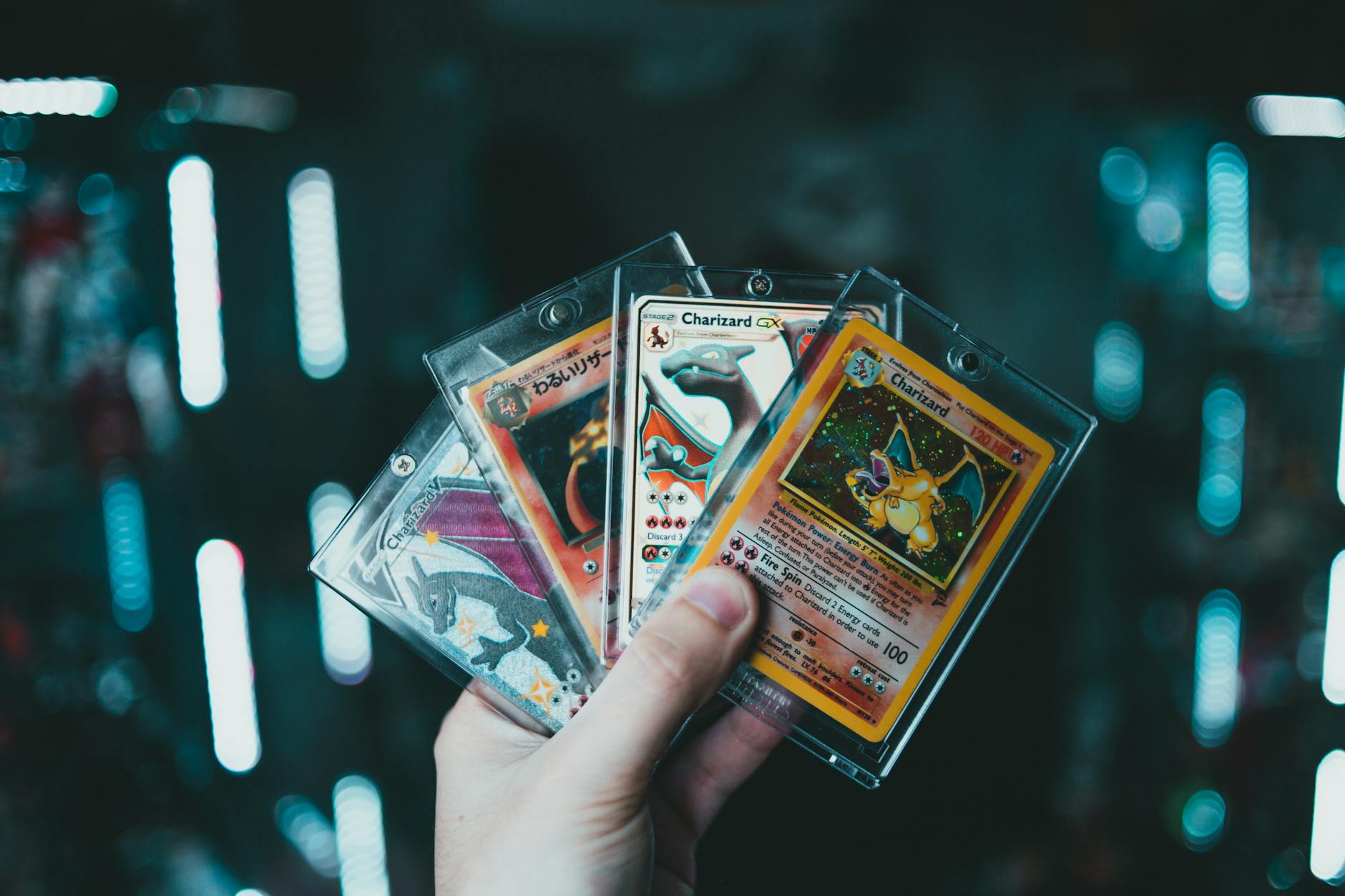
There is also the psychological toll of treating a hobby like a portfolio. Collectors who constantly track prices may experience anxiety when values dip, leading to panic selling that accelerates market declines. The dopamine hit of watching values climb can become addictive, pushing collectors to overextend financially or neglect other aspects of their lives. Perhaps most insidiously, the joy of simply owning and appreciating cards diminishes when every piece is mentally tagged with a dollar sign. A childhood Charizard that once evoked warm memories becomes a source of stress when its market price fluctuates. However, if you entered the hobby primarily through an investment lens and maintain realistic expectations, this framework is not inherently harmful. Problems arise when casual collectors absorb the investment mindset without the financial literacy or emotional resilience to handle market volatility, or when the community standards shift so dramatically that non-investor collectors feel alienated or priced out of participation.
Historical Lessons from Other Collectible Market Crashes
The comic book speculation bubble of 1993-1996 offers the most instructive parallel for Pokémon collectors concerned about financialization. During the boom years, publishers like Marvel and DC flooded the market with variant covers, holographic editions, and numbered limited runs specifically designed to attract speculators rather than readers. Prices soared, shops proliferated, and everyone assumed values would climb forever. When the bubble burst, it destroyed hundreds of retail stores, bankrupted major publishers, and left a generation of “investors” holding boxes of worthless polybagged comics they had never intended to read. The sports card market experienced similar dynamics in the late 1980s and early 1990s.
Manufacturers responded to collector demand by dramatically increasing print runs while simultaneously releasing premium parallel versions of standard cards. The result was a market saturated with product that nobody actually wanted to collect, only to flip. When prices collapsed, many longtime collectors left the hobby entirely, and it took decades for the market to rebuild on a foundation of genuine scarcity and collector interest rather than manufactured hype. Pokémon has advantages these markets lacked”a living franchise with new games, shows, and products that continuously attract genuine fans. But the warning signs are present: The Pokémon Company has released increasingly numerous premium products, chase cards have become statistically rarer, and the secondary market is awash in sealed product being held for speculation rather than opened for enjoyment. If history is instructive, a correction that punishes pure speculators while rewarding patient collectors who bought what they genuinely loved is likely, though its timing and severity remain unpredictable.

How the Grading Economy Changed Pokémon Card Collectibility
Third-party grading transformed Pokémon cards from personal collectibles into standardized commodities, and this shift lies at the heart of the financialization phenomenon. Before grading became widespread, a card’s value was negotiated between buyer and seller based on visible condition and mutual trust. Now, a PSA 10 Charizard is theoretically interchangeable with any other PSA 10 Charizard of the same variety, allowing for the kind of liquid market that speculation requires. This standardization enabled auction houses to sell cards sight-unseen, pricing databases to aggregate values, and investors to build diversified “portfolios” without developing the expertise to evaluate condition themselves. The grading companies themselves have become significant market participants. Their submission backlogs influence short-term prices by controlling the flow of newly graded cards into the market.
Their grading standards”and any perceived changes to those standards”can dramatically affect values. During peak demand periods, grading fees and turnaround times created their own speculative dynamics, with collectors paying premium prices for faster service to capitalize on perceived market windows. The relationship between collectors and graders is no longer simply transactional; it shapes market psychology in ways that pure collectors from earlier eras would find bewildering. For collectors navigating this landscape, the grading economy presents a genuine dilemma. Ungraded cards are increasingly difficult to sell at fair prices because buyers assume the worst about condition. Yet submitting cards for grading is expensive, time-consuming, and carries the risk of receiving a lower grade than expected”which can actually decrease a card’s perceived value compared to leaving it ungraded. Collectors must decide whether to participate in this system or accept reduced liquidity for their collections.
Protecting Your Collection’s Value Without Losing the Joy of Collecting
The most sustainable approach for long-term collectors is to establish clear boundaries between cards held for enjoyment and cards held for potential appreciation, then apply different standards to each category. Your “investment” holdings can be graded, stored in climate-controlled conditions, and tracked on pricing sites. Your personal collection”the cards you actually want to look at, the ones with sentimental value, the pieces that sparked your interest in the hobby”should be insulated from market psychology as much as possible. This bifurcated approach has practical advantages. Cards you genuinely love are unlikely to be sold regardless of price movements, so tracking their market value only creates unnecessary stress.
Conversely, cards held purely for speculation should be evaluated coldly on their financial merits, including realistic assessments of liquidity, holding costs, and opportunity cost compared to other investments. Most collectors would benefit from having a smaller, more carefully selected investment portion than their emotions suggest. The overlap between “cards I love” and “cards with strong appreciation potential” is smaller than many collectors admit. The tradeoff here is accepting that you may miss some upside by not optimizing every acquisition for investment potential. But the compensating benefit”actually enjoying your hobby without the anxiety of portfolio management”is substantial. Collectors who successfully navigate financialized markets often report that setting these boundaries renewed their enthusiasm after periods of burnout.
Warning Signs That Speculation Is Damaging Your Collecting Experience
Several red flags indicate that investment thinking has begun undermining your enjoyment of the hobby. If you find yourself delaying purchases you can afford because you hope prices will drop, or buying cards you do not actually want because you expect them to appreciate, your decision-making has been captured by speculation. If checking price updates has become a compulsive habit, or if you feel genuine distress when your collection’s paper value declines, the financial tail is wagging the collecting dog. Another warning sign is changing your collecting focus based entirely on market trends rather than personal interest. Abandoning vintage cards you love because modern chase cards are “performing better” is a classic mistake that often leads to regret.
Markets are unpredictable, and the collector who sells their sentimental favorites to chase returns frequently ends up with neither the cards they loved nor the profits they expected. Similarly, if you have stopped opening sealed product because keeping it sealed preserves value, you have essentially stopped collecting and started commodities trading. The limitation of this advice is that it assumes collectors have sufficient self-awareness to recognize these patterns in themselves. Many do not, particularly when surrounded by communities that normalize investment-first thinking. If you are uncertain whether speculation has become problematic, consider discussing your collecting habits with someone outside the hobby who can offer perspective unclouded by market enthusiasm.
The Sealed Product Speculation Problem
Sealed product hoarding represents perhaps the most visible symptom of Pokémon cards’ financialization, and it creates problems that extend beyond individual collectors to affect the entire market ecosystem. When speculators purchase booster boxes, cases, and elite trainer boxes with no intention of opening them, they reduce the supply available to players and collectors who want to actually engage with the cards inside. This artificial scarcity drives up prices for both sealed and single cards, creating a feedback loop that attracts more speculators while pricing out casual participants.
The practical effect is that many collectors cannot afford to open current product at reasonable prices, pushing them toward either the singles market or away from the hobby entirely. Meanwhile, speculators holding sealed product face genuine risks: storage costs, potential damage, and the possibility that future reprints or market corrections will destroy their expected returns. The Pokémon Company has shown willingness to reprint popular sets when demand warrants, which can devastate sealed product investments overnight. Collectors who remember paying premium prices for sealed Evolutions product before its various reprints learned this lesson painfully.
What Does the Future Hold for Pokémon Card Collectibility?
Predicting market direction is inherently unreliable, but structural factors suggest the hobby will likely find a new equilibrium that accommodates both collectors and investors, albeit with ongoing tension between these groups. The Pokémon franchise’s continued cultural relevance provides a foundation that pure speculation cannot sustain independently. Children today are forming the same nostalgic attachments to current cards that drive vintage prices, ensuring future generations of genuine collectors will enter the market.
The most probable long-term outcome is a stratified market where truly rare vintage cards maintain premium values supported by both investment demand and nostalgic collectors, while the vast middle market of common and uncommon cards returns to prices that reflect actual collecting interest rather than speculative hope. This would represent a healthier ecosystem than the current environment, where even relatively common cards are sometimes priced as if they were scarce investments. Collectors who focus on building meaningful collections rather than maximizing portfolio returns are likely to fare well in this future, regardless of what happens to the speculative fringe.
Conclusion
The financialization of Pokémon cards presents real risks to long-term collectibility, but these risks are not uniformly distributed. Collectors who maintain genuine enthusiasm for the cards themselves, set boundaries between collecting and investing, and resist the psychological pressure of constant price-tracking are well-positioned to enjoy the hobby regardless of market conditions. Those who approach cards purely as investment vehicles face the same risks as any speculator in any market”plus the additional cost of missing out on the actual enjoyment that collecting can provide. The key insight for navigating this landscape is that you can acknowledge the investment potential of your collection without letting that potential dictate your collecting decisions.
Build a collection that would still bring you satisfaction if prices collapsed tomorrow. Buy cards you genuinely want to own. Engage with the community in ways that prioritize shared enthusiasm over profit extraction. The stock-market mentality only damages collectibility to the extent that collectors allow it to displace genuine passion”and that remains, ultimately, a choice within each collector’s control.