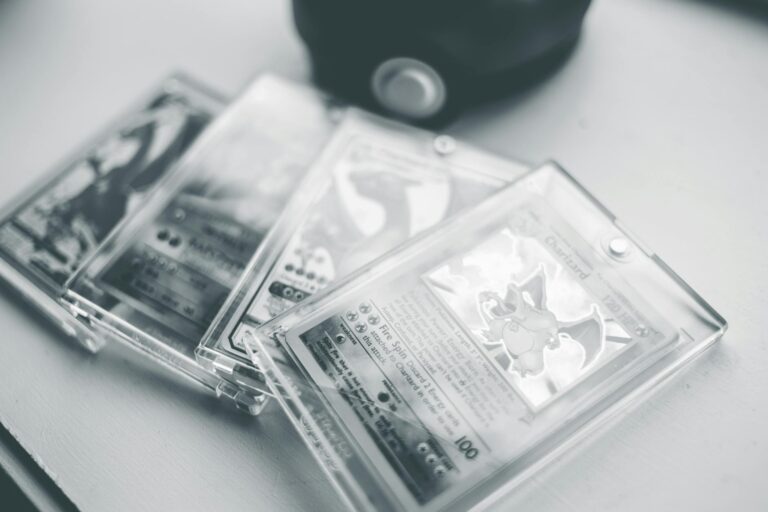
Why 4th-print Pokémon cards are confusing for collectors
Fourth-print Pokémon cards—cards printed as subsequent runs after the initial and early reprints—are a major source of confusion and frustration for many collectors because of inconsistent labeling, subtle but significant visual differences, shifting market conventions, grading complications, and incomplete documentation from official and secondary sources. The rest of this article explains those causes in plain terms, with examples and practical guidance for collectors.
What “fourth print” usually means, and why the term itself is problematic
– Common usage: Many collectors use “fourth print” to mean the fourth distinct print run or stamp variant of a specific card design; that may be the fourth time the card’s plate was struck, the fourth batch produced at the printer, or simply “the fourth different appearance I’ve seen.” Because collectors, resellers, and graders don’t all use the same definition, the phrase carries different meanings in different contexts.
– Why this matters: If two people buy a card labeled “fourth print” but they are using different definitions, one buyer’s expectations about rarity, price, and desirability will be wrong. The ambiguity around the label fuels disputes on marketplaces and community forums.
Production realities that create near-identical but legally different cards
– Multiple printings and reprints: The Pokémon Company and licensed partners often reprint popular cards across multiple sets, expansions, and promo runs; sometimes the same art is used again with different set symbols or holo patterns, leading to many versions that look similar but are distinct in ways that matter to cataloging and grading.
– Print-run tweaks: Printers adjust plates, foil layers, registration, and color profiles between runs for quality control or to correct errors. Those tiny changes—slight color shifts, border thickness, dot patterns in halftone printing—are nearly invisible to the untrained eye but are how specialists distinguish runs.
– Randomized foil patterns and production variance: Holographic foil patterns are often randomized during manufacturing; two cards from the same sheet or box can have different holo “swirls,” patches of reflective foil, or speckling. Those randomized traits are sometimes used by niche collectors (for example, collecting “unique holo swirls”), which increases perceived complexity because many “variants” aren’t official print-run categories but happenstance patterns.[1]
Labeling, set symbols, and cataloging inconsistencies
– Set symbols and copyright lines: Official identifiers—set symbol, collector number, illustrator credit, and the copyright line—are the primary, objective ways to identify which print a card belongs to. But in later reprints those identifiers may be shifted, abbreviated, or otherwise altered (for instance, adding or removing a copyright year or manufacturer line), producing confusion for catalogers and databases.
– Cataloging gaps: Centralized databases like those maintained by major hobby websites and price guides try to track all printings, but long tails of localized promos, tournament prints, and region-specific reprints are often missing or inconsistently recorded. This leaves collectors with partial or conflicting data when they try to verify a card’s print history.
Grading companies, authentication, and label controversies
– Graders’ role: Professional graders (PSA, Beckett/BCS, CGC, SGC, etc.) evaluate condition and issue labels that include details like “1st Edition,” “Shadowless,” and sometimes printing variant notes. Grading helps confirm condition but doesn’t always resolve print-run ambiguity because graders focus on condition, not the full bibliographic history of print variants. The same plate variant may receive identical grades despite being from different runs.
– Labeling disputes and community drama: High-profile controversies about grader decisions, label wording, or inconsistent variant recognition have eroded trust and added to confusion (there have been public debates and videos discussing grading drama and variant recognition in the hobby).[2][3] Collectors relying solely on graded slabs can still encounter disagreements about which print run a slabbed card represents.
Visual cues that cause head-scratching and misidentification
– Tiny print-line differences: Differences in the copyright line, set code placement, or the presence/absence of certain symbols are small but definitive; they are easy to overlook in casual photos or listings and easy to misreport.
– Art cropping and border printing: Slightly different crop ratios or border thickness can cause a card to be mis-categorized as a different print. Sellers taking photos at odd angles or with flash can exaggerate these features, misleading buyers.
– Foil “noise” and printing artifacts: Random foil patterns, dust specks, or printer artifacts can look like purposeful variant markings; niche collectors may treat these as variants, but large-scale price guides usually do not.
Market mechanics and economic incentives that increase confusion
– Rarity perception vs. actual scarcity: Some fourth-print variants are genuinely rarer because fewer copies were produced, while others are rare in the market only because they haven’t been documented or because sellers mislabel them, creating artificial scarcity and price spikes.
– Speculation and re-listings: Sellers sometimes relist a card with a new variant claim after receiving attention; that practice multiplies listings with slightly different variant claims and drives fragmentation of information. The presence of copycat listings and resellers who coin variant names compounds community confusion.
– Condition-focused pricing: Since PSA/BCS/SGC grades strongly influence price, buyers may ignore variant authenticity if the grade is high, producing a market where visually distinct prints trade at similar prices because grade outweighs variant significance.
Regional and promotional print runs that create cataloging blind spots
– Localized promos and tournament cards: Cards printed for specific regions, promotional campaigns, or tournament events sometimes use separate print batches or slightly altered plates; because these runs are distributed unevenly and sometimes undocumented, they create blind spots for global price guides.
– Language and stamping variants: A card printed for a non-English market or stamped with a promo identifier (e.g., “promo,” a tournament date) may be considered a separate run—even when the pictured art and collector number mirror the base set—because the production process or legal labeling differs.
Why photographic evidence and online listings are unreliable
– Photos hide key details: Important differences can be in micro-text, subtle crop, or foil finish that photos fail to show; low-light, glare, or compression artifacts on marketplace photos can cause misidentification.
– Listing copy mistakes: Sellers reuse descriptions or copy paste information from other listings, and mistakes propagate. A single mislabeled item can be reposted dozens of times, creating a false consensus about what a “fourth print” looks like.
Collector psychology and the “variant” economy
– Human pattern-seeking: Collectors often look for patterns and rarities; perceived variants become collecting niches, and communities adopt their own naming conventions that aren’t standardized.
– FOMO and attention cycles: When a card is claimed to be a rare variant, fear of missing out and the viral attention economy push prices and listings. That dynamic produces more claims and more confusion about what constitutes an authentic fourth print.
Practical examples collectors encounter (typical scenarios)
– Slight copyright-line differences: A card appears identical except for “©1999” vs “©1999 Nintendo” or a printer’s tiny code; one collector lists it as a different print, another calls it a mis