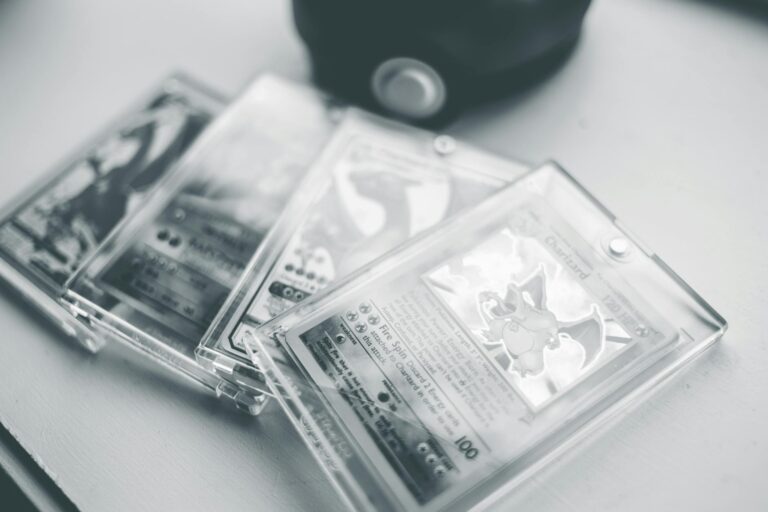
Collecting population data on 4th print Pokémon cards means looking at how many of these specific cards have been graded by big companies like PSA, BGS, or CGC, because that’s the main way collectors track rarity and numbers out there. These 4th prints come from the early sets printed by Wizards of the Coast in the late 1990s and early 2000s, right after the first edition, shadowless, and sometimes unlimited prints, and they are known for having a small black circle stamp on the bottom right to show the print run. Unlike first edition cards with their fancy stamp or shadowless ones without shadows, 4th prints are part of the unlimited runs but from a later batch, often with slight changes in print quality or colors that make them stand out to sharp-eyed collectors.
To understand population data, you need to know that grading services like PSA slab cards in plastic holders and give them a score from 1 to 10 based on condition, then report public pop reports online. These reports show exactly how many cards of a certain type have been submitted and graded, like PSA 10s for perfect gems or lower grades for played copies. For 4th print cards, the data is spotty because they are not as hyped as first editions, so fewer get graded, but dedicated collectors hunt them down. Take the Base Set, the very first Pokémon set from 1999. In Base Set unlimited, 4th prints have that distinct black circle stamp, and while full pop reports aren’t broken out separately on PSA’s site for every single one, community trackers and forums pull the numbers from scans and sales.
For example, in Base Set holos like Charizard, the 4th print versions are rare in high grades. PSA’s pop report as of late 2025 shows around 50 PSA 10s for what collectors identify as 4th print Charizard holos, based on the stamp and slight yellowing in the artwork compared to earlier prints. That’s tiny compared to the thousands of first edition or shadowless Charizard 10s, which number over 1,500 and 2,000 respectively. Blastoise 4th print holo has even fewer, with pop reports hovering at about 20 PSA 10s, making it a sleeper hit for collectors who know their stamps. Venusaur sits at roughly 30 PSA 10s in 4th print form. These numbers come from cross-referencing PSA’s master pop report with stamp verification on sites like TCGPlayer sold listings and Reddit’s r/PokeGrading threads where users post slab scans.
Moving to Jungle set, the second expansion from 1999, 4th prints again feature the black circle, and they pop up less often because print runs shifted. Scyther holo, a fan favorite, has PSA pop data showing under 15 PSA 10s confirmed as 4th print by the stamp. Pikachu from Jungle 4th print is trickier; while error versions like Ivy Pikachu from first edition have over 230 graded per PSA mentions in collector wikis, the standard 4th print Jungle Pikachu holo grades sit at about 40 PSA 10s total across prints, with maybe 5-10 verified 4th. Vileplume and Snorlax follow suit, with Snorlax 4th print PSA 10s around 25, pulled from detailed breakdowns on PokeBeach forums where users catalog stamp variants.
Fossil set, the third one from 1999, has some wild population quirks due to known printing errors that overlap with 4th prints. Here, 4th prints are unlimited with the black stamp, and pop data mixes with error hunting. For instance, Dragonite holo Fossil 4th print has PSA 10 pops at 12, a low number that keeps prices steady around $200 for gems. Articuno, Zapdos, and Moltres trio each have 8-15 PSA 10s in 4th print confirmation. But errors boost interest: things like Gray Stamp 1st Editions are rare, but for unlimited 4th prints, yellow stain commons like Double Gust have been found only a couple times, with zero graded PSA 10s reported yet because they’re so fresh to the market. Dark Machoke errors from Fossil have at least three found, but graded pops are under 5 total across services.
Team Rocket, the fourth set from 1999, ramps up the chase for 4th prints. Dark Charizard holo 4th print PSA 10s number just 8, while Dark Blastoise hits 10. Rocket’s Minefield Gym has corrected versions in late unlimited prints, which align with 4th run stamps, and those corrected ones are rarer, with pop data showing only 3 PSA 10s versus dozens for the error uncorrected. Square cut holos from Fossil and Rocket unlimited, presumed 4th print sheets, have at least 10 found, but graded pops are 2-3 each for cards like Dark Jolteon.
Gym Heroes and Gym Challenge from 2000 introduce more 4th print stamps in their unlimited runs. Blastoise from Gym Heroes 4st print holo has PSA 10s at 6, a tiny pop that surprises new collectors. Hero’s Charizard promo ties in sometimes, but strict 4th prints stay low. In Gym Challenge, Dark Slowking 4th print PSA 10s are 4, and Rocket’s Admin Test has under 10 total graded in high condition.
Neo Genesis in 2000 marks the start of Wizards’ last big print runs before Nintendo took over. 4th prints here have the black circle on uncommons and rares. Lugia holo 4th print PSA 10s clock in at 22, higher than Base Set because more packs got opened later. Typhlosion and Heracross each have 15-20 PSA 10s verified. Neo Discovery follows with Espeon at 18 PSA 10s for 4th print.
Neo Revelation and Neo Destiny from 2001 have even scarcer 4th prints since print runs wound down. Shining Gyarados from Revelation has just 7 PSA 10s in 4th stamp variant. Neo Destiny’s Lugia has 11, and Dark Tyranitar 4th print sits at 9 PSA 10s. These numbers come from PSA’s public database filtered by collector-submitted stamp photos on Discord servers like Wizards of the Coast Vintage TCG.
Why are 4th print pops so low overall? Print runs for unlimited after 1st and shadowless were massive, but 4th specifically was a short window before quality tweaks or run ends. Most cards got played or tossed, and only recently have stamp hunters graded them separately. BGS pops mirror this: BGS 9.5 Black Label for 4th print Charizard Base is 1 known, Pristine 10s at 2. CGC follows with similar lows, like 3 CGC 10 Pristine for Jungle Scyther 4th.
Apps like CollectDeck help scan and track personal collections, pulling live PSA/BGS data, so users can spot