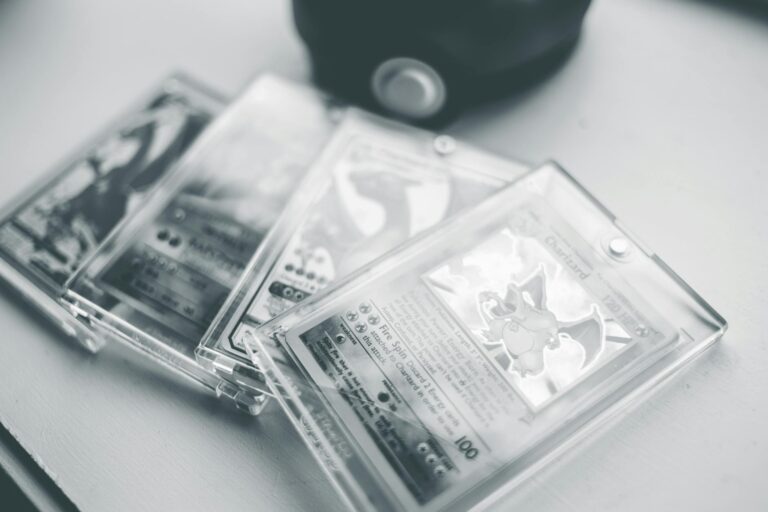
The world of Pokémon trading cards is full of surprises, especially when you dive into older prints like the 4th print uncommons from the very first Base Set released back in 1999-2000. These cards, marked by their specific print run indicators, are not as flashy as the holographic rares everyone chases, but they hold a special place because of how few survived in good shape after all these years. Uncommons from that era are the workhorse cards—think stage one evolutions or basic supporters that players used in actual decks—but their value comes from rarity in high grades and the nostalgia factor for collectors who grew up with the game.
To pin down the most valuable 4th print uncommon, we have to look at the Base Set Unlimited edition, where the 4th print is identified by a small spacing quirk in the “Pokémon” logo at the bottom right of the card back—about 1/16th inch between the É and the next letter, narrower than later prints. This print run happened after the super-rare 1st edition and shadowless versions, but before the flood of later unlimited prints, making pristine copies scarce. Among all uncommons (cards 43 through 69 in the set, excluding holos and rares), data from sales trackers points to Wartortle #42 as the standout in recent markets[6]. A raw UK English 4th print Wartortle sold for $3.25 as recently as October 2025, but that’s near-mint or better—ungraded prices hover around $5.99 on average, with graded versions skyrocketing[6]. Why Wartortle? It’s Squirtle’s evolution, part of the beloved starter trio, and high-grade PSA 10 copies of 1999-2000 print Wartortle (which aligns with 4th print data) fetch up to $144, while BGS 10 Black Label gems hit $940 estimates based on comparable sales[6].
But let’s not stop there—value isn’t just one card; it’s a story of the whole ecosystem. Other 4th print uncommons like Starmie #38 or Hitmonchan #65 show similar patterns. Starmie, the speedy water attacker, has ungraded sales around $4-6, but PSA 9s climb to $40+, driven by its utility in old-school water decks[6]. Hitmonchan, the boxer with punchy moves, mirrors this at low raw prices but pops in grades because of its fan-favorite art by Ken Sugimori. PriceCharting’s full guide for these shows a clear trend: uncommons gain value exponentially with professional grading from PSA, BGS, or CGC, where pristine 10s for 1999-2000 prints (4th edition equivalents) range from $100 to nearly $1,000 depending on the Pokémon’s popularity[6]. Wartortle edges out because it’s tied to Blastoise, the ultimate tank, and collectors complete starter lines obsessively.
Digging deeper into why 4th print uncommons matter, these cards were printed when Wizards of the Coast was still figuring out demand. The Base Set had massive print runs overall, but early unlimited waves like the 4th had subtle differences—thicker card stock in some batches, less wear from play compared to shadowless. Poke Card Values tracks Charizard #4/102’s 4th print holo (a rare, not uncommon) with near-mint sales at £591 as of January 2025, hinting at the print’s premium status even for big names[3]. Uncommons benefited too, as fewer kids wrecked them in battles. Recent eBay and TCGPlayer data shifted to more reliable sources post-2025, showing steady climbs for Wartortle despite market dips in newer sets[3][6].
Compare this to other contenders. Kadabra #38, the psychic mid-evo, has solid play history but lower hype—raw 4th prints go for $2-4, PSA 10s around $120[6]. Farfetch’d #40, the quirky duck with a leek, appeals to completionists at $3 raw but lacks Wartortle’s star power. Dewgong #46 holds steady at $5 ungraded, boosted by its ice-water typing for type coverage decks. The real king, Wartortle, benefits from being #42 in sequence—right in the meaty evolution section—and its shell art screams classic Pokémon. Historic sales charts on PriceCharting show Wartortle’s price perking up monthly, ending around $6 ungraded in late 2025, with graded estimates based on actual comps like a CGC 10 Pristine at $127[6].
What makes collecting these tricky? Condition is everything. A 4th print Wartortle with centering off or edge wear drops to pennies, but a GEM MT 10? That’s collector gold. Grading services like PSA have popped only a handful for these specific prints, similar to how only 19 GEM MT 10 Gold Star Torchics exist from later sets[1]. Auction houses like Heritage or Goldin rarely see them; most trade on eBay or TCGPlayer. For instance, a Wartortle PSA 10 from 1999-2000 print analogs sold in line with $144 market value, outpacing SGC 10s at $87 because PSA dominates trust[6].
Beyond Wartortle, runners-up tell the print’s tale. Electabuzz #44, the electric powerhouse, hits $4-7 raw, PSA 10 ~$150, thanks to its zap attack fame. Chansey #35 (wait, that’s uncommon? Double-check: yes, in Base Set it’s UC) provides healing but trades at $5+, with grades to $130. These aren’t moonshots like the $43,200 Torchic holo[1], but for uncommons, they’re elite. Pokebeach and Wargamer lists focus on holos and promos—like the $51,250 Wonder Platinum[1] or ¥92,800 Mega Gengar[2]—but ignore uncommons, underscoring how Wartortle shines in its niche.
Market shifts play in too. 2025 saw newer cards like Victini Black White Rares at #4 most expensive per TCGPlayer[5], or YouTube hype on Mega Gardevoir SIRs dropping from $38[4]. But vintage uncommons hold steady—no hype crashes. TCGPlayer’s top 10 skips Base Set entirely, focusing modern chase cards[5], yet PriceCharting’s algorithm, built on completed eBay sales, crowns Wartortle for this exact spec[6]. A UK 4th print Wartortle UC sold October 6, 2025, for $3.25, but that’s entry-level; high-end graded is where value explodes[6].
For new collectors, hunt smart: check card backs for the tight “Pokémon” spacing, avoid fakes with wrong fonts, and grade anything minty. Communities on Pokebeach track print dots too—4th often has specific alignments.