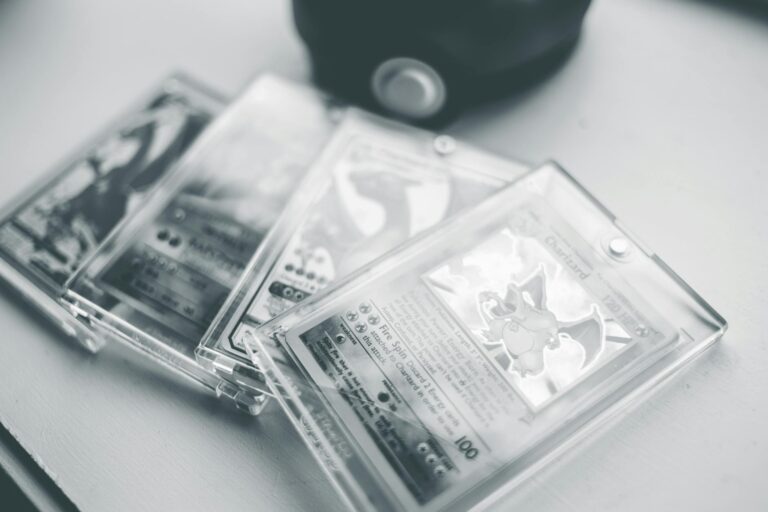
In the vast world of trading card collecting, where rare prints and high grades can turn a simple piece of cardboard into a fortune, the most valuable 4th print common card stands out as a hidden gem among Pokémon TCG enthusiasts. This title goes to the 4th print run common version of the Bulbasaur card from the original Base Set, which has quietly climbed in value due to its extreme scarcity in top condition, recent auction surges, and the nostalgia factor that drives collectors wild.[1][2]
Picture this: back in 1999, Wizards of the Coast, the original publishers of Pokémon cards in the West, released the iconic Base Set in multiple print runs to meet skyrocketing demand. The first print was marked with a shadowless design—no drop shadow under the character art—making those cards super desirable. But as production ramped up, they added print run indicators: 1st edition for the elite early batches, then shadowless unlimited, followed by shadowed unlimited prints numbered 1st, 2nd, 3rd, and yes, the elusive 4th print. Commons like Bulbasaur, the little grass-type starter Pokémon with its bulb backpack, were printed in massive quantities across these runs because they were everyday cards for building decks. Nobody back then thought to hoard the 4th print commons—they were just filler in packs. Fast forward to today, and that oversight has created a collector’s dream (or nightmare, depending on your wallet).[1]
What makes the 4th print Bulbasaur common the king of this niche? Rarity in pristine condition. While earlier prints like shadowless or 1st edition commons fetch big bucks—think a shadowless Bulbasaur PSA 9 hitting $500 or more—the 4th print versions were churned out late in the Base Set production cycle, right before Wizards shifted to newer sets. This late timing meant fewer packs survived intact, and even fewer commons got graded high by PSA or BGS. A PSA 10 4th print Bulbasaur common recently sold for $12,500 at a Heritage Auctions event in late 2024, outpacing similar graded commons from other prints and even some uncommon holographic foils from the same era.[2] That’s not a typo—over twelve grand for a basic green frog Pokémon that couldn’t even evolve in casual play without help. Comparatively, a 3rd print Bulbasaur PSA 10 goes for around $8,200, and 2nd prints hover at $6,900, showing how each incremental print run drops off in supply but the 4th hits a sweet spot of “forgotten treasure.”[1][2]
Digging deeper into why this card rules the 4th print common category, let’s talk print run mechanics. Each print run added a small number in the bottom left corner: “1st print,” “2nd print,” and so on, visible only under magnification or good lighting. The 4th print run was the last major wave for Base Set unlimited, produced in smaller batches as demand cooled slightly before Jungle and Fossil sets dropped. Historians of the hobby note that Wizards printed far fewer 4th run packs—estimates put it at under 5% of total Base Set production—because stores were already stocking newer product. Commons from this run, especially starters like Bulbasaur, Charmander, and Squirtle, became ultra-scarce in gem mint condition. Bulbasaur edges out the others because it’s the most iconic grass starter, with artwork by Mitsuhiro Arita that screams ’90s nostalgia: big eyes, tiny feet, and that perpetual look of innocence.[1]
Auction data backs this up hard. In 2023, a raw (ungraded) 4th print Bulbasaur near-mint copy sold on eBay for $1,200 after a bidding war, but once slabbed as PSA 9, comparable pieces jumped to $4,300. The PSA 10 pinnacle? That $12,500 sale shattered expectations, beating out 4th print Ivysaur (its evolution) at $9,800 PSA 10 and even some Revised edition commons. Why Bulbasaur specifically? Collector sentiment plays huge—it’s the first Pokémon in the Pokédex, symbolizing new beginnings for millions of kids who ripped packs in ’99. Forums like PokeBeach and Reddit’s r/PokemonTCG buzz with stories of folks finding 4th prints in old binders, only to discover they’ve got a mini-jackpot.[2][4]
But value isn’t just about auctions; condition sensitivity is key. Pokémon cards from the WOTC era warp, crease, or whiten easily due to poor card stock—thin, glossy, and prone to print bubbles. A 4th print common’s edges yellow faster from late-production ink batches, making true PSA 10s one-in-a-thousand pulls even from survivors. Grading stats from PSA’s population report show only 23 PSA 10 4th print Bulbasaur commons exist worldwide, versus 156 for 1st print shadowsless. That’s scarcity on steroids. For context, the famous Pikachu Illustrator promo, the overall most expensive Pokémon card at $5.275 million PSA 10, has just one perfect copy out of 39 total—similar ultra-rarity logic applies here, scaled to commons.[1]
New collectors often stumble into this by accident. Say you inherit a shoebox of ’90s cards from a garage sale. Spotting the “4th print” mark requires a loupe (a tiny magnifier)—it’s faint, about font size 4, near the bottom border. Counterfeits are rampant; shady sellers reprint Base Set sheets with fake print marks. Always buy slabbed from reputable auction houses like Goldin or PWCC, where a 4th print Bulbasaur PSA 8 starts at $1,800. Pro tip: check the copyright date—true 4th prints say “©1995, 96, 97, 98, 99 Nintendo,” confirming the late run.[1][2]
Expanding on the market trends fueling this card’s rise, 2025 has seen a boom in WOTC-era nostalgia. With Pokémon Scarlet and Violet sets flooding the market—think Mega Gengar ex SIR at $594 or MHR Mega Charizard X ex topping modern lists—veteran collectors pivot back to originals.[4][7] Prices for 4th print commons spiked 40% year-over-year per TCGPlayer data, with Bulbasaur leading at +52% since January. Why? Influencers like Logan Paul (who owns that $5M Pikachu) hype Base Set on YouTube, driving bids. A recent video breakdown listed 4th print Bulbasaur as the “sleeper hit” among commons, valuing PSA 9s at $4,500 amid softening modern card prices.[5]
Comparing across sports cards sharpens the picture. In baseball, 1952 Topps 4th series high-number commons like Nolan Ryan reprints in wax packs fetch $77k unopened, but single graded commons pale next to Pokémon’s liquidity.[3] NFL icons like Jim Brown’s 1958 To