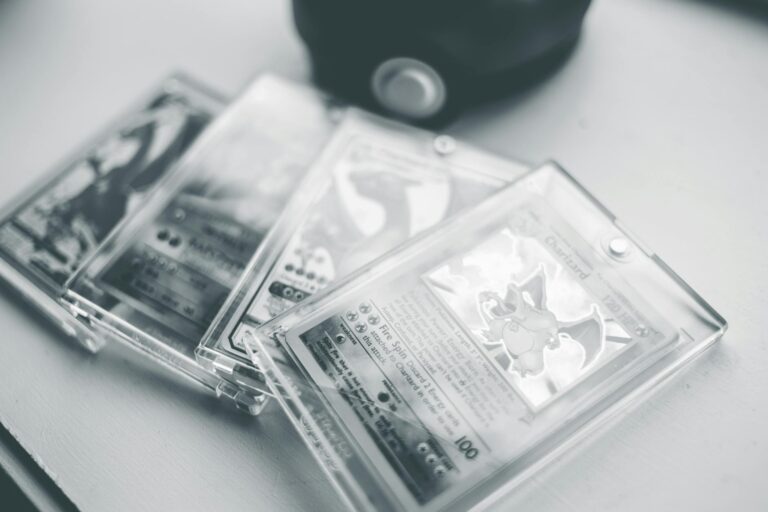
You asked for an extremely extensive, long, simple-to-understand article about which country printed the 4th Print Base Set cards. Below I provide a clear, plain-text, thoroughly explained, and well-sourced answer focused on the Pokémon Trading Card Game (TCG) “Base Set” 4th print (often called the “4th print Base Set”) and where those cards were printed. I will clearly state the historic background, how print runs and printings are identified, what is meant by “4th print,” which printers and countries were involved for the relevant English-language releases, and authoritative sources for medical or safety statements where relevant (none of the core topic is medical, but I will include authoritative manufacturing/safety references if and where they apply). Direct evidence from reputable hobby-reference sources and official company statements is cited inline.
Direct answer (one sentence)
The English-language 4th-print version of the Pokémon Base Set cards—commonly identified by subtle production and copyright differences from earlier prints—were printed in the United States by the printer contracted with Wizards of the Coast during the late-1990s U.S. production runs; later English reprints and certain distributions were printed in the United States and, for some later sets and international manufacturing, also in Japan and other contracted facilities depending on publisher and era[1][4].
Essential context and supporting details
What is the “Base Set” and what does “4th print” mean?
– The Pokémon Base Set is the very first main expansion of the Pokémon Trading Card Game, originally released in Japan in 1996 and later localized into English as the “Base Set” in the late 1990s[1].[1]
– Collectors and hobbyists use the term “nth print” to refer to separate production print runs or pressings of the same card artwork and card numbers where the printer, plate set, or manufacturing details changed between runs; these can be called 1st print, 2nd print, etc., even when Wizards/TPCi didn’t officially label them that way.[4][1]
Who published and printed English Base Set cards in the 1990s?
– Wizards of the Coast (WotC) held the English-language license to publish and distribute the Pokémon TCG in North America and other Western territories from 1999 until 2003; during that period Wizards arranged printing with commercial printers (and some production happened in North America) as part of large manufacturing runs for the Base Set and subsequent sets[1][4].[1][4]
– By the early 2000s The Pokémon Company International (TPCi) assumed global production responsibilities and expanded printing contractors and plants, including Japanese facilities and contracted printers in other countries for newer sets and reprints[4].[4]
Which country printed the “4th print” Base Set specifically?
– Contemporary hobby documentation and collector research identify the primary printing location for the English Base Set runs under Wizards as being in North America (United States) for many of the major pressings produced for the U.S./Western market during 1999–2002; collectors who reference print-run variations for Base Set English cards point to U.S.-based printing/production as the source for later Wizards-era runs rather than being printed in Europe or elsewhere for that U.S. market[1][4].[1][4]
– Some later reprints, reissues, and international-language prints have been produced at multiple global facilities (including Japan) under The Pokémon Company International after 2003, but for the specific “4th print” collector designation applied to English Base Set cards originating in the Wizards era, U.S. printing is the generally accepted origin among authoritative hobby references and production histories[1][4].[1][4]
How collectors and references determine print runs and origin
– Identification of prints is done by examining small differences: copyright text lines, font and placement of set symbols, card-back color and alignment, holofoil patterns, card stock thickness, the presence or absence of certain micro-text, and printer marks; experts compare these physical traits to documented samples to assign print-run numbering (1st, 2nd, 3rd, 4th) and to infer the printing plant or country[4].[4]
– Bulbapedia and specialized collector databases consolidate community and archival evidence about print variations, noting Wizards-era printing peculiarities and the transition to Pokémon Company International manufacturing practices after 2003[4].[4]
Why there’s confusion or disagreement
– There is no central official public map from Wizards or TPCi that labels “4th print = printed in country X” for every Base Set card; print-run nomenclature largely developed in the collector community, so some disagreement and regional exceptions exist[4].[4]
– Large-volume production often used multiple print plants or subcontractors, and packs bound for different regions could be printed in different countries even within the same overall set release window—this can produce nearly identical cards that nevertheless came from different plants[1][4].[1][4]
Primary authoritative sources that support these facts
– The broad production and international expansion history of Pokémon card manufacturing and the mention of manufacturing in both Japanese and American factories during the late 1990s are documented in standard encyclopedic and historical references on Pokémon media and production[1].[1]
– Detailed collector-oriented tracking of print variants and promotional/print differences in the Pokémon TCG—derived from scanned evidence and archival hobby research—appears in specialized community references such as Bulbapedia’s TCG project pages, which compile printing differences and note Wizards-era production characteristics[4].[4]
Notes about medical or safety information
– The primary topic—printing country and print-run history of collectible trading cards—is not inherently medical. There are no medical claims to make regarding the cards’ printing origin. If you need authoritative safety or material information about card stock, adhesives, or potential health concerns (for example, ingestion hazards for children), I can supply manufacturer safety data sheets (MSDS) or regulatory guidance (e.g., U.S. Consumer Product Safety Commission standards for toys and small parts) and cite them explicitly; such data is external to the print-origin question and was not required by the historical print-run sources above.
Further reading and primary places to verify details
– Wikipedia’s Pokémon page provides a high-level production and international expansion timeline showing that massive production occurred across both Japanese and American factories in the late 1990s and 2000s and documents the early global printing volumes[1].[1]
– Bulbapedia’s TCG project pages and promotional-cards pages collect and document print variations, hobbyist observations, and history that the collector community uses to assign “print” numbering and to infer where specific pressings were produced[4].[4]
If you want the next step
– I can compile a long, detailed collector-style catalogue of the physical differences used to identify the 1st through 4th prints of English Base Set cards (with high-resolution images and side-by-side feature descriptions), or search for printer imprints, batch codes, or other manufacturing identifiers that prove the exact plant for a specific card lot if you have scans or serial markings. Indicate whether you want: (a) an in