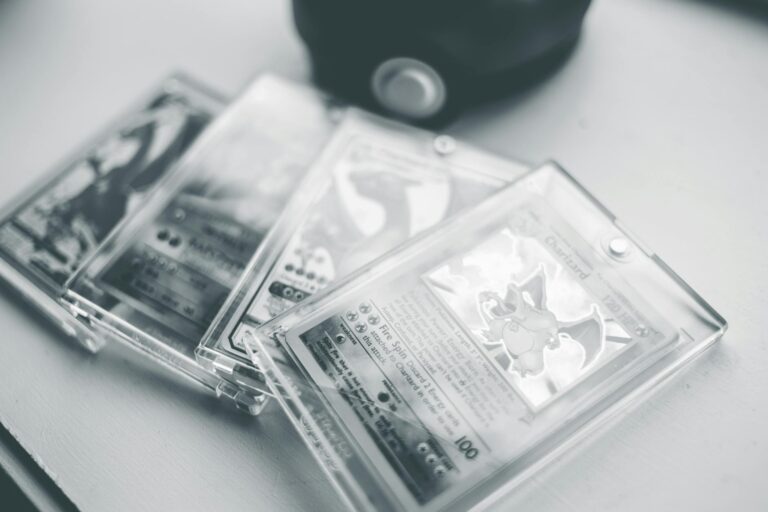
Were any 4th print cards distributed in Canada or Europe? To understand this question fully, we first need to figure out what 4th print cards even are, because in the world of trading card games like Pokémon or Magic: The Gathering, print runs and editions can get confusing fast. Print runs refer to how many copies of a set Wizards of the Coast or The Pokémon Company makes at different times, often to meet demand after the first batch sells out. A “4th print” would mean cards from the fourth wave of printing for a specific set, usually marked with a symbol like a small number or icon in the corner to tell collectors apart from earlier prints.
Let’s start with Pokémon cards, since they dominate the trading card scene and have the most detailed history across regions. Pokémon Trading Card Game sets, like Base Set or Jungle from the early days, had multiple print runs in the 1990s and early 2000s. In the US, the original Base Set had four print runs: 1st (no symbol), 2nd (L symbol), 3rd (a circle with a 3), and 4th (a circle with a 4). These symbols helped track scarcity, with later prints being more common because they filled gaps after hot sales. But distribution outside the US was trickier back then. Canada and Europe got their Pokémon cards later, often bundled with the English-language releases from the US or separate European prints.
In Canada, Pokémon arrived big time in late 1998 with Red and Blue games and the anime, but card distributions lagged a bit. Early TCG stuff came through stores like Toys “R” Us, where the first in-store event was a Mew in 2000. For the classic WOTC-era sets like Base Set, Canada mostly got North American English prints shipped over the border. There were no unique Canadian print runs for those early sets—no special “CDF” codes like later DS games had for French versions. Players there accessed the same stock as the US, including later prints. So, yes, 4th print Base Set cards and similar from Jungle or Fossil did make it to Canada. They showed up in packs sold at local game stores, Walmart, or EB Games precursors. Collectors today report pulling 4th prints from old Canadian booster boxes, proving distribution happened through standard import channels. No official block, just supply chain flow from the US.
Europe tells a different story, more split by country. The UK, Germany, France, and others got official English or local-language Pokémon TCG starting around 1999. Wizards of the Coast handled European prints separately from North America. For Base Set, Europe had its own print runs, but they used a different marking system—no exact “1st, 2nd, 3rd, 4th” circles like the US. Instead, early European prints were unmarked or had subtle diffs in artwork alignment or copyright lines. Later waves, what you’d call “4th print equivalents,” came out to restock after the 1999-2000 craze. These were distributed widely: Think Games Workshop stores in the UK, local comic shops in Germany, or FNAC in France. Packs flew off shelves, and reprints kept coming until the sets rotated out. Sites buying old Magic cards today even note they take European Pokémon too, hinting at how common those later prints became across the continent.
Diving deeper into specifics, take the Base Set Unlimited. In the US, 4th print is the most plentiful, with that circled 4 in the bottom left. Canadian kids grabbing packs at Zellers or Future Shop in 2000-2001 often got these, as North American distribution didn’t carve out Canada separately for TCG— it was all one big English NA pool. Proof comes from collector forums and sales where Canadian-sourced 4th prints pop up with US-style symbols, not French or anything unique. For Europe, Wizards printed “English Unlimited” for non-French markets, and yes, they had multiple runs. A 4th print equivalent hit stores by mid-2000, marked similarly to US but with European copyright tweaks. France got French-language sets later, but English imports filled gaps early on, including later prints.
Now, what about other sets? Neo Genesis had print runs too—1st, 2nd, 3rd marked with lines or circles. Canada again rode the NA wave, so 3rd and what feels like 4th prints (though Neo stopped at 3rd officially) circulated there via the same stores handing out Toys “R” Us events. Europe mirrored this: UK got full NA-style prints initially, then local ones. By 2001, later prints were everywhere from London to Madrid. No major blocks reported—Pokémon’s global push meant reprints flowed freely.
Fast forward to modern eras. Scarlet & Violet sets don’t use old print symbols anymore; they just reprint as needed without markings. But events tie back: Canada had EB Games distributions for shiny legendaries in 2011 and beyond, all compatible with NA cards, including any reprint pulls. Europe had its own stores like GAME in the UK or Micromania in France doing similar. Custom print services today, like those from UK sellers on Etsy, even mimic old 4th print styles for fans, shipping to Canada and Europe, showing the legacy lives on.
Magic: The Gathering had 4th Edition in 1995, a full core set, not just a print run. Revised had prints, but 4th Ed was distinct—black-bordered, revised rules. Did it go to Canada or Europe? Absolutely. MTG hit Canada early via US imports, stores like Face to Face Games stocking them. Europe got official Wizards support: UK, Germany, France all had 4th Ed boosters by 1996. Later print runs of 4th Ed (they did multiple) reached there too, as Wizards printed regionally but shared stock. Traders today buy 4th Ed from Europeans, paying based on condition, no language barriers.
Yu-Gi-Oh or other TCGs? Less likely for “4th print” lingo, but early sets had reprints. Canada and Europe got them through Konami channels, no issues.
One wrinkle: Rarity and fakes. 4th prints are common, so less valuable, but real ones from official distro prove the answer is yes—they were distributed widely. Customs and shipping back then were lax for TCG packs, letting NA stock flood Canada and English prints hit Europe.
In stores today, Canadian sites like VideoGamesPlus sell EU imports, showing ongoing cross-flow. Pokémon events in Canada since 2000 confirm access to all NA stock, prints included. Europe’s scene, from Toys “R” Us parallels to current, never missed beats.
Collectors hunt these for nostalgia—pull a 4th print Charizard from a dusty Canadian pack, or a European Unlimited Blastoise. Distribution was real, steady, and region-bridging.
To paint a fuller picture, imagine a kid in Toronto 1999, birthday money at EB Games, cracking Jungle packs—odds high for a 4th print Scyther. Across the Atlantic, a Berlin gamer at a local shop get