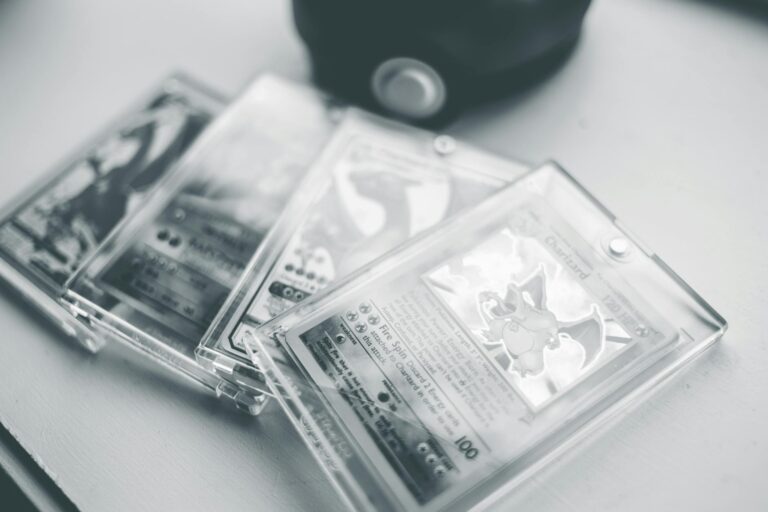
A 4th print Charizard is not more rare than a 1st Edition Charizard. The 1st Edition Base Set Charizard (the 1999 English Base Set holographic Charizard with the “1” inside the edition stamp) is widely regarded as one of the rarest and most valuable Pokémon cards because it was part of the very first English print run, circulated heavily among players and collectors in the late 1990s, and very few copies survived in mint condition[2][4]. The 4th print (often referred to as an Unlimited or later reprint depending on how people use the term) comes from later printings with far higher production numbers and therefore is considerably more common and typically much less valuable than a genuine 1st Edition Charizard[1][2].
Explanation, context, and the reasons behind that short answer
What “1st Edition” and “4th Print” mean in practice
– “1st Edition” (Base Set 1st Edition) specifically denotes the cards from the earliest English Base Set print run that have the circular “Edition 1” stamp on the left side of the artwork; these were produced in 1999 and distributed during the very first release[2][4]. The 1st Edition Charizard is an original vintage print run with high historic significance[1][4].
– “4th print” is a less formal phrase and can mean different things to different collectors: it may refer to a later printing within the same Base Set era (for example, shadowless, unlimited, or later reprints), or it might be used colloquially to describe much later reprints or promotional versions. In any case, later prints were produced in far larger quantities than the initial 1st Edition run and therefore are far more common[1][2].
Why 1st Edition Charizard is rarer and more valuable
– Limited original supply and heavy use: The earliest English Base Set run had a limited number of truly mint-condition cards remaining because the game exploded in popularity and many cards were played with, traded, or damaged; pristine survivors are therefore scarce[4].
– Historical and cultural significance: The 1st Edition Base Set Charizard is one of the most iconic cards in the hobby’s history, often considered the “grail” for Pokémon collectors; that demand dramatically increases scarcity-driven value[1][4].
– High demand at top grades: Graded PSA 10 (or equivalent) examples of the 1st Edition Charizard command the highest prices and are very infrequent in the market, driving the card’s collectible status and perceived rarity[2]. Price tracking and auction results consistently show 1st Edition Charizards selling at substantially higher prices than later prints[2][3].
How print runs and print variants affect rarity
– Print runs: Early runs (1st Edition) were smaller than later mass-market printings; subsequent Unlimited and reprint runs had much larger production numbers, which reduces scarcity[1].
– Shadowless vs. Unlimited vs. reprints: Within the earliest non-1st-Edition prints, there are recognized variants—“shadowless” printings (a short-lived variant between 1st Edition and Unlimited) are scarcer than the Unlimited printings, but still not as rare or valuable as true 1st Edition gem mint examples[1][5].
– Error cards and test prints: Rare error cards, presentation/test prints, region-specific promos, or experimental prints can be individually rarer than later reprints, but these are separate categories and do not change the basic fact that genuine 1st Edition Charizards are among the scarcest commercially significant Charizard variants[5][3].
How collectors and graders influence perceived rarity
– Grading concentration: Companies like PSA, CGC, or Beckett grade individual card condition, and a large portion of the market value is tied to the number of high-grade examples on record; a relatively low census of PSA 10 1st Edition Charizards increases their rarity premium[2].
– Market liquidity and headline sales: High-profile auction sales and top-end transactions for 1st Edition Charizards (and other unique Charizard variants) contribute to public perception of rarity and desirability; news of six-figure sales reinforces the idea that 1st Edition Charizards are exceptionally scarce in top condition[3][4].
Exceptions and nuance worth knowing
– “Rarity” vs. “value”: A later-print Charizard might sometimes be physically rarer than a particular subvariant of 1st Edition Charizard (for example, a unique promo, a region-specific misprint, or an extremely limited test print), but when most people ask whether a 4th print Charizard is rarer than a 1st Edition, they mean the widely recognized mainstream 4th-print/unlimited reprint versus the canonical 1st Edition Base Set Charizard; in that common comparison, the 1st Edition is rarer and more valuable[1][5][3].
– Condition matters more than print number alone: A heavily damaged 1st Edition card will be far less valuable than a pristine later reprint graded highly; however, relative rarity as a category remains with the 1st Edition in collector mindshare and census data[2].
– Variant-specific markets: Some modern reprints, special promos, or test/press-run cards (e.g., presentation prototypes) can be scarce and sought after by niche collectors, but they do not equal the mainstream collector demand or historic scarcity of the 1st Edition Base Set Charizard[3][5].
Evidence from price tracking and auction history
– Price tracking sites and auction results consistently show very high valuations for 1st Edition Charizard in high grades, with PSA 10 copies trading for substantial sums and much higher prices than typical later-print or unlimited Charizards[2].
– Collectible card market summaries and lists of most-expensive Pokémon cards regularly place various 1st Edition Charizard variants near the top of value lists, and highlight the card’s historic status and rarity relative to later prints and mass-produced modern versions[3][4].
How to tell the prints apart when assessing rarity
– Look for the 1st Edition stamp: Genuine English 1st Edition Base Set cards have the “Edition 1” circular stamp on the left side of the card artwork; this is the clearest visual marker collectors use to identify 1st Edition cards[2][4].
– Check border and shadow differences: “Shadowless” prints lack the drop shadow to the right of the Pokémon portrait and are an early non-1st variant; Unlimited prints (later) introduced a drop shadow and often had subtle color and thickness differences[5].
– Compare holo patterns, text placement, and card stock: Printing runs and manufacturers’ practices changed slightly between runs; experienced graders and long-time collectors can distinguish these differences reliably[5].
If you’re assessing a specific card (practical advice)
– Authenticate and grade: If you own or intend to buy what is claimed to be a 1st Edition Base Set Charizard, get it professionally graded and authenticated by a reputable grading service (PSA, CGC, Beckett) to verify edition, condition