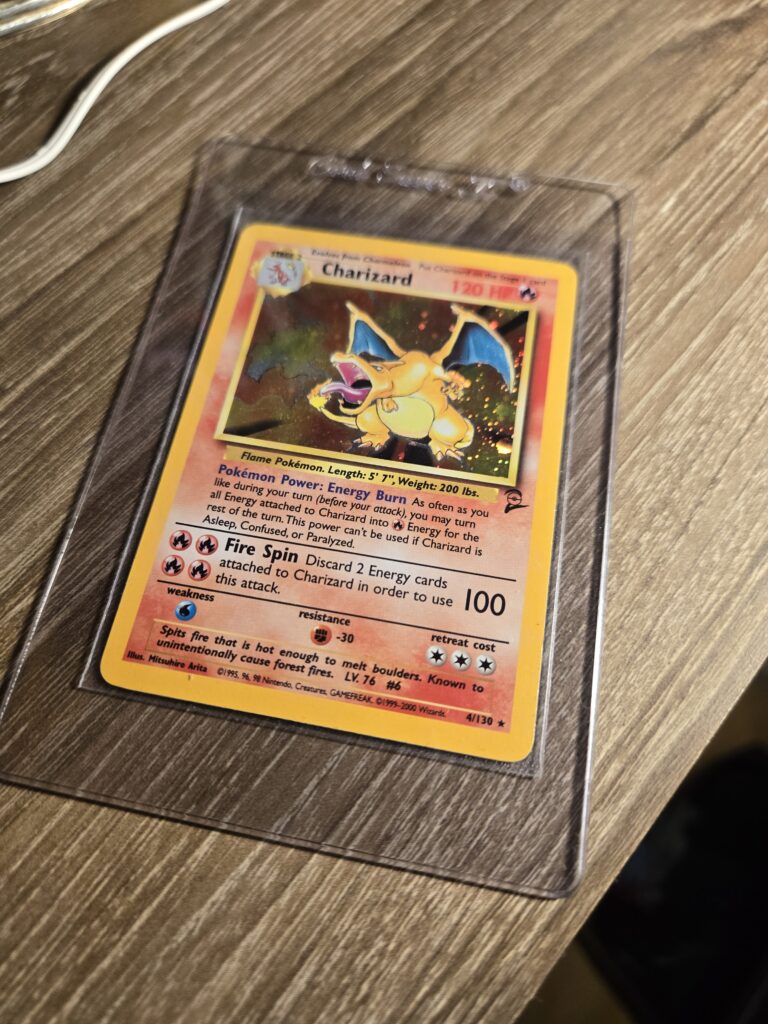
Yes, a demographic shift where children lose interest while adult collectors and parents dominate purchasing likely weakens the foundation for future nostalgia-driven demand. Nostalgia as a market force depends on a generation forming emotional attachments during childhood that later translate into collecting behavior as adults with disposable income. If today’s children never develop those personal connections to Pokémon cards”because they’re priced out, disinterested, or simply handed cards without earning them”they won’t become the nostalgic collectors of 2040. The current market may be consuming its own future by prioritizing adult speculation over childhood engagement.
Consider the trajectory of the original 1999 Base Set: those cards command premium prices today because millions of kids ripped packs, traded on playgrounds, and formed memories. The adults buying them now are chasing their own childhoods. But if current children experience Pokémon cards primarily as expensive items their parents collect or as investments rather than toys they actively engage with, the emotional imprint differs fundamentally. This article examines how parent-driven purchasing patterns might affect long-term market dynamics, what historical precedents exist, where the limitations of this theory lie, and what collectors should consider when evaluating future value.
Table of Contents
- What Happens When Kids Drop Out of Pokémon Card Collecting?
- How Does Parent-Driven Buying Change the Nature of Card Collections?
- The Historical Precedent of Other Collectible Markets
- What Factors Could Preserve Future Nostalgia Despite Current Trends?
- The Supply Problem: Why Parent-Bought Sealed Product Complicates Things Further
- How the Competitive Play Scene Affects Long-Term Collector Development
- What Current Trends Suggest About 2040s Market Dynamics
- Conclusion
What Happens When Kids Drop Out of Pokémon Card Collecting?
The departure of children from active participation in the hobby represents more than a demographic footnote”it potentially reshapes the entire demand curve decades into the future. Historically, collectible markets depend on what economists call “generational cohort effects,” where shared childhood experiences create synchronized adult demand. When Base Set kids hit their thirties with careers and disposable income around 2020, prices exploded. If a similar cohort isn’t forming now, that synchronized demand may not materialize in 2045. Children dropping out typically happens for a few identifiable reasons. Price barriers prevent casual engagement when booster packs cost significantly more than childhood allowances can cover.
Digital alternatives like Pokémon GO, Pokémon TCG Live, and video games compete for attention without requiring physical purchases. Scalping and empty shelves during demand spikes have historically made the hobby frustrating for young newcomers who can’t compete with adult buyers. When children can’t participate meaningfully, they don’t form the memories that drive future nostalgia. However, “dropping out” requires nuance. Some children remain deeply engaged through competitive play, digital platforms, or collecting specific subsets. The question isn’t whether all children have abandoned Pokémon”they clearly haven’t”but whether the ratio of engaged children to adult speculators has shifted enough to matter for long-term market health.

How Does Parent-Driven Buying Change the Nature of Card Collections?
When parents become the primary purchasers, the relationship between child and collection fundamentally changes. A card earned through allowance savings, a lucky pull from a birthday pack, or a hard-negotiated playground trade carries different emotional weight than a card handed over by a parent who bought it sealed as an “investment.” The former creates personal narrative; the latter creates inventory. This distinction matters because nostalgia isn’t triggered by mere ownership”it’s triggered by memory and emotional association. Adults who collected as children remember specific moments: the friend who traded them a holographic Charizard, the disappointment of pulling their fifth Tangela, the excitement of finally completing a set. These micro-narratives create the psychological pull that later drives premium prices.
Children who receive curated collections without the hunting, trading, and occasional disappointment may not develop equivalent attachments. There’s a limitation to this argument, however. If children are still opening packs, playing the game, and engaging socially”even if parents fund these activities”meaningful memories can still form. The critical variable isn’t who pays but whether the child actively participates in the experience. A parent buying packs for a child who eagerly rips them open differs substantially from a parent buying sealed product that sits in storage.
The Historical Precedent of Other Collectible Markets
Examining parallel collectible markets provides useful context for understanding how demographic shifts affect long-term value. The sports card market of the late 1980s and early 1990s offers a cautionary tale. When parents and speculators flooded the market buying cases of cards as investments”often without children’s genuine involvement”they created massive supply without creating future nostalgic demand. The result was a market crash and decades of depressed prices for most products from that era. Comic books followed a similar trajectory in the early 1990s, with speculation-driven purchasing creating artificial demand that collapsed when the speculator cohort exited.
Titles like X-Men #1 (1991) sold millions of copies to adults buying multiple variants as investments, but most of those copies never found readers who formed emotional attachments. Today, despite massive print runs, these issues hold modest value compared to genuinely scarce vintage comics that children actually read and loved. Beanie Babies represent perhaps the starkest example. Adult collectors drove prices to absurd heights in the late 1990s, but because children weren’t the primary market participants forming lasting emotional bonds, no nostalgia wave materialized to sustain values. The lesson across these markets: speculation without authentic engagement creates bubbles, not lasting collectible markets.

What Factors Could Preserve Future Nostalgia Despite Current Trends?
Several mechanisms might preserve nostalgia potential even with shifted demographics. First, global market expansion means new regions are experiencing Pokémon card collecting for the first time, creating fresh cohorts of young collectors in markets where the hobby is more accessible. The nostalgia cycle of 2045 may be driven by collectors in Southeast Asia, South America, or Africa rather than North American or European markets. Second, digital integration creates new forms of attachment. Children deeply engaged with Pokémon TCG Live or Pokémon TCG Pocket may develop nostalgia for physical cards as extensions of their digital experience, similar to how video game players seek physical merchandise from beloved franchises.
The emotional connection forms through the brand and gameplay rather than specifically through physical pack opening. The tradeoff here involves authenticity versus accessibility. Digital platforms make the game more accessible to children priced out of physical product, potentially preserving brand attachment. However, that attachment may not translate directly to physical card collecting in adulthood. A thirty-year-old nostalgic for Pokémon TCG Live might simply return to digital platforms rather than buying vintage physical cards.
The Supply Problem: Why Parent-Bought Sealed Product Complicates Things Further
Beyond the demand-side nostalgia problem, parent and investor purchasing creates supply-side complications for future markets. Sealed product purchased as investment tends to survive in much higher quantities and better condition than product purchased for consumption. This means future supply of “vintage” product from the current era may be significantly higher than historical norms. When Base Set released in 1999, most product was opened by children and handled roughly.
Surviving sealed product is genuinely rare. Current sets see substantial portions purchased specifically to remain sealed in climate-controlled storage. If future collectors do emerge seeking childhood nostalgia, they’ll encounter much more available supply than previous generations found when seeking their childhood cards. This creates a warning for current investors: even if nostalgia demand materializes in twenty years, abundant surviving supply may cap price appreciation. The investment thesis depends not just on future demand but on that demand exceeding supply”a more uncertain proposition when so much current product is being preserved rather than consumed.

How the Competitive Play Scene Affects Long-Term Collector Development
One bright spot for future nostalgia involves competitive play. Children who engage with Pokémon cards through organized tournaments, league play, and competitive formats form deep attachments regardless of who purchased their cards. The memories of tournament victories, deck-building challenges, and competitive friendships create exactly the emotional foundation that drives future collecting.
Historically, the competitive community has maintained more consistent engagement across age groups than casual collecting. Players who started competing as children often continue through adolescence and into adulthood, maintaining continuous connection to the hobby. These engaged players represent a distinct demographic from pure collectors or speculators, and their nostalgia patterns may follow different trajectories.
What Current Trends Suggest About 2040s Market Dynamics
Projecting twenty years forward requires significant humility given how dramatically collectible markets can shift. However, current trends suggest a bifurcated future market. Premium vintage cards from eras with genuine childhood engagement (1999-2010 especially) may continue commanding strong prices driven by deep nostalgia.
Product from speculation-heavy eras may face the same fate as 1990s sports cards: abundant supply, limited emotional attachment, and disappointing returns for those who bought expecting appreciation. The most valuable insight for current collectors and investors involves recognizing that today’s market behavior shapes tomorrow’s outcomes. Supporting programs that keep children engaged”accessible price points, organized play, school programs”isn’t just good for the hobby’s culture; it’s an investment in the market’s long-term health.
Conclusion
The relationship between childhood engagement and future nostalgia-driven demand represents one of the most important long-term factors for the Pokémon card market, yet it receives far less attention than short-term price movements or set releases. If current trends continue”with children increasingly priced out or disengaged while adults and investors dominate purchasing”the foundation for 2040s nostalgia may be significantly weaker than what drove the 2020s boom.
Collectors evaluating long-term holdings should consider not just current rarity and condition but the emotional resonance specific cards and eras hold for actual people who engaged with them as children. Product from eras with genuine mass childhood participation historically outperforms product from speculation-driven periods. Whether today’s sets fall into the former or latter category depends substantially on whether the hobby can maintain meaningful youth engagement alongside adult collector interest.