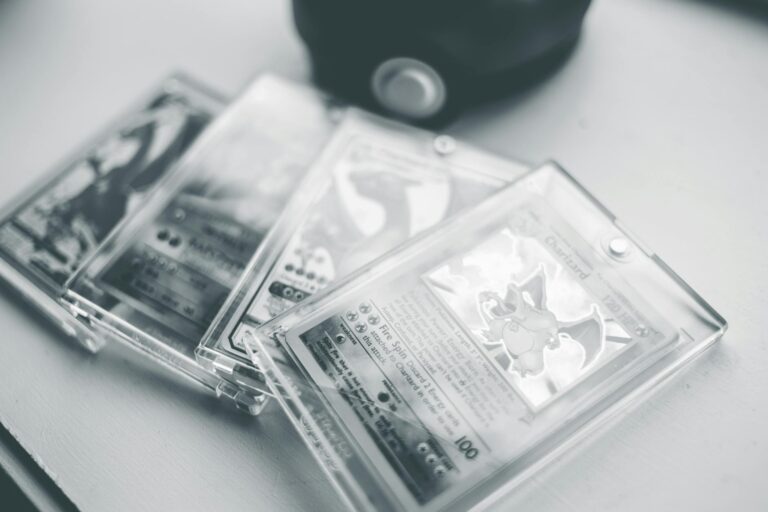
A 1999–2000 date on Pokémon Base Set cards can usually be spotted by inspecting a set of printing and copyright markers, border and card-edge features, edition indicators (First Edition or Unlimited), and other production cues such as holo pattern, card stock, and font traits; most authentic North American Base Set prints that originate from the Wizards of the Coast era will show copyright strings mentioning dates in that period, the Wizards printing characteristics, and (if 1st Edition) the small “1st Edition” stamp near the artwork which is specific to 1999 printings[1][6].
Why this matters and how to approach the inspection
– Collectors and buyers want to know whether a card is an original-era print (the late 1990s/very early 2000s) because provenance and printing variant strongly affect scarcity and value; major auction results show high prices for authenticated 1999 Wizards of the Coast Base Set pieces, demonstrating why accurate identification matters[5].
– Identifying a 1999–2000 printing requires looking at more than a single element; you must combine copyright lines, edition markings, border and back-print specifics, holo window characteristics (for holographic cards), and stock/thickness/texture. No single one of these alone reliably proves a card’s origin because reprints, counterfeits, and later reissues copy parts of the original layout[6].
Step-by-step visual checklist to spot a 1999–2000-era Base Set card
– Copyright line: The card’s legal line (usually on the lower edge of the artwork or under the main text block) is one of the clearest clues. Original Wizards of the Coast North American cards printed around 1999–2000 commonly list a copyright string that includes years covering 1995–1999 or shows “1999” in the range for Base Set printings; later reprints and foreign print runs will use different date formats or different company names and years[1][4].
– First Edition stamp (if present): The small black circular “1” within a rectangular banner that says “1st Edition” near the left side under the artwork is unique to the First Edition print run of the Base Set released in 1999; if the card carries that stamp it is a First Edition run from the original Wizards printings rather than the Unlimited printings that followed (which lack that stamp)[6].
– Shadowless vs. Shadowed border on Unlimited/1st-edition holo cards: Early 1999 First Edition and the extremely early Unlimited printings included a distinct “shadowless” look—this describes the lack of a drop shadow along the right edge of the Pokémon illustration box. Shadowless Base Set cards are associated with the earliest 1999 runs and are visually different from later “shadow” bordered Unlimited reprints[2][6].
– Back printing and alignment: The blue Pokémon-card back remained constant, but centering, dot patterns, and print registration differ in older Wizards printings; while difficult to quantify without comparison, poor centering and slight printing inconsistencies are common on original late-1990s cards and can help distinguish originals from later, cleaner reprints[6].
– Holographic foil window features (holo cards only): The holofoil texture and the way the foil is applied—in particular the starfield pattern inside the holo region and whether the foil sits flush or slightly recessed—are characteristics of Wizards-era holo production. Many authentic 1999 Wizards holographic cards show a specific holo pattern and foil adhesion that differs from later reprints or counterfeit foils; comparing a suspect card to verified authentic 1999 holo examples is useful[6][5].
– Card stock thickness and gloss: Original Wizards cards have a particular card-stock feel and thickness; experienced collectors often note a certain combination of gloss and stiffness in cards from 1999–2000 compared with modern reprints and counterfeit materials. While tactile tests are subjective, this is useful when combined with visual evidence[6].
– Printing fonts and punctuation: Early Wizards prints used specific typefaces, spacing, and punctuation for Attack names, energy symbols, and the copyright string. Tiny differences in the font weight, spacing, or punctuation can indicate a reprint or fake when compared side-by-side with a known authentic sample[6].
– Collector numbering and set code: Authentic Base Set cards show a set numbering like “X/102” (for example 4/102) and often include collectors’ numbering that matches Wizards of the Coast Base Set layouts; double-check the card number against known Base Set lists from 1999 to ensure the number corresponds correctly[1][7].
– Reverse-side printing markers and small manufacturer text: Some prints (regional releases, reprints) include other manufacturer marks or copyright strings referencing different years or companies (for example, later printings by The Pokémon Company International or foreign printings will differ from the Wizards strings). Confirm that the manufacturer mentioned corresponds to Wizards-era production if you are authenticating a North American 1999–2000 card[1][4].
Key variants and what each implies about year/print run
– 1st Edition (1999) — first print run of North American Base Set: Displays the circular “1st Edition” stamp next to the art box and commonly includes the older copyright range; these are the most collectible and were produced in 1999 by Wizards of the Coast[6][5].
– Shadowless Unlimited (very early 1999–2000) — printing quirks: These are the early Unlimited printings which lack the 1st Edition stamp but still have the shadowless card frame that makes them visually similar to 1st Edition cards; shadowless cards are an early variant and almost always date from the immediate post-First Edition printings in 1999[2][6].
– Unlimited with shadow (1999–2000 mass reprints) — later 1999 and 2000 reprints: The bulk Unlimited print runs that followed used the drop shadow on the right edge of the artwork box; these were printed in larger quantities and are often dated 1999 or 2000 in various listings but lack First Edition stamps[1][6].
– Base Set 2 (2000 reprint mash-up) — reissue with silver “2” symbol (February 2000): Base Set 2 is an explicit reprint/re-release that mixes Base Set and Jungle cards and is identified by a silver “2” symbol; it dates to 2000 and is intentionally separate from the original Base Set printings, so presence of that symbol confirms a 2000-era Base Set 2 print rather than an original 1999 Base Set card[1].
– Non-US printings and later reprints (2000s onward) — different copyright/printing houses: Cards produced after Wizards’ period or in other regions will often name different companies and years on the copyright line and may use different paper/foil methods. These should be treated as distinct from the 1999–2000 Wizards prints[1][4].
How to verify suspicious or high-value cards
– Compare with documented auction winners and trusted photo examples: High-end auctions routinely publish photos of authenticated