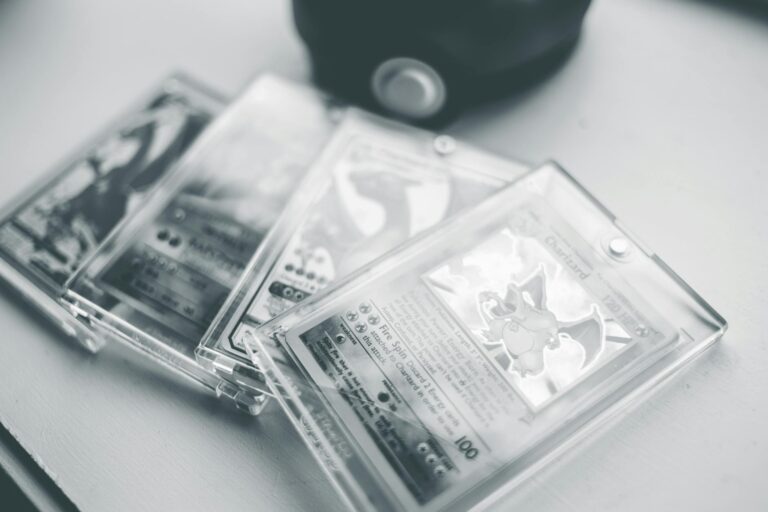
Spotting a real 1999-2000 Charizard Pokemon card from the original Base Set and telling it apart from fake reprints or counterfeits takes a close look at several key details. These cards, made by Wizards of the Coast, come in versions like 1st Edition, Shadowless, and Unlimited, each with unique signs that fakes often mess up[1][4][5].
Start with the very bottom of the card, right in the copyright line. A genuine 1999-2000 US English Charizard from the Base Set Unlimited print will say “©1995-1999 Nintendo/Creatures Inc./GAME FREAK inc.” That’s the exact wording, with the years going up to 1999 only[1]. Fakes might change this to something like “©1995-2000” or add extra words, or they could copy it wrong with spacing issues. Wizards of the Coast printed these early runs, so look for their logo at the bottom center, a small circle with “Wizards” inside it. Reprints from later years or bootlegs skip this or make it blurry[1][4].
Next, check if it’s a 1st Edition or Shadowless version, which are even more valuable from those 1999-2000 printings. 1st Edition cards have a gold starburst stamp in the bottom left saying “1st Edition” clearly, not smudged or off-color. Shadowless ones lack the black shadowing around the card text and artwork borders, making the whole card look brighter and cleaner under light. Unlimited prints, still original from 2000, have that shadowing back. Fakes often fake the stamp poorly, with the text looking pixelated or the gold too dull, and they struggle with the shadowless effect, either adding fake shadows or making the holo pattern look flat[3][5].
The holofoil pattern is a big giveaway. Hold the card under bright light or tilt it slowly. Real 1999-2000 Charizard holos have a dynamic rainbow shift that dances across Charizard’s body, wings, and tail flame, with a subtle “holoshift” at the bottom edge of the artwork. There’s sometimes a tiny “holobleed” where the foil slightly overlaps the border. Look closely for the “Black Dot Charizard” error on some Unlimited prints—a small black ink dot right over the “t” in “Nintendo” on the copyright line. That’s a real printing flaw from the era, and fakes rarely nail it perfectly[1][3]. Counterfeits use cheap foil that stays static, looks cloudy, or has bubbles under the surface. No real card from this time has holographic security stamps; those came after 2003[1].
Feel the card’s thickness and texture. Originals are about 0.3mm thick, with a crisp, slightly textured stock that’s not too glossy or too matte. Bend it gently (don’t crease it)—it snaps back firmly without warping. Fakes feel flimsy, too bendy, or overly stiff like plastic. The edges should be sharp and clean, not fuzzy or whitish from bad cutting. Corners on unplayed originals are razor-sharp; even minor wear shows as tiny dents, but fakes often have rounded corners from poor manufacturing[2].
Examine the print quality up close with a magnifying glass or phone macro lens. Text is razor-sharp, with no bleeding ink or fuzzy letters. The attack names like “Fire Spin” and energy costs align perfectly, no offsets. Charizard’s artwork has fine details in the scales, eyes, and flames that pop under light. Colors are vibrant but not oversaturated—real reds and oranges have depth. Fakes have dot-matrix printing dots visible under magnification, misaligned text, or colors that look washed out or neon[1][3].
The back of the card tells more. Real 1999-2000 backs have a crisp Pokemon logo, clean blue pattern, and copyright matching the front: “©1995-1999…”. No pixelation or color shifts. Some early prints have tiny errors like HP listed as “HP 40” on other cards, but for Charizard it’s consistent. Fakes mess up the back pattern, making it repeat wrong or fade at edges[3].
For high-value ones, get it graded by PSA or Beckett. A real PSA 10 from 1999 Base Set Charizard can fetch thousands, like recent sales around $10,000 ungraded rising to way more graded[2][6]. Always check the PSA cert number on their official site to confirm it’s not a fake slab—counterfeit holders exist with bogus labels[2]. Raw cards under $200 might be okay if low-grade, but for anything near mint, grading verifies it[1].
Seller checks matter a ton. Buy from spots with high feedback, like eBay sellers over 99% positive with return policies. Ask for multiple angles: front lit, back, edges, corners close-up, under UV light if possible. Avoid blurry photos or “too good to be true” prices—real near mint Unlimited Charizards go for $200-$500 raw lately[6]. If it’s serial-numbered promo from 2000 like McDonald’s sets, low numbers add value, but verify[1].
Common fake tricks include using old stock photos, hiding flaws in group shots, or claiming “vintage” without details. Recent buyer stories show fakes passing quick looks but failing grading—one guy got a “perfect” Charizard that PSA called fake due to wrong foil[1]. Sealed packs or boxes from 1999-2000 are safer; opening them yourself confirms originality.
Dig into print runs. Base Set had 1st Edition (rarest), Shadowless (next), then Unlimited into 2000. Jungle and Fossil sets from the same era share traits like Vulpix “HP 50” errors, but Charizard is Base Set #4/102[3][4][5]. UK 1999-2000 prints fixed some errors, but US ones have the originals.
Tools help: a jeweler’s loupe (10x-30x), blacklight (real cards glow subtly blue-white, fakes pink or nothing), and weight scale (real singles weigh 1.7-1.8 grams). Compare side-by-side with known real images from trusted sites.
Market trends show Unlimited Charizard holding at $197 average ungraded recently, with NM at $400+, PSA 10 over $10k[6]. Prices dipped a bit in late 2025 sales, but originals hold value over reprints.
Layer these checks: copyright, logo, holo shift, print errors, texture, grading. Practice on cheap commons first—spot fakes there, then tackle Charizard. Patience pays off; one wrong buy costs hundreds.
Expand on holo specifics. Tilt a real one 45 degrees: the flame shifts orange to yellow, wings blue to green smoothly. Fakes stutter or stay one color. Micro-abrasions? None on mint originals; fakes scratch easy.
Edge inspection: run finger along borders—real ones smooth, no paper fuzz. Whitening means fake die-cut.
Seria