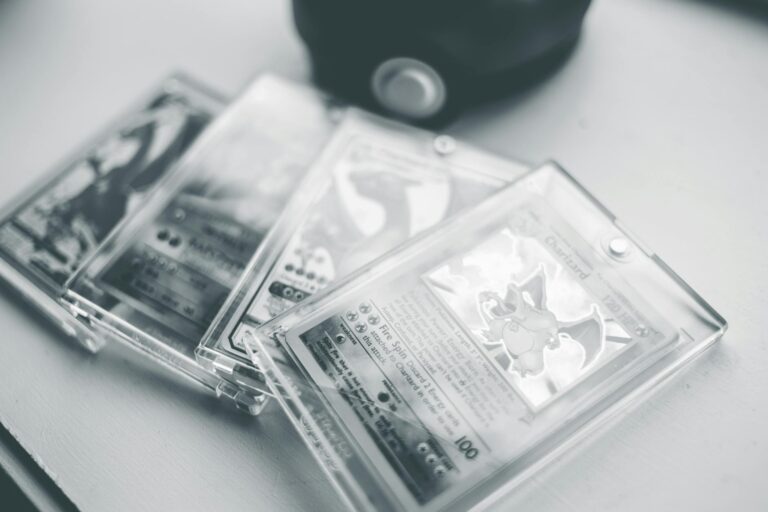
Direct answer: A 1999–2000 Charizard from the original Base Set (1st Edition or Shadowless) is substantially rarer and more valuable than an Unlimited (also called Base Set Unlimited or Base Set 2) Charizard; among graded PSA 10 examples the early print runs (1st Edition and Shadowless) have far smaller populations and much higher price ceilings than Unlimited prints, while Unlimited copies are far more common and sell for a small fraction of the earliest prints[1][3].
Key context and why this matters
– Which Charizard are we comparing? The classic distinctions collectors use are: 1st Edition (1999 North America) with the 1st Edition stamp, Shadowless (very early print run without the drop shadow at the right of the image), and Unlimited (the mass‑printed run that followed, often called Base Set Unlimited or Base Set 2 in some markets). Each print run shares the same artwork but differs in edition marking, card border/shadow, and print-run quantity; these differences drive rarity and value[1][5].
– Production numbers and era: Wizards of the Coast and later reporting show massive overall production of Pokémon cards in 1999–2000, but the very first 1st Edition and shadowless runs were limited relative to later Unlimited printings, making them scarcer today[5].
– Grading magnifies perceived rarity: Professional grading (PSA, CGC, BGS) creates clear population counts; collectors often treat a PSA 10 as the benchmark of “perfect” condition and use population report counts to gauge scarcity[1]. PSA population numbers and sales histories show far fewer PSA 10 1st Edition or shadowless Charizards than Unlimited PSA 10s, and auction results reflect much higher final prices for the early prints[1][2][3].
Evidence from population, sales and price history
– PSA guidance and collector practice: Experts and buying guides advise checking PSA’s Population Report for the exact number of PSA 10s of each variant because “fewer than 50 known copies suggests higher rarity,” and they explicitly list 1st Edition (1999) and Shadowless as the most sought-after with the highest values, while Unlimited/Base Set 2 is described as mass‑produced and more available[1].
– Market price data (examples): Price-tracking websites and auction records show large price differentials. Recent PSA 10 sale records for Base Set Unlimited or Base Set 2 Charizard have reported prices in the low thousands to tens of thousands depending on listing and market conditions, whereas 1st Edition/shadowless PSA 10s (when they appear) have historically reached much higher ranges (tens of thousands to hundreds of thousands at peak auctions), illustrating the premium collectors place on earlier printings[1][2][3][4]. PriceCharting shows sale records for Base Set and Base Set 2 Charizards with PSA 10 prices that vary widely by print and date, and Pokecardvalues lists much higher market values for the 1st Edition Shadowless variant than for Unlimited[2][3][4].
– Volume and availability: Unlimited prints were produced in much larger quantities (they were intended to meet explosive demand after the initial releases), so ungraded and lower‑grade Unlimited Charizards are commonly available on marketplaces; in contrast, genuine 1st Edition and shadowless cards are comparatively scarce in circulation, and mint examples (PSA 10) are particularly rare[5][1].
How collectors evaluate rarity (practical checklist)
– Identify the variant: Look for the 1st Edition stamp (small circular label usually at left of the artwork) to confirm 1st Edition; absence of the shadow along the right of the image indicates shadowless; Unlimited will have the shadow and no 1st Edition stamp[1][5].
– Consult graded population reports: PSA’s Population Report is the most commonly used metric to compare how many PSA 10s exist for each variant; lower counts = higher scarcity and usually higher valuation[1].
– Compare recent auction results: Completed sales on major auction houses and price aggregators (e.g., Heritage, PWCC, PriceCharting, eBay completed listings) show realized prices and demand levels for each variant and grade[2][3].
– Consider condition sensitivity: Early prints were produced on paper and printing processes that make achieving gem‑mint centering and surface condition harder; therefore, PSA 10 examples from early print runs are rarer than PSA 10 Unlimited copies[1].
Why condition and grading skew perceived rarity
– A raw (ungraded) Unlimited Charizard might be “common” relative to other Base Set variants, but high-grade examples are still uncommon because obtaining a perfect centering, flawless surface, and clean edges after 25+ years is challenging; nonetheless, the ratio of high‑grade Unlimited to high‑grade 1st Edition/shadowless heavily favors Unlimited availability[1][3].
– Grading population reports and auction histories are central to how modern collectors and investors define rarity and value—two cards that look identical to the untrained eye can have wildly different market values due to edition and grade[1][2].
Typical price relationships (generalized, based on market records)
– 1st Edition Base Set Charizard (1999) — highest rarity and value, especially PSA 10 and PSA 9.5: historically commands the highest auction prices among Base Set Charizards[1][4].
– Shadowless Base Set Charizard (1999) — next in rarity/value; scarcer than Unlimited and usually fetches substantially more than Unlimited copies in similar grades[1][4].
– Unlimited/Base Set 2 Charizard (1999–2000) — most common and lowest price among the three categories, although a PSA 10 Unlimited remains valuable and can sell for thousands depending on market demand at the time[2][3].
Factors that affect perceived rarity beyond print run
– Country/print differences: Japanese prints, English prints, and later reprints have different collector markets; some regional variants can be rarer in certain markets[5].
– Market cycles and nostalgia: Demand spikes (media exposure, anniversaries, mainstream auctions) can temporarily drive prices and make particular print/grade combinations feel rarer because available listings disappear quickly[5].
– Provenance and unique history: Cards with notable provenance (celebrity collections, tournament history, unusual backstory) can attract premiums that make them effectively “rarer” in terms of market availability[1][2].
How to verify and research a card yourself (actionable steps)
– Physically inspect the card for the 1st Edition stamp and the presence/absence of the right-side image shadow to classify 1st Edition vs shadowless vs Unlimited[1].
– Look up the card’s serial/certification number on PSA’s verifier if the card is slabbed; consult PSA’s Population Report for counts by grade and variant[1].
– Search completed auction results on PriceCharting, major auction houses, and eBay to see realized prices for the exact variant and grade you’re researching[2][3][4].
– Use multiple price databases because listing prices can be inflated