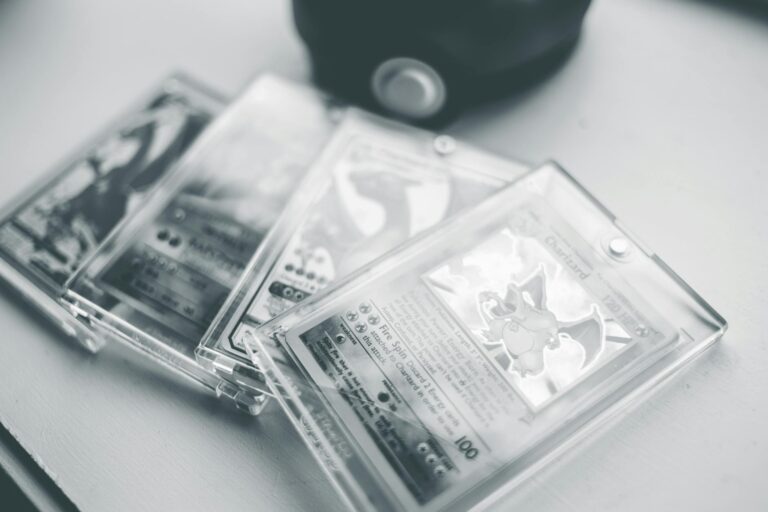
Direct answer: No credible evidence shows that Wizards of the Coast intentionally released a distinct “4th print” Charizard as a deliberate marketing or rarity decision; what collectors call “4th print” or variations of the Base Set Charizard stem from multiple print runs, distribution changes, test prints and printing errors rather than a single purposeful release labeled by Wizards as a “4th print.”[2][3]
Context and explanation
What people mean by “4th print” and why the label exists
– Collectors and market sites frequently use informal labels such as “1st print,” “shadowless,” “unlimited,” and sometimes “4th print” to describe subtle differences between physical Charizard cards from the original English Base Set era (late 1990s) and later reprints or variants; these labels are a retrospective collector shorthand, not formal print-run names announced by Wizards of the Coast (WotC).[4][5]
– The Base Set English release history is complicated: WotC printed initial runs (including 1st Edition), then “shadowless” printing, then “unlimited” runs and later reprints and special editions; along the way there were test prints, design/ink changes, corrected plates and other variations that produced multiple visually distinct versions collectors now index and trade under informal names.[2][3][4]
Evidence that variations resulted from production/test/printing circumstances rather than a declared “4th print”
– Test prints and prototype treatments occurred before the wide English release—WotC and associated printers experimented with foil patterns, registration and art treatments (for example a disco/staggered holo test Charizard has been documented and sold at auction), indicating that some unusual Charizard cards are one-off or limited test artifacts rather than part of a labeled commercial “4th print.”[3]
– Printing corrections and distribution changes created variant populations: Bulbapedia and collector documentation describe many printing errors, ink changes and design corrections during the unlimited print runs (for example black flame art variants, misprinted energy icons on other cards, and mass-produced “error” traits that were corrected later), which explains how multiple visually different Charizards entered the market without a single intentional “4th print” release by WotC.[2]
– Market listings that show a “4th print” Charizard (for example on card-price aggregator and marketplace sites) are using modern marketplace classification to differentiate examples by observable traits, edition marks, printing plant differences or collector-attributed chronology; these are vendor-side or community classifications rather than archival WotC print-run confirmations.[1][5]
Why claims that Wizards intentionally released a “4th print” persist
– Terminology confusion: fans and sellers conflate different things—reprint sets (Base Set 2, Legendary Collection, later reprints), unlimited vs. shadowless variants, and distributor/press differences—into casual “print” counts, producing the impression of a formally numbered sequence including a “4th print” when none was officially labeled that way.[4]
– Rarity-driven narratives: high prices and collector demand for rare or visually unusual Charizard variants encourage storytelling that treats each observable variant as a deliberate scarce release; marketplaces and listing titles often emphasize rarity for sales, reinforcing that narrative even when it’s inaccurate.[1][5]
– Test prints and oddities attract attention: well-publicized unusual items (for example disco-holo test Charizard and other printer-test artifacts) have high auction values and media coverage, which can be misread as evidence that multiple formal print runs were intentionally released as numbered prints by WotC.[3]
What the primary sources and authoritative histories say
– Bulbapedia’s documentation of Base Set and error cards explains that many differences came from printing changes, distributor decisions and corrected designs during the unlimited print period, not from an announced “4th print” product line from Wizards of the Coast.[2]
– Industry and auction reporting about rare test prints (for example a disco holofoil Charizard test card that sold at auction) frames these as experimental or pre-release prints rather than as an official later-numbered print run designated “4th print.”[3]
– Collectible price-tracking and marketplace sources list many Charizard entries and may tag some as “4th print” for identification, but these are secondary, marketplace-driven classifications used to help buyers/sellers distinguish visually different cards.[1][5]
How printing and distribution processes produced many variants (technical overview)
– Multiple print stages and plates: Trading-card print runs for a major release typically involve successive printing plates and runs, plate replacements, corrections and color/ink adjustments; when plates and inks change mid-run, visually different cards are produced without any change to the card’s legal identity.[2]
– Test/press proofs and prototype treatments: Before finalizing production, printers and licensors print tests and proofs to evaluate foil patterns, ink coverage and registration; surviving examples produced in this phase can be scarce and unique.[3]
– Distributor and regional handling differences: At the time WotC distributed Pokémon TCG in English, different print shops, paper stocks and finishing processes (and occasionally even reprints years later) led to regional and run-to-run differences that collectors now categorize as variants.[2][4]
Examples of notable Charizard variations and what they represent
– Shadowless vs. Unlimited: Early unreleased or short-run “shadowless” cards lack the drop-shadow on the Pokémon portrait box; these were produced before the later unlimited prints that included shadowing as a design change—this is an example of sequential printing differences rather than a declared “4th print.”[4]
– Disco/starlight test Charizard: An experimental foil treatment (referred to as the “disco” holo test) exists and has sold at auction; this is evidence of testing, not a public “4th print” release.[3]
– Marketplace “4th print” listings: Sites that list a Charizard as “4/102 4th print” are typically using cataloging shorthand to signal a particular variant or printing observable in the market; the listing does not confirm an official WotC numbering scheme for a “4th print.”[1][5]
How to assess claims and research on your own
– Consult primary collector-research sources: Bulbapedia and contemporary WotC documentation (press releases and historical reporting) offer the clearest historical context for Base Set print history and known printing anomalies.[2][4]
– Examine manufacturing signals, not just marketplace labels: Look for features such as the presence/absence of the shadow on the right portrait box, holo pattern type, card back inconsistencies, edition stamps (first edition vs. unlimited), and known test/press characteristics—these physical signs carry more explanatory weight than an ad headline reading “4th print.”[2][3]
– Treat marketplace naming cautiously: Prices, listing titles and vendor tags can popularize inaccurate or informal terminology; verify by cross-referencing authoritative collector documentation and archival images rather than accepting a seller’s “4th print” label at face value.[1][5]
What would count as strong evidence that WotC intentionally released a labeled “4th print”
– A formal Wizards of the Coast press