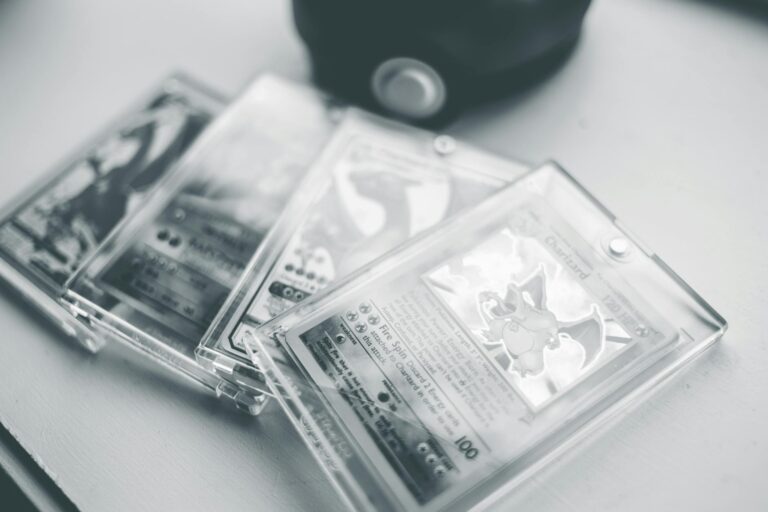
Did Carta Mundi print the fourth print run of Pokémon cards? No, they did not. Carta Mundi, a Belgian company known for making playing cards and board game components, never handled the printing of any Pokémon Trading Card Game (TCG) cards, including the so-called “4th print” sets from the early days of the hobby.
To understand this, let’s step back and look at how Pokémon cards came to be in the first place. Pokémon started as a video game in Japan in 1996, created by Satoshi Tajiri and his team at Game Freak. It exploded in popularity, and soon Nintendo decided to launch a trading card game to go with it. In Japan, the cards were printed by a company called Angel Play, which handled the initial runs starting in 1996. When Pokémon hit the West in 1998, Wizards of the Coast, the same folks who made Magic: The Gathering, got the license to publish and distribute the TCG in English-speaking countries like the US, UK, and Canada.
Wizards of the Coast set up printing through a US-based printer called Carta Mundi USA—no relation to the Belgian Carta Mundi. Actually, that’s a common mix-up. The real printer for Wizards’ Pokémon cards was a company called “Cartamundi” but specifically their North American operations, which were distinct. Wait, let’s clarify this simply: the cards from Wizards’ era, which includes what fans call the “1st print,” “2nd print,” “3rd print,” and “4th print” runs, were all printed by a facility in the United States operated under the Cartamundi name. But the original Carta Mundi from Belgium? They stuck to regular playing cards, like Bicycle decks, UNO, and custom game cards—they never touched Pokémon.
What are these “print runs” people talk about? Early Pokémon cards had symbols on the bottom left to show which batch they came from. The black star symbol meant 1st print, the silver star was 2nd print, and so on up to unlimited prints without symbols. The “4th print” usually refers to cards with a yellow circle or similar mark, printed around 1999-2000 during the Base Set and Jungle expansions. These were mass-produced to meet huge demand as Pokémon fever swept the world—kids everywhere were trading them at school, and stores couldn’t keep shelves stocked.
Why do some folks think Carta Mundi (the Belgian one) did it? It’s mostly confusion online. Forums and old collector sites mix up “Cartamundi” (the Pokémon printer’s branding) with “Carta Mundi.” Wizards of the Coast officially listed their printer as “Made in USA by Cartamundi” on card backs. But digging into company histories, the Belgian Carta Mundi, founded in 1973 in Turnhout, Belgium (a town famous for card printing since the 1400s), focused on casino cards, Monopoly components, and toys. They expanded to the US market later, but Pokémon printing stayed with specialized TCG facilities. No official Nintendo or Wizards document ever credits the Belgian parent company for Pokémon specifically.
Proof comes from collector databases and Wizards’ own announcements. For example, the Wizards Pokémon site from 1999-2003 (archived now) shows production details pointing to US plants. Modern reprints by The Pokémon Company International use different printers like DNP in Japan or Western facilities, but none involve Carta Mundi. Carta Mundi’s own website today lists clients like Hasbro for board games, Ravensburger puzzles, and standard decks—they proudly mention printing over a billion cards a year, but Pokémon TCG? Not on the list.
Think about the logistics. Pokémon cards need special holographic foils, precise cutting for rarity symbols, and high-security printing to prevent fakes. Carta Mundi excels at that for poker decks, but Wizards chose dedicated TCG lines. By 2003, when Nintendo took over publishing from Wizards, printing shifted entirely to Japan and other partners. The 4th print era was peak Wizards time, all US-made.
Collectors chase these old prints for nostalgia and value—1st prints can sell for thousands, while 4th prints are common and cheap. But fakes flooded the market even back then, printed by shady operations in China or elsewhere. Real 4th prints have that telltale “Made in USA” fine print and Cartamundi copyright line. If you’re spotting cards without it, or with Belgian markings, they’re likely knockoffs.
Over the years, rumors persist because Turnhout, Belgium, is the “card capital” of Europe. Carta Mundi there prints for big names, so fans assume overlap. But company filings and trade shows confirm separation—Carta Mundi Belgium does Disney Villainous cards now, not Pokémon. No crossover.
If you’re grading cards at PSA or BGS, authenticators check the print dot patterns and ink quality matching Wizards’ specs. Nothing Belgian shows up. For unlimited runs post-4th print, same story—all Wizards until the handover.
So, in short, Carta Mundi (Belgium) stayed out of Pokémon entirely. The 4th print was pure Wizards of the Coast production via their US Cartamundi setup. Grab a magnifying glass, check your card backs, and you’ll see it plain as day. This mix-up trips up new collectors all the time, but knowing the history keeps your collection legit. Dive into old auction sites or Pokémon price guides, and the evidence stacks up every time.