The 1st Edition Base Set Charizard is the most valuable widely known Pokemon card in existence, with PSA 10 copies selling for $420,000 to $550,000 at major auction houses. Card number 4/102 from the 1999 Pokemon Base Set, this holographic rare has become the undisputed flagship of the Pokemon collecting hobby. In December 2025, a PSA 10 example sold at Heritage Auctions for $550,000, setting a new all-time public auction record and confirming that demand for this card continues to climb more than 25 years after it was first printed. Of the 5,325 copies graded by PSA, only 124 have achieved the coveted Gem Mint 10 grade.
That roughly 2.3 percent survival rate at the highest grade explains the enormous price gap between a PSA 10 and lower grades. A PSA 9 trades in the $20,000 to $50,000 range, while a PSA 6 can be found for around $1,800. Even ungraded copies in decent shape sell for thousands of dollars. This article covers the card’s full price history, what drives its value, how to evaluate condition, market trends heading into 2026, and the practical realities of buying or selling one.
Table of Contents
- What Makes the Charizard First Edition Base Set Card So Expensive?
- Price History of the 1st Edition Base Set Charizard From 2020 to 2026
- How a Complete 1st Edition Base Set Compares to a Standalone Charizard
- Buying a 1st Edition Charizard Without Getting Burned
- Condition Pitfalls and Grading Realities for 1st Edition Charizard
- The Shadowless Versus 1st Edition Distinction
- Where the 1st Edition Charizard Market Goes From Here
- Conclusion
- Frequently Asked Questions
What Makes the Charizard First Edition Base Set Card So Expensive?
Three factors converge to make this card absurdly expensive. First, the 1st edition print run was genuinely limited. Wizards of the Coast printed the initial run in 1999 before demand for the Pokemon TCG exploded, and they quickly moved to unlimited printings to meet orders. That means the pool of 1st Edition cards that exist is fixed and shrinking as copies get damaged, lost, or locked away in collections. Second, charizard is the single most recognizable Pokemon to casual fans and serious collectors alike. It has crossover appeal that extends well beyond the card hobby into pop culture, nostalgia, and even mainstream investment circles. Third, the PSA 10 population is tiny. With only 124 Gem Mint copies out of thousands graded, the supply at the top tier is painfully thin.
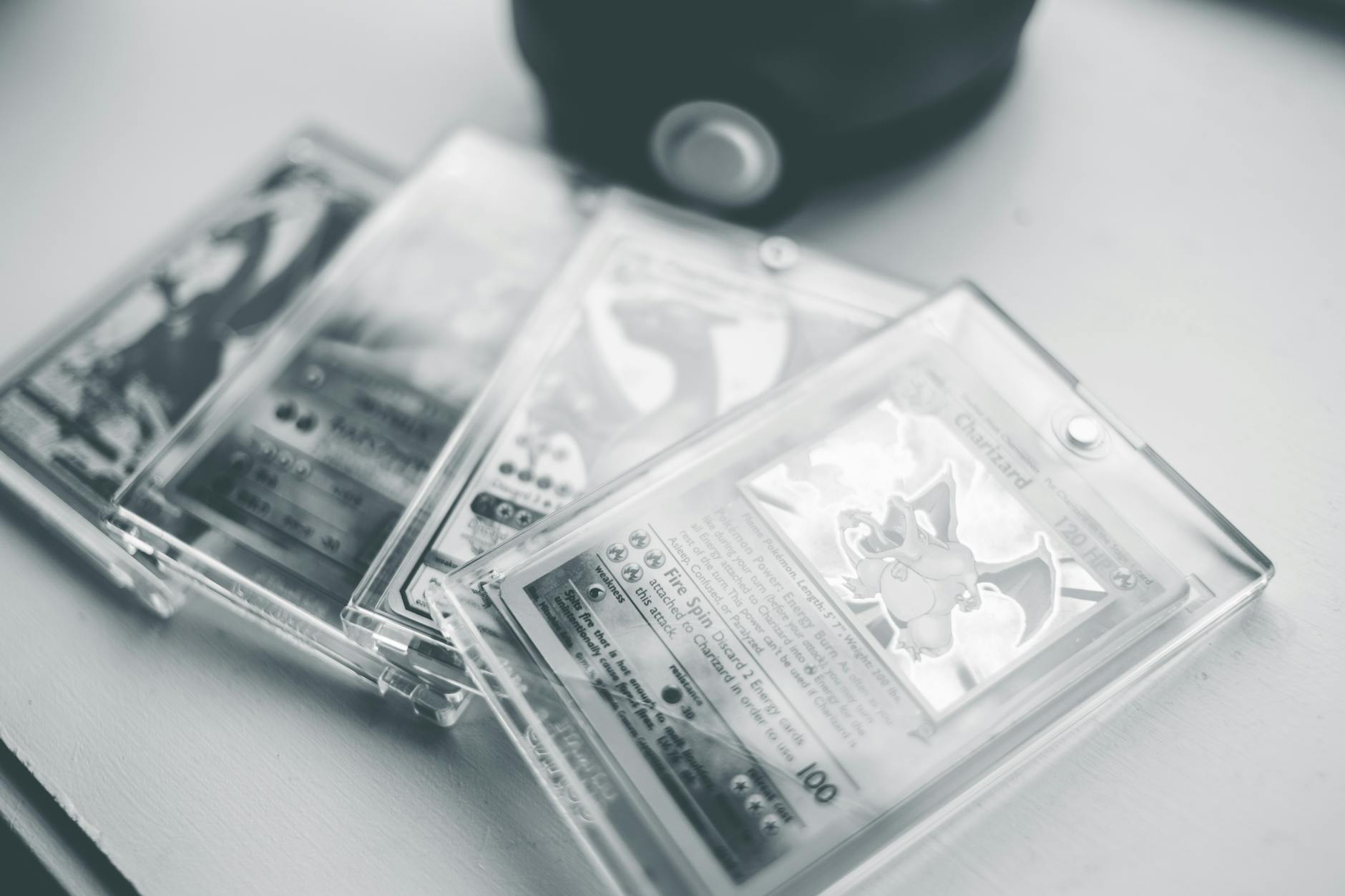
The comparison to other 1st Edition Base Set holos is instructive. Cards like Blastoise and Venusaur from the same set are valuable, but they trade at a fraction of Charizard’s price. A PSA 10 1st Edition Blastoise might sell for $40,000 to $60,000, impressive on its own but roughly one-tenth of what Charizard commands. The gap is almost entirely driven by cultural cachet. Charizard was the card every kid wanted in 1999, and that emotional attachment has translated directly into collector demand decades later. It is also worth noting that the 1st Edition stamp matters enormously. An unlimited Base Set Charizard in PSA 10 sells for a small fraction of the 1st Edition price. The stamp, a small black circle with a “1” on the left side of the card, is the difference between a four-figure card and a six-figure card. Shadowless variants, which were printed between the 1st Edition and unlimited runs, fall somewhere in between but are a separate discussion.
Price History of the 1st Edition Base Set Charizard From 2020 to 2026
Before 2020, a PSA 10 1st Edition Charizard was already considered an elite collectible, but prices hovered around $20,000. That figure seems almost quaint now. The COVID-era boom from 2020 through 2021 changed everything. A combination of nostalgia-driven demand, stimulus spending, and high-profile celebrity purchases pushed prices into six figures almost overnight. Logan Paul’s purchase of a copy for over $150,000 brought mainstream media attention to the card, and suddenly auction results were making national headlines. The market corrected and fluctuated between 2022 and 2024, with PSA 10 sales ranging from roughly $180,000 to $420,000 depending on the auction venue and timing. Some collectors who bought at the 2021 peak found themselves temporarily underwater.
However, by late 2025, prices rebounded decisively. The $550,000 Heritage Auctions sale in December 2025 was not an outlier driven by two overeager bidders. It reflected a broader trend of renewed collector demand that multiple market trackers have confirmed heading into 2026. If you are trying to time the market, the honest answer is that nobody can do it reliably with collectibles. The card has shown a general upward trajectory over any five-year window, but short-term volatility is real. Someone who paid $400,000 in early 2022 watched the value dip before recovering. If you are buying as a collector who wants to own the card, timing matters less. If you are buying purely as an investment, you should be comfortable holding through potential dips.
How a Complete 1st Edition Base Set Compares to a Standalone Charizard
In October 2025, a complete 1st Edition Base Set consisting of all 103 cards, each graded PSA 10, sold for $911,000. Within that lot, the Charizard was valued at approximately $264,000, meaning it accounted for roughly 29 percent of the entire set’s value. That sale is a useful data point for understanding how the Charizard functions within the broader 1st Edition market. It is simultaneously the most valuable single card in the set and worth less as part of a lot than it would be sold individually, since a standalone PSA 10 Charizard was already fetching $420,000 or more at the time. This dynamic creates an interesting arbitrage consideration. Buying a complete set and breaking it apart could theoretically yield a higher total return than selling the set intact, but only if you can find buyers for all 103 individual cards.
The lesser holos and commons in PSA 10 are collectible but far less liquid than the Charizard. Most serious collectors who pursue complete sets do so for the satisfaction of the achievement rather than for financial optimization. For newer collectors, this also illustrates a practical point. You do not need to own a PSA 10 to own a meaningful piece of pokemon history. The complete set sale valued every card in it, not just the Charizard. Building a 1st Edition Base Set in lower grades is a far more accessible goal and still represents a significant collection.
Buying a 1st Edition Charizard Without Getting Burned
The most important decision when buying this card is whether to purchase graded or ungraded. A PSA-graded copy provides authentication and a standardized condition assessment, which is critical at these price points. The counterfeiting market for high-value Pokemon cards is active and increasingly sophisticated. Buying an ungraded 1st Edition Charizard from an unverified seller is risky, and at prices ranging from several thousand to tens of thousands of dollars for raw copies, the stakes are high. If you buy graded, stick to major grading companies like PSA, BGS (Beckett), or CGC. PSA dominates the Pokemon market and its grades are the most liquid, meaning PSA-graded cards generally sell faster and for more predictable prices.
A BGS 9.5 is roughly comparable to a PSA 10 in terms of condition, but it typically sells for less due to lower demand in the Pokemon segment specifically. This is a tradeoff worth considering if you are buying to hold rather than to flip. You might get more card for your money with BGS, but you will likely get less when you sell. For auction purchases, Heritage Auctions, PWCC, and Goldin are the main venues for high-end Pokemon cards. Each charges buyer’s premiums, typically 20 to 25 percent on top of the hammer price, which can add tens of thousands of dollars to your total cost. Factor this into any price comparisons you make against reported sale figures, which sometimes include the premium and sometimes do not.
Condition Pitfalls and Grading Realities for 1st Edition Charizard
The brutal reality of grading is that most 1st Edition Charizards will not come back as a PSA 10. The card was printed in 1999, handled by children, stored in binders and shoeboxes, and subjected to decades of wear. Common condition issues include whitening on the card back edges, surface scratches on the holo foil, and print lines that were present from the factory. Even cards that look pristine to the naked eye frequently come back as PSA 8 or 9 due to centering issues or minor surface imperfections visible under magnification. The price cliff between grades is steep. A PSA 10 at $420,000 to $550,000 drops to $20,000 to $50,000 at PSA 9, and then to around $1,800 at PSA 6.
That means a single grade point can represent hundreds of thousands of dollars in value. If you are considering submitting an ungraded copy for grading, manage your expectations carefully. The 124 out of 5,325 population report tells the story clearly: fewer than 1 in 40 submissions achieve the top grade. One warning for buyers: be cautious of cards described as “PSA 10 potential” or “gradable.” These descriptions are subjective and often optimistic. Unless you are experienced enough to evaluate centering, surface quality, and edge condition yourself, do not pay a premium based on a seller’s grade prediction. Buy the card for what it is, not what it might become.
The Shadowless Versus 1st Edition Distinction
A common source of confusion is the difference between 1st Edition and Shadowless Base Set Charizards. Both were printed early in the Base Set’s production run, but they are distinct. The 1st Edition carries the edition stamp on the left side of the card art. The Shadowless variant lacks this stamp but also lacks the shadow border around the card art that appears on unlimited printings.
Shadowless Charizards are valuable in their own right, with PSA 10 copies selling for roughly $30,000 to $50,000, but they are a tier below the 1st Edition in both rarity and market demand. For collectors working within a budget, a high-grade Shadowless Charizard can be an appealing alternative. It offers a similar vintage aesthetic and scarcity profile at a fraction of the 1st Edition price. However, it does not carry the same prestige or long-term price trajectory, so it should be viewed as a different collecting goal rather than a substitute.
Where the 1st Edition Charizard Market Goes From Here
The December 2025 record sale at $550,000 suggests the market has moved past the post-COVID correction and entered a new phase of price discovery. Several factors support continued strength: the PSA 10 population is fixed and unlikely to grow significantly since most surviving copies have already been submitted, generational nostalgia for late-1990s Pokemon remains strong, and the card continues to attract mainstream media attention with each record-breaking sale. That said, the card is not immune to broader economic conditions.
A recession, rising interest rates, or a shift in collector sentiment could all put downward pressure on prices. The 2022 to 2024 fluctuation period proved that six-figure collectibles are not a one-way bet. For collectors who value the card for what it represents, those swings matter less. For speculators, the volatility is the price of admission.
Conclusion
The 1st Edition Base Set Charizard occupies a singular position in the collectibles world. It is the most iconic card in the most popular trading card game ever made, with a PSA 10 population small enough to fit in a single room. Prices have climbed from $20,000 before the pandemic to $550,000 at the most recent record sale, driven by genuine scarcity, cultural significance, and broad collector demand that shows no signs of disappearing.
Whether you are considering a purchase, evaluating a card you already own, or simply tracking the market, the key takeaway is that grade matters enormously with this card. The difference between a PSA 9 and PSA 10 is not incremental; it is a multiplier of ten or more. Buy from reputable sources, get authentication if purchasing ungraded, and understand that this card’s value is built on decades of nostalgia and a supply that will never increase.
Frequently Asked Questions
How much is a 1st Edition Charizard worth in 2026?
A PSA 10 copy is worth approximately $420,000 to $550,000 based on recent auction results. A PSA 9 trades in the $20,000 to $50,000 range, a PSA 6 around $1,800, and ungraded copies in good condition sell for several thousand dollars.
How many PSA 10 1st Edition Base Set Charizards exist?
As of the most recent PSA population report, 124 copies have achieved a PSA 10 grade out of 5,325 total submissions. This number can increase slightly as new submissions come in, but significant growth is unlikely since most surviving copies have already been graded.
What was the highest price ever paid for a 1st Edition Charizard?
The current public auction record is $550,000, set at Heritage Auctions in December 2025. The previous record was $420,000, achieved in 2022.
What is the difference between 1st Edition and Shadowless Charizard?
The 1st Edition has an edition stamp on the left side of the card art and was part of the earliest print run. The Shadowless variant lacks both the edition stamp and the shadow border found on unlimited prints. Both are valuable, but 1st Edition copies sell for significantly more at every grade level.
Is a 1st Edition Charizard a good investment?
The card has appreciated substantially over any long-term time horizon, but it has also experienced significant short-term volatility. Between 2022 and 2024, prices fluctuated between $180,000 and $400,000 for PSA 10 copies. It should not be treated as a guaranteed investment, and buyers should be prepared to hold through potential downturns.
How can I tell if my Charizard is 1st Edition?
Look for a small black circle containing the number “1” on the left side of the card, just below the card art. If this stamp is present and the card has no shadow border around the artwork, it is a 1st Edition. If the stamp is absent but there is no shadow, it is a Shadowless variant. If neither the stamp is present and a shadow border exists, it is an unlimited printing.