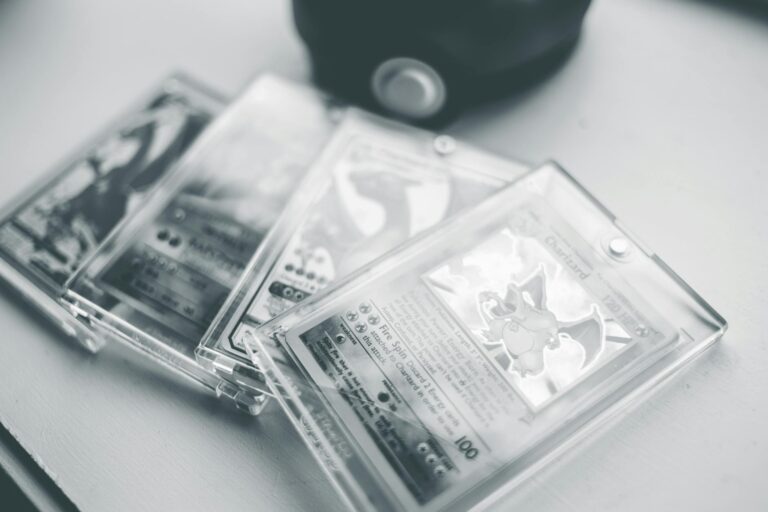
Are 4th print Pokémon cards from the Base Set shadowed or shadowless? The short answer is that 4th print Base Set cards are shadowed, meaning they have drop shadows behind the card text and energy symbols, unlike the earlier shadowless prints.
To understand this, let’s dive deep into the world of early Pokémon Trading Card Game prints, focusing on the original Base Set released in 1999. The Base Set came in waves of print runs, each with small differences that collectors now obsess over. These differences can make a card worth hundreds or even thousands more, depending on its condition and exact print version. The key feature here is something called “shadowed” versus “shadowless.” Shadowless cards lack a thin black drop shadow behind the white text box at the bottom of the card and behind the energy symbols in the bottom right. Shadowed cards have those shadows, making the text pop a bit more against the background.
The print runs break down like this. First print cards are the rarest and come in two main flavors: 1st Edition (with a special stamp in the bottom left) and shadowless unlimited (no stamp, but still no shadows). These were printed starting in January 1999, mostly for the US market. Wizards of the Coast, the company handling Pokémon TCG back then, rushed production to meet huge demand. Shadowless cards followed right after, still early in 1999, and they’re identifiable by crisp, bold text without shadows—plus some printing quirks like brighter colors or minor errors.
Then come the later prints: 2nd, 3rd, and 4th. By the 2nd print, shadows started appearing on some cards, but it wasn’t consistent across the whole set yet. The 3rd print solidified the shadowed style more, and the 4th print—exclusive to the UK market in some cases—was fully shadowed. Bulbapedia, a top authority on Pokémon cards, notes specific errors corrected in the 4th Base Set print released only in the UK, confirming these are shadowed versions. For example, certain text shifts or ink issues from earlier prints got fixed, and all known 4th prints show the drop shadows clearly.
Why does this matter? Shadowless cards, especially holos like Charizard #4/102, are premium collectibles. A shadowless Charizard in near mint can fetch around $800 ungraded, jumping to $15,000 or more for a PSA 10 gem mint, based on recent sales data from sites tracking Pokémon prices. Shadowed versions from later prints like the 4th are common and cheaper—often under $100 for the same card in good shape. Collectors use a simple test: hold the card up to light or compare the text box. No shadow? Early print, likely valuable. Shadow present? Later print, like 4th, more standard.
Digging into specifics, the Base Set has 102 cards, with 9 holos, 16 rares, and so on. Holo rares like Charizard, Blastoise, and Venusaur are the stars. On shadowless versions, the energy symbols (those little circles for Fire, Water, etc.) float without shadows, and the type symbol in the top right lacks a drop shadow too. 4th prints fix this—shadows are there, making the card look slightly bolder. Bulbapedia lists errors tied to print runs, like Machamp’s Fighting symbols shifted right on shadowless, or Ninetales missing damage numbers on some shadowless from Brushfire decks. These errors taper off in shadowed prints, including the 4th.
How do you spot a 4th print exactly? It’s trickier than just shadows. Look for the copyright date: early prints say “© 1995, 96, 98, 99 Nintendo,” but later ones might tweak it slightly. Cut quality improves too—no more rough edges or double crimps from packs. Some 4th prints came in UK-exclusive products, like certain starter sets. Non-holo cards might have darker gold borders on shadowless, but shadowed 4th prints normalize the colors. Gray stamps or smudged 1st Edition marks are from even other sets like Team Rocket, not Base Set 4th.
Value-wise, shadowed 4th prints don’t command shadowless prices. A shadowed Charizard #4 might sell for $200-400 ungraded, while shadowless hits $800+. Grading matters huge—PSA population reports show over 230 graded examples of some shadowed variants, diluting rarity. Shadowless have fewer high-grade survivors due to age and play wear.
History adds flavor. Pokémon exploded in 1999; kids everywhere ripped packs hunting holos. Print runs ramped up fast. 1st Edition and shadowless were short-lived, maybe a month or two each. By 4th print, demand stabilized, so shadowed became standard through Unlimited editions. UK got unique runs because of regional distribution—Wizards printed there separately, leading to that confirmed shadowed 4th.
Common mistakes? New collectors mix up shadowed with “unlimited.” All unlimited after shadowless are shadowed, including 4th. Don’t confuse with reversed holos or later sets like Jungle, which have different shadow styles. Fakes flood the market—proxies on sites like Etsy mimic shadowless Charizard for $30, but real 4th prints are legit shadowed.
Grading tips: PSA, BGS, or CGC look at centering, corners, edges, surface. Shadowed 4th cards grade easier since they’re newer-ish. Holo bleed (rainbow foil leaking) hits shadowless more. Store in sleeves, top loaders; humidity warps them.
Beyond Base Set, shadowless shows up rarely elsewhere—like Fossil corrected errors or Team Rocket low-ink holos—but 4th Base is solidly shadowed. Dark gold borders on some shadowless non-holos from 2-player sets are fun variants, but again, not 4th.
Collecting strategy: If chasing value, hunt shadowless. For completion, grab a 4th print shadowed set—cheaper entry. Check eBay sold listings for comps; prices fluctuate with hype cycles. Pokémon’s boom continues; 2025 sees shadowless Charizard sales steady at high levels.
Errors galore in early prints spice it up. Shadowless Bulbasaur with yellow streaks missing blue ink. Squirtle holos lacking eye shine. Abra with a “jet plane” dot. Jet-black ink hickeys on Ninetales. These quirks mostly vanish by 4th shadowed.
Production details: Printed on sheets of 11×11 cards, cut post-print. Early runs had alignment issues; 4th smoothed out. UK 4th fixed Fossil-like errors bleeding into Base perceptions.
Market today: Shadowless demand drives prices. A PSA 9 shadowless Charizard #4 sold for $5,876 recently, down a tad, but PSA 10 holds $15k. Shadowed 4th? Routine sales under $1k even graded high.
Community spots fakes via shadow test—real shadowless have uniform no-shadow tex